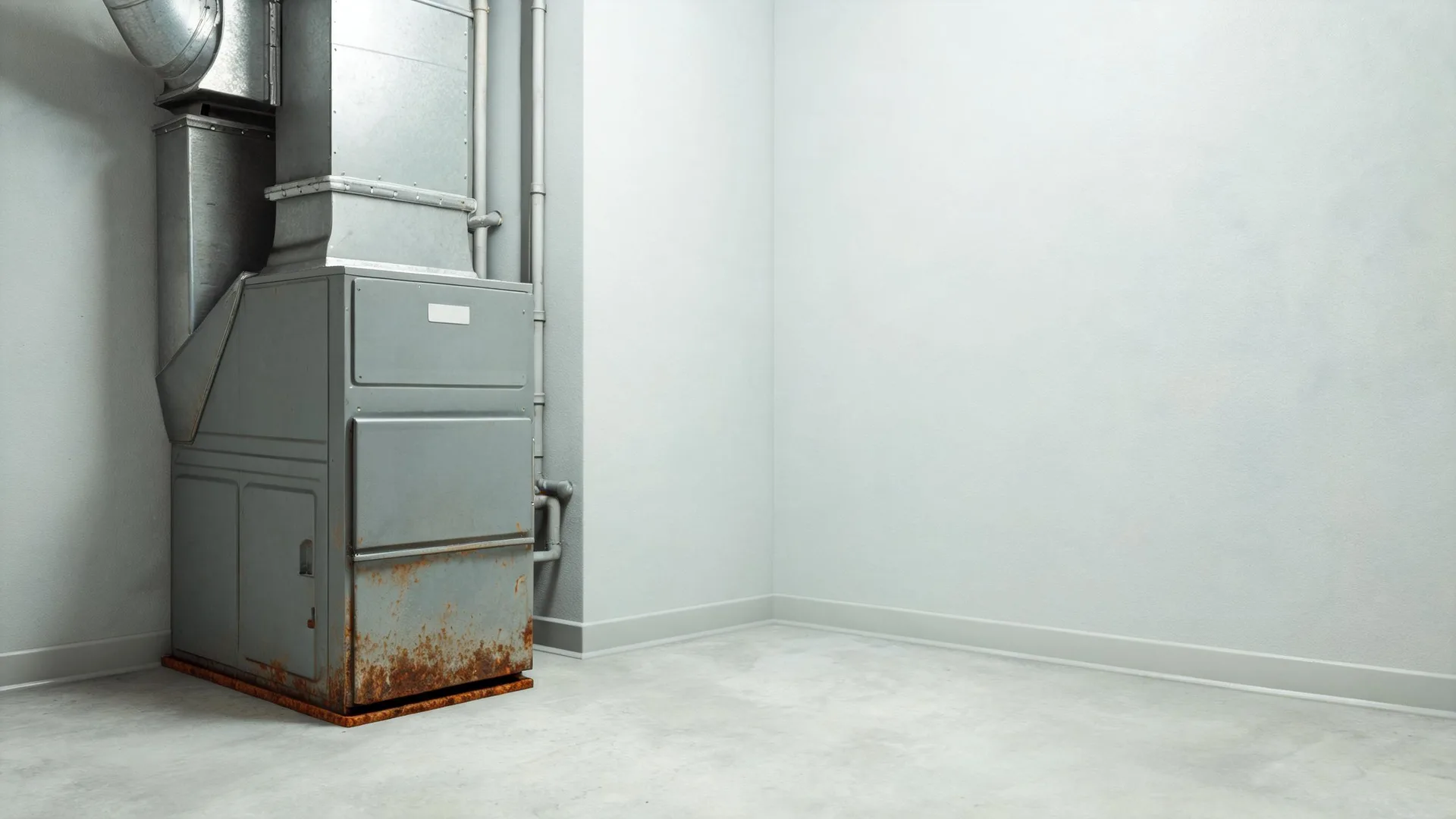
September is the month to get ahead of it
Furnaces here sit idle most of the year and start up again in October. A weak igniter or a failing blower motor usually doesn't show itself until the first cold snap asks the system to run.
Takes about a minute. No obligation.
Furnaces here sit idle most of the year and start up again in October. A weak igniter or a failing blower motor usually doesn't show itself until the first cold snap asks the system to run.
Once heat is running through the winter, whatever part was already marginal is the one that gives out. Getting it looked at in September means the fix happens on your schedule, not in a cold house after the weather's already turned.
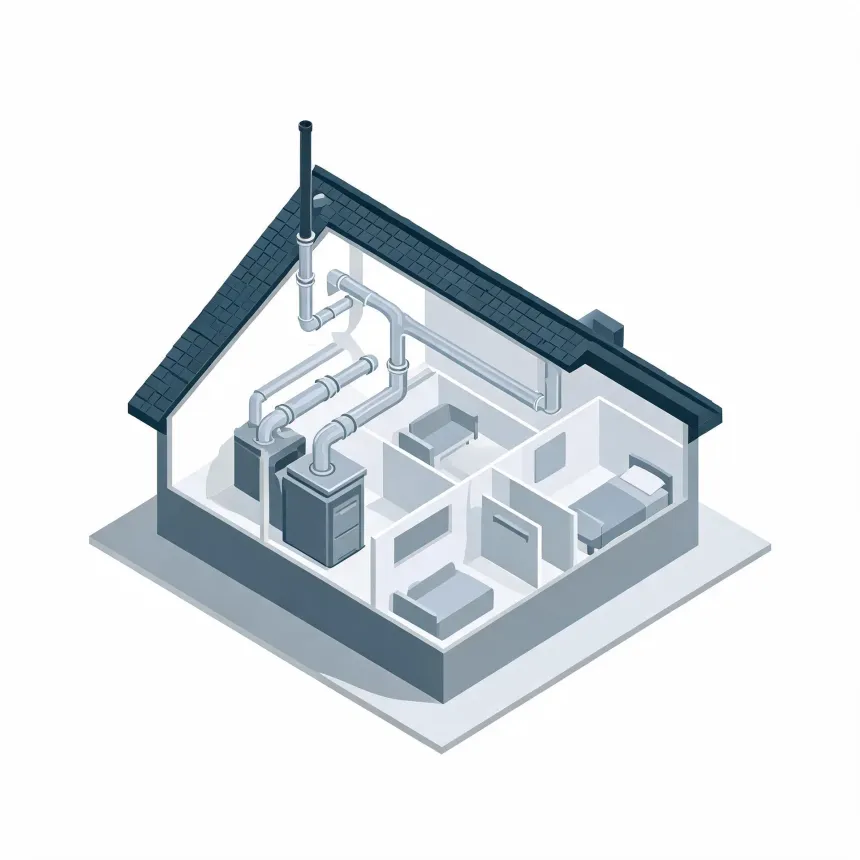
NOAA 1991–2020 monthly normals
A furnace rarely just quits. It gives you a sound, a smell or a short cycle first.
Banging, a burning smell, short-cycling or a pilot light that won't hold are all worth a call before the part that's struggling gives out completely.



Half the homes in this region were built in 1969 or earlier. If your furnace has been there since the house was built, or close to it, that puts it well past the age where a breakdown is just a breakdown. Parts for an older furnace can also be harder to source, which matters when a contractor is deciding whether to fix what's there or recommend something else. None of that means your furnace is done. It means the repair call is a good time to ask how many years it has left before you spend money on it again.
If the furnace is original to the house, or close to it, a contractor can tell you what shape it's really in while they're already there for the repair. That's the question worth asking before the work starts, not after.
Find a contractor
Before anyone comes out, check the thermostat is set to heat and the temperature is set above room temperature. Check the breaker for the furnace hasn't tripped, and if the furnace has a power switch nearby, make sure it's on. Look at the filter. If it's gray and packed with dust, swap it, a clogged filter can choke off airflow enough to shut the furnace down on its own. If the furnace has a standing pilot, check whether it's lit. If it uses an electronic igniter, you'll usually hear the blower trying to start, or see a light blinking on the control board, worth noting the pattern before you call since that code tells a tech a lot. Check that the vents in each room are open and not blocked by furniture or rugs. If you smell gas, don't do any of this. Leave the house and call the gas company from outside.
The igniter and flame sensor cycle on every single heat call, all season. The igniter is a thin element that gets more brittle each time it heats up and cools down, and eventually it cracks. The flame sensor coats over with a thin layer of oxidation and stops sensing the flame even though the flame is there. Both are common reasons a furnace tries to start, fails, and locks out.
A blower motor that's working harder than it should, because of a dirty filter or blocked vents, runs hotter and wears out sooner. Some furnaces respond to that strain by shutting themselves down before anything gets damaged, which can look like a random failure but usually traces back to restricted air. A cracked heat exchanger is the one that matters most, since it can let combustion gas mix with the air moving through the house, and it's why a furnace that's overheated repeatedly is worth having checked closely.
A furnace that's struggling usually sends a signal before it quits outright, and running it through that signal is what turns a repair into a replacement. A cracked heat exchanger gets worse with every heat cycle, as the metal keeps flexing along the same weak line until it opens up enough to leak combustion gas into the airflow. A failing blower motor draws more current to do the same work, and that extra heat breaks down the motor windings a little more each time it runs. Even something as simple as a dirty flame sensor gets worse with use, since the coating that blocks it from sensing the flame builds up a little more on every cycle until the furnace won't stay lit at all. None of these fix themselves by running longer. They fail a little further each time the furnace fires, right up until the part that was marginal stops working altogether.
A diagnostic call starts before any panel comes off. The tech asks what the furnace was doing, whether it tried to light, ran and then shut off, or did nothing at all, since that tells them where to look first. Then the covers come off and they watch it try to fire, because a furnace will usually show the problem if you let it run through a full cycle while someone's watching. They'll check for a flame and look at its color, pull the flame sensor and look for buildup on it, and test the igniter for continuity rather than guessing from how it looks. Airflow gets checked too, since a reading off the blower or a restricted filter can point to the real cause behind a part that keeps failing. By the end they can usually tell you not just what's broken, but why it broke, which is what keeps a repair from turning into a repeat visit.