

Running clean
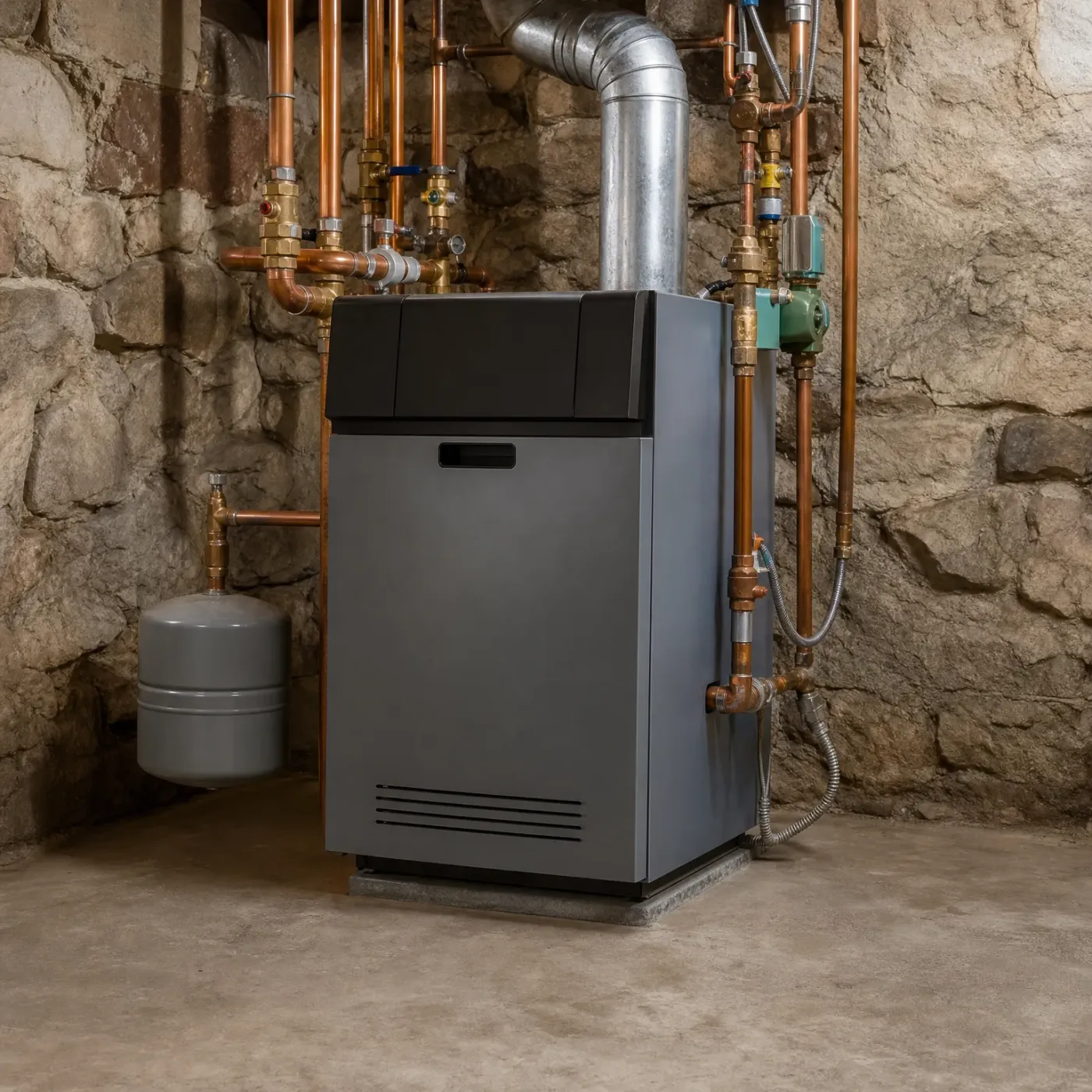
No odor in the utility room, no soot on the jacket. Pumps and fittings stay dry, the pressure gauge holds steady, and the burner fires and shuts off without leaving any trace of oil behind.
 Hand it off
Once you send the form, finding a pro is off your list.
An oil smell from your boiler is not something to live with until spring. If it comes on when the burner fires, something in the combustion is off, and if it lingers after the unit shuts down, oil may be pooling somewhere it shouldn't. Either way, the smell is the system telling you a part needs attention before it becomes a bigger repair.
Oil boilers are common across Connecticut, especially in older homes that never switched to gas. A contractor who works on them all winter has seen this exact complaint many times and knows the usual places to check first. That kind of familiarity matters more than a general handyman's guess, because an oil burner has its own quirks that someone who mostly works on gas systems won't know as well.
You don't have to figure out who that person is. Send the request and the search for a licensed, local contractor who knows oil systems becomes someone else's job, not yours. You get matched with one contractor, not a handful of companies competing for your callback, so you're not stuck fielding calls while your house smells like heating oil.
Connecticut winters ask a lot of these systems, and a boiler that's working harder than it should to mask a leak or a bad burn is also costing you more to run, which matters here with electric rates as high as they are. Getting the smell diagnosed early is worth it before the cold really sets in.
Once you send the request, the next step is off your plate. Someone who knows oil boilers will be the one looking at yours.
You walk past the utility room and catch it again, that oily smell that wasn't there last winter. Maybe it's faint and only shows up when the boiler kicks on. Maybe it hangs around even after the burner shuts off. You're not trying to ignore it, but you also don't want to call someone out for nothing. You want to know what's actually going on before you decide what to do about it.
A smell when the burner fires usually points to a combustion problem. The nozzle could be clogged, the air shutter could be out of adjustment, or the oil could have water or sediment in it, any of which keeps the flame from burning fully clean. A smell that sticks around after the unit shuts off is different. That points to oil pooling somewhere, often a loose fitting, a bad valve, or a small leak at the pump or filter. Connecticut winters mean your boiler runs for months without a break, and a small issue at the start of the season tends to get worse by January. Either way, the smell is the boiler telling you something is off before it becomes a bigger repair.





You come downstairs before the heat's caught up with the cold that settled in overnight. The radiator under the window is ticking, working on it, and the glass above it has gone white with ice on the inside. That's when you smell it again, the oil, stronger this time, sitting in the room instead of fading. You crack the window anyway, just to breathe, and the cold pours in faster than the radiator can answer it. Down in the utility room the boiler's running fine by the sound of it. The smell doesn't match the sound. You've already pulled up the form on your phone. One call, to someone who deals with Connecticut boilers every winter, and this stops being yours to figure out.
The pro who reaches out is licensed in Connecticut.
It costs nothing to send, and you don't have to hire anyone.
A boiler burns oil inside a sealed chamber, not out in the open, so under normal running you shouldn't smell anything at all. The nozzle's job is to break the oil into a fine mist so it burns completely when the igniter fires it. When that nozzle gets dirty or worn, the spray pattern breaks down into bigger droplets, and bigger droplets don't burn all the way. What's left goes out with the exhaust instead of turning to heat, and some of it reaches you as that oily smell. The burner also needs air to feed the flame, and it pulls that air either from a dedicated tube or straight from the room. That same path works both ways. When the blower kicks on, it can draw the smell back toward you instead of just feeding the fire. Exhaust is supposed to leave through the flue pipe and vent outside. If that pipe is partly blocked, some of what should go up and out gets pushed back down into the room instead. None of this is something you can see from outside the unit. A technician checks the nozzle spray pattern, looks at how the burner is drawing air, and runs a flue gas check to see whether combustion is actually clean or just looks fine from the front. What gets fixed depends entirely on which of these is actually happening in your unit.
Statewide, winter nights average 23°F, according to NOAA climate data. That's a long, hard stretch for a boiler to run, firing again and again through the night to hold the house. More cycles means more chances for a worn nozzle to throw oil that doesn't burn clean, or for soot to build up around the burner. If your boiler already carries that faint oily smell, a cold snap is when you'll notice it most, usually overnight when the burner is working hardest and the house is quiet enough to catch it.
NOAA nClimDiv 1991-2020 county normals weighted by homes
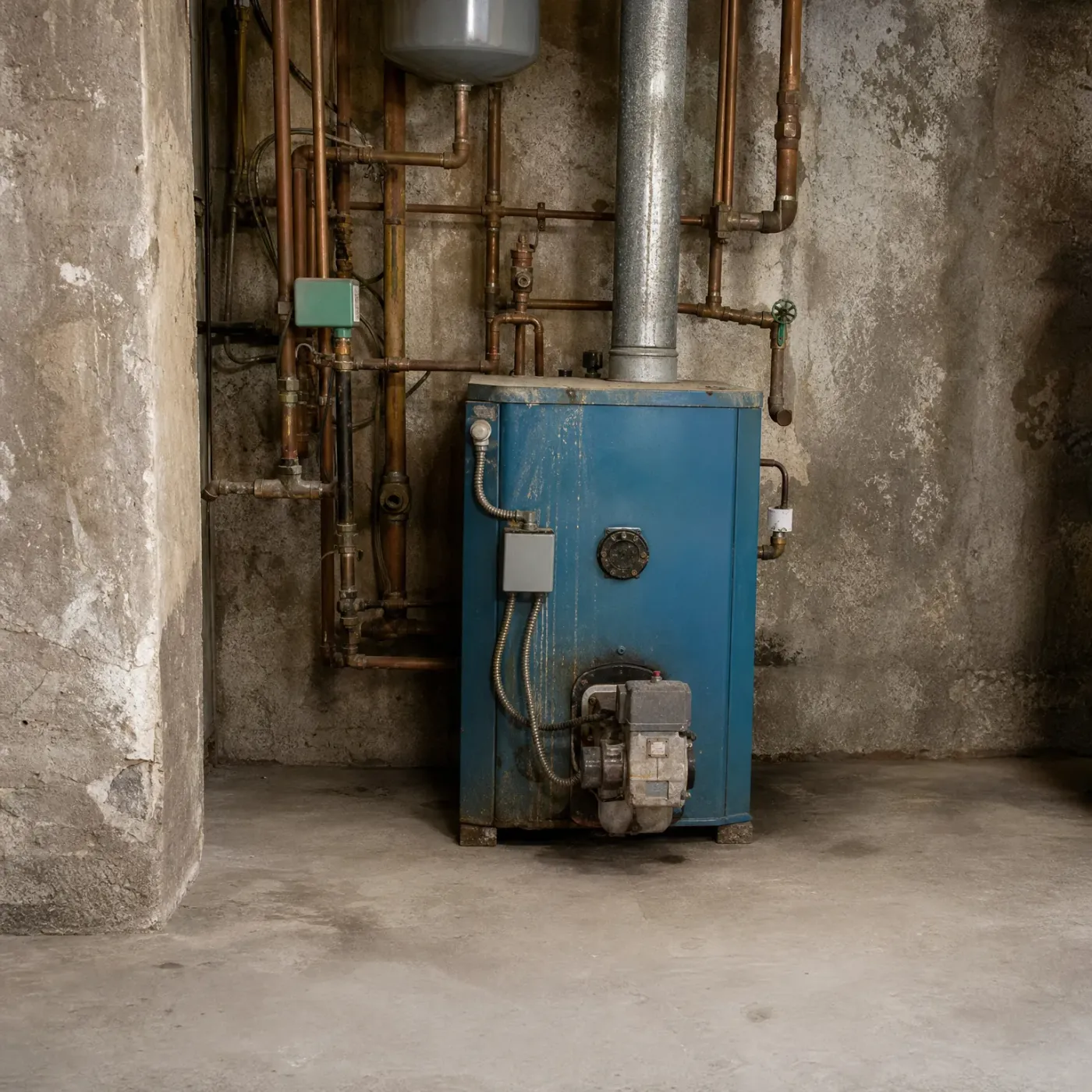
You probably noticed it first in the room with the boiler, a faint oily smell that wasn't there before. Maybe there's a film on the floor near the base of the unit, or a dark spot on the burner housing. Soot around the flue pipe or on the wall behind it is worth checking too. If the smell is strong enough to notice from the stairs, or if anyone in the house has started getting headaches when they're down there, that's not something to wait out. Unburned oil and the fumes that come with it are a sign the combustion isn't clean, and breathing that in over weeks isn't something to treat as background noise in your own house.
Oil feeds from the tank into the pump under pressure.
The pump pushes oil through a thin nozzle into mist.
The igniter sparks and lights that mist inside the chamber.
Burning oil heats the heat exchanger, warming water for the house.



No odor in the utility room, no soot on the jacket. Pumps and fittings stay dry, the pressure gauge holds steady, and the burner fires and shuts off without leaving any trace of oil behind.

The pressure gauge is worth a glance, and so is the burner assembly at the base. A film near the burner or along the flue duct is oil finding a way out it shouldn't.


That's a lot of burner cycles over a Connecticut winter. Every cycle is another chance for a worn nozzle to throw oil that never fully burns.
A nozzle or filter caught before it fails fully is a quick job for someone who works on these units all season. Left alone, it can mean a cracked heat exchanger instead.
At 23°F, your boiler isn't firing once and holding steady. It's cycling on and off most of the night to keep up, and each restart puts the nozzle and igniter back to work. A part that's already struggling to burn clean gets more chances to fail the colder it gets outside.
NOAA nClimDiv 1991-2020 county normals weighted by homes
An oil smell from your boiler always traces back to something specific: a nozzle throwing a bad spray pattern, a cracked flue joint, a leak at a fitting. None of that fixes itself, and none of it needs guessing once someone's looked at the burner and the chamber around it. A local oil heat technician who services boilers all winter has seen this exact smell call plenty of times, and knows which of those few things it usually is before the panel even comes off. Send the request and you're matched with one licensed contractor near you, not a handful of companies competing for the callback. You won't be fielding calls all evening trying to figure out who to trust with the job. Someone who works on this equipment in Connecticut all season, through the cold nights that run the burner hardest, takes it from here. The smell has an answer. Getting it looked at is the only step left.
Finding a pro stops being your job