
Profile view of a bearded man wearing a black baseball cap and a dark gray T-shirt against a plain light background.

Oil boiler or heat pump for a Connecticut home

New system or replacementBoilerConnecticut
Step 1 of 2

What ZIP code is the job in?

Should I replace my oil boiler with a heat pump in Connecticut?

You're tired of filling the oil tank every winter, and the price per gallon never seems to go anywhere but up. A heat pump keeps coming up as the alternative, but you've also heard they struggle once it gets really cold, and Connecticut winters do get cold. You want to know if that's a real problem or an old story, and whether it makes sense for your house.

For most Connecticut homes, yes, but keep the boiler as backup

Cold climate heat pumps now hold their output well below freezing, and they also give you air conditioning, which matters once August turns sticky. Oil doesn't cool anything. The catch is the coldest nights of the year, when a heat pump has to work harder and an oil boiler can carry the load without strain. That's why most installs here pair the two: the heat pump handles the vast majority of the year, including most of winter, and the boiler kicks in only when it's too cold for the heat pump to keep up efficiently. You stop buying oil almost entirely without betting the whole house on one system for the one week a year it gets brutal.

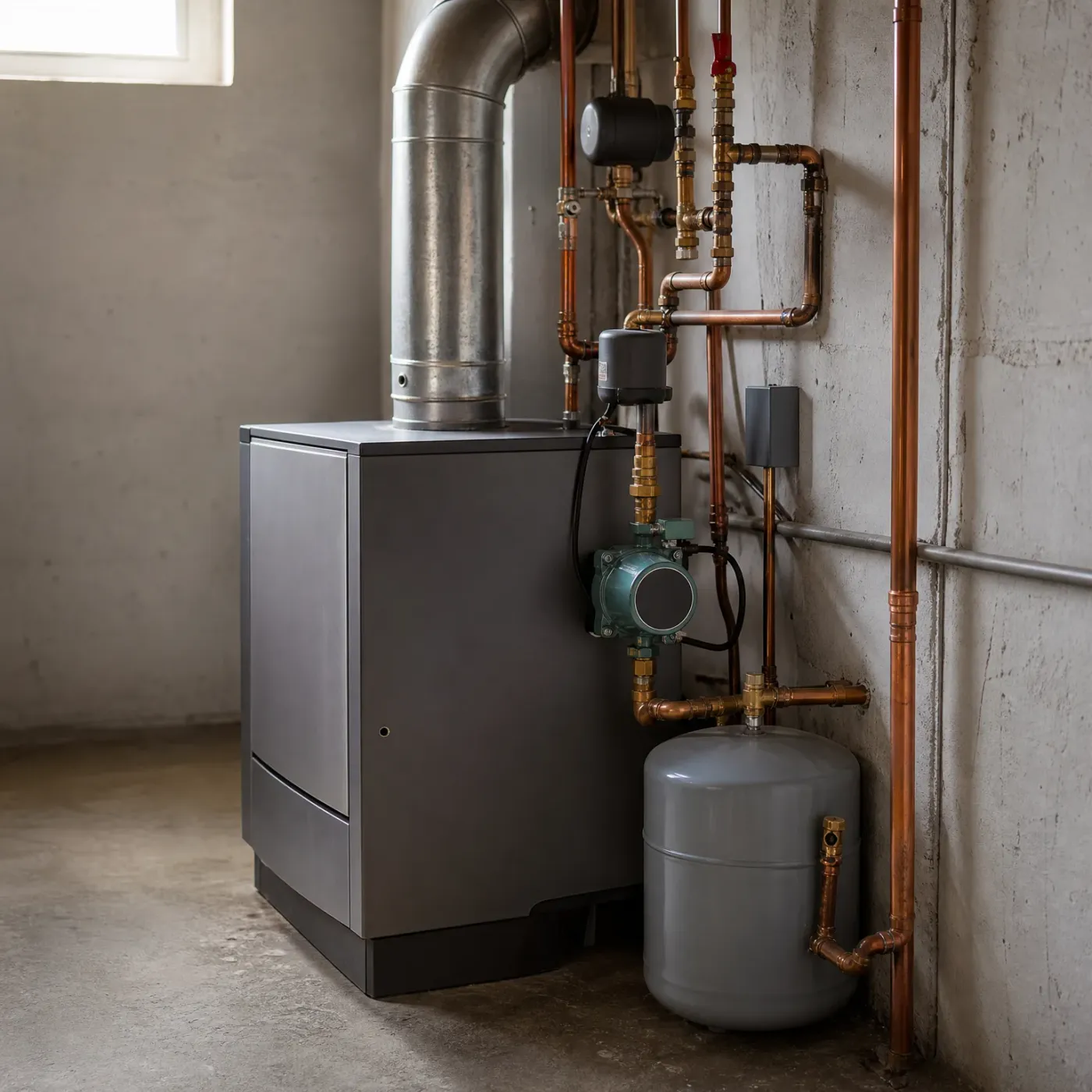
A gray floor-standing boiler with a metal flue pipe, copper piping, a circulator pump and a gray expansion tank, installed against a concrete wall.

What a cold snap does to output

A heat pump pulls heat from outside air, so its output drops as the temperature drops. On a night in the single digits, the unit works harder and puts out less than it would at 30 degrees. Modern cold-climate units are built for this and keep running well below zero, but the coldest nights are exactly when your home needs the most heat. That's why most installers size a backup source into the system rather than asking the heat pump to carry the whole load alone.

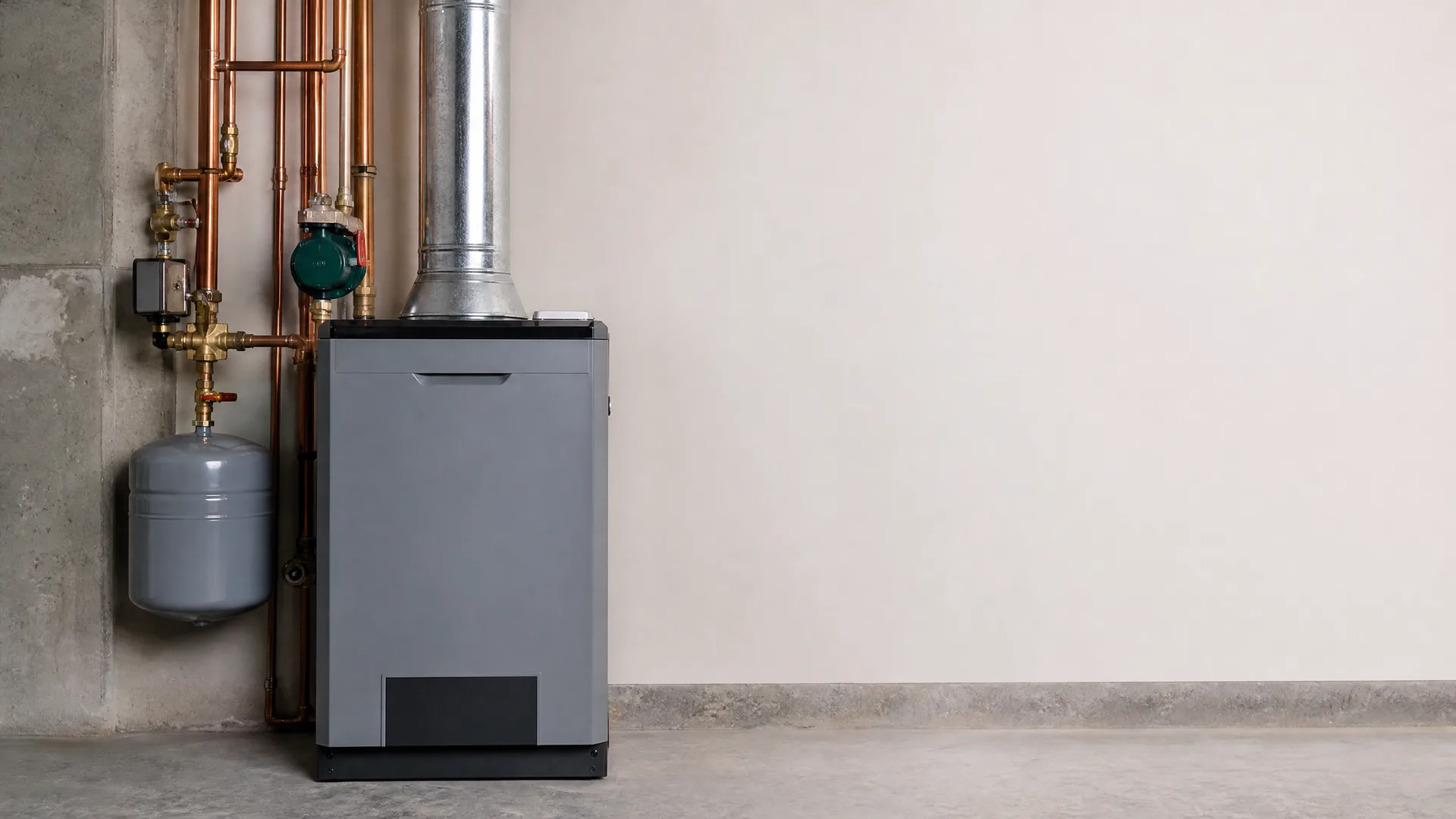
A tall grey floor-standing boiler on a concrete plinth in a corner of a room, with copper pipework, a flue, a circulator pump and an expansion vessel to its right, beside a plain cream wall.

What the oil boiler still does

Your boiler doesn't care what the temperature is outside. It burns oil and sends hot water through the pipes at the same rate whether it's 40 degrees or 10 below. That steadiness is the main thing people like about it. The tradeoff shows up on delivery day, not during a storm: you're paying whatever the going rate per gallon happens to be, and that number has moved a lot over the past few winters.

What's the oil tank actually telling you this year

You're checking the gauge more than you used to, and doing the math on how many fills get you through to spring. Maybe the burner's been cycling longer to hold the same temperature, or you've noticed soot around the flue, or the delivery truck is coming more often than last winter. None of that means the boiler is failing. It means oil is doing what oil does, and the cost of running it keeps landing on you in a lump sum every few weeks instead of spread out. If the boiler is old enough that you're not sure when it was last serviced, a sudden breakdown in January is the real risk, not just the fill-ups.

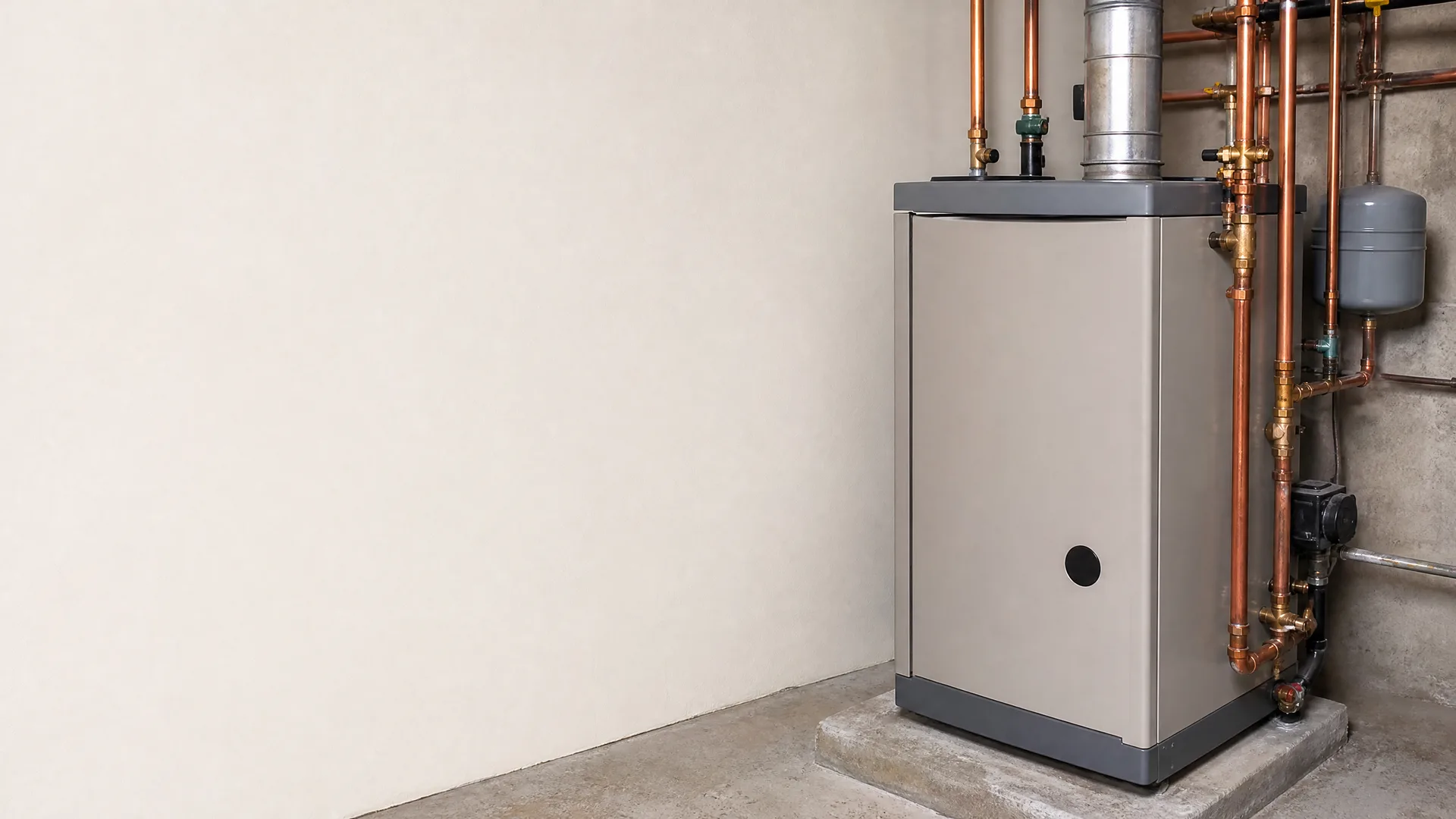
A gray boiler on a concrete pad in a basement corner, connected to copper and black pipes with a gauge, circulator pump, and gray expansion tank, beside a wood-framed wall.

Keeping the oil boiler

The boiler still heats the house the way it always has, through the same copper pipes and the same radiators. You know its habits, including when it needs a filter or a nozzle changed. You're still tied to oil deliveries and whatever the price does this winter.


An older oil-fired boiler with a burner unit, flue pipe, expansion tank and copper piping stands in the corner of a concrete-floored basement with weathered plaster walls.

Switching to a heat pump

A heat pump takes over both heating and cooling, which matters once summer gets sticky and a window unit isn't cutting it. Connecticut's cold snaps mean a cold-climate model matters, and a straight swap means new wiring and possibly new ductwork. Electric rates here are high, so the math depends on how the house holds heat.

A man with grey hair and stubble in a dark sweater sits on a grey sofa indoors, looking off to the side, with a potted plant and a sunlit window behind him.
A man with gray hair, a beard and glasses, wearing a dark green sweater, sits on a gray sofa in a sunlit living room with a potted plant, table lamp and wooden sideboard behind him.
A middle-aged man with graying hair and a short beard sits on a blue sofa in a living room, looking toward a window, with a bookshelf, lamp and framed picture in the background.
A man with graying curly hair and a dark green sweater sits on a gray sofa in a sunlit living room, looking off to the side, with a framed picture, shelving, an armchair and a window with sheer curtains behind him.
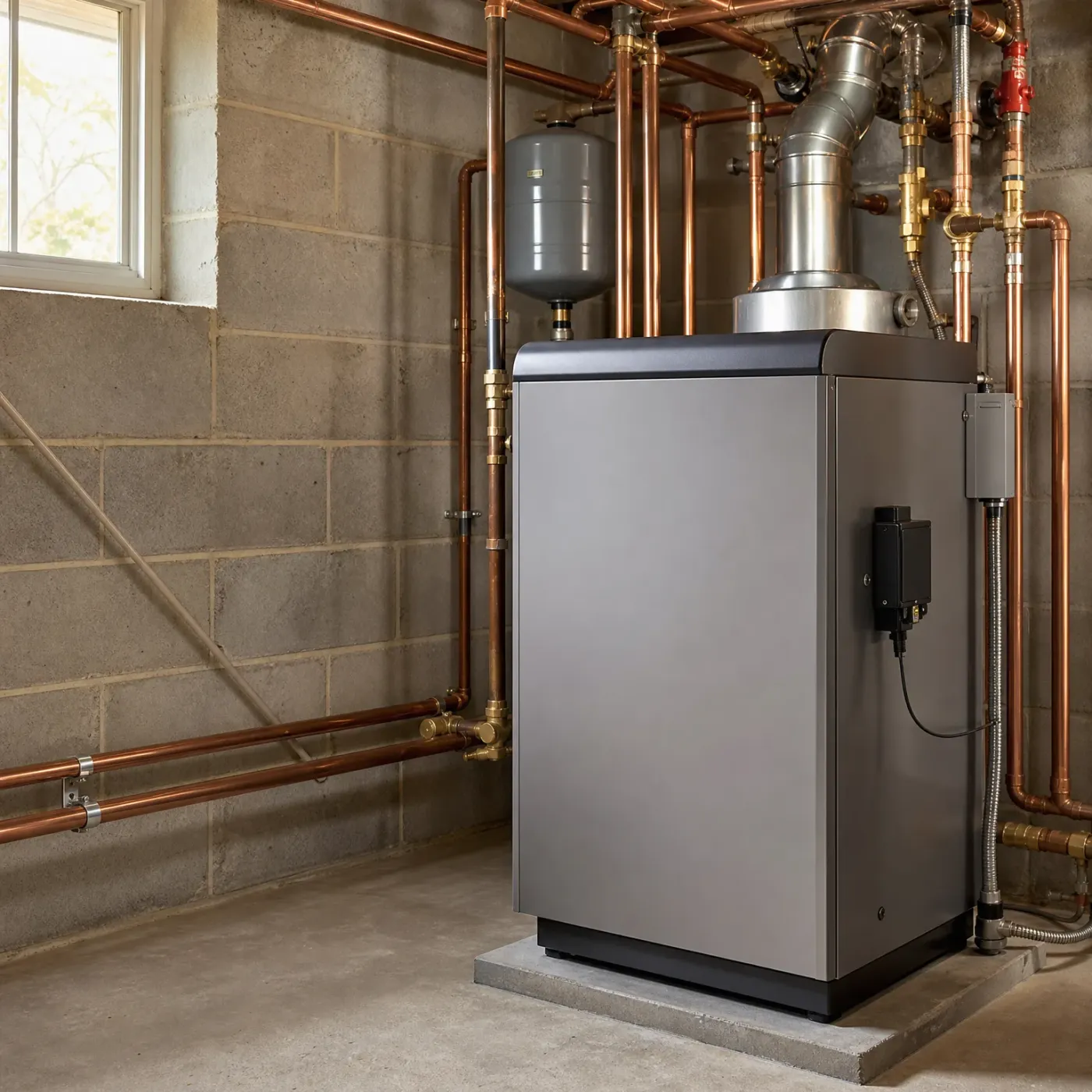
A gray floor-standing boiler on a concrete pad in a basement with concrete block walls, connected to copper piping, a flue vent, and an expansion tank.

A local pro for your boiler installation

Your request goes to one pro, not a list of companies.

A local installer who puts in boilers gets your project.

Find a boiler pro

Sending the form costs nothing.

A blue oil-fired boiler with a burner unit and pressure gauge stands in a concrete basement corner, connected to copper pipes and a metal flue.
Before you get your boiler installation
A gray floor-standing boiler with a metal flue stands against a concrete block wall, connected to copper pipes, brass valves and a gray expansion tank, on a bare concrete floor.
After you get your boiler installation

A cold-climate heat pump doesn't make heat the way your boiler does. It moves it. Refrigerant inside the outdoor unit absorbs heat from the outside air, even when that air is cold, then a compressor squeezes that refrigerant to raise its temperature further. That hot refrigerant runs inside to the indoor unit, where a fan pushes air across it and sends warm air into the house. The refrigerant cools back down, cycles back outside, and picks up more heat to repeat the loop. A boiler burns fuel to heat water and push it through pipes to radiators. A heat pump runs on electricity and moves heat instead of creating it by burning something, which is why installers size the outdoor unit to the house and to how low the temperature actually gets where you live, not just to the square footage.

A woman with shoulder-length brown hair wearing a beige knit cardigan sits in a gray upholstered armchair near a window, looking off to the side with a slight smile, with bookshelves blurred in the background.
A woman and a sleeping child wrapped together in a cream knitted blanket on a couch, with a potted plant, framed photo and lit lamp in the background.

If you keep the oil boiler, you're still at the mercy of delivery schedules and whatever price the next fill locks in. A cold winter means more trips to the tank, no matter what you paid last time.

If you switch to a heat pump, you're paying for electricity instead, and Connecticut's rates run high. The trade is predictable billing for a cost per unit that isn't cheap either way.

Winter nights average 23°F statewide

23°F is the average overnight low here for December, January and February, and plenty of nights drop well past that. Your boiler has to make up that difference every time, and a heat pump installed to handle those temperatures has to be sized and set up for them from the start.

NOAA nClimDiv 1991-2020 county normals weighted by homes

A man seen from behind raises his hand to wave at a woman standing in the open front doorway of a single-story house with gray shingle siding, white columns and a gabled porch entry.

Oil boiler or heat pump, the choice is yours to make

Nothing here tells you one system is wrong and the other is right. It tells you what each one costs you in attention, in oil deliveries, in how your electric bill moves once the compressor's doing the work. Some winters you'll be glad for the boiler's steady heat on the coldest nights. Some summers you'll be glad a heat pump gives you cooling the boiler never could.

Whichever way you lean, this is work that has to be sized right for your house and set up to handle a Connecticut winter, not a mild one. A contractor who installs these systems locally, season after season, has seen what holds up here and what doesn't. Once you've got a direction in mind, getting matched with one who knows this equipment and your area means someone who already understands what you're asking for before you explain it twice.

A gray upholstered sofa with a textured cushion sits beside a dark round side table holding a vase of green foliage, with a table lamp and sheer-curtained window behind.
A gray boiler with a metal flue pipe stands in a concrete-walled basement, connected to copper piping, a circulator pump, and a gray expansion tank on the floor.

Get the right pro for your boiler

Get a local pro

One installer gets your project, so there's no bidding war over it.

You're not committing to anything by asking.