How to restart a boiler after a Connecticut power outage
Tell a local repair pro what your boiler is doing.
The power came back on, but your boiler didn't. That's common after an outage and most of the time it just needs to be restarted the right way, in the right order. Get that sequence wrong and you can trip a lockout or leave the pilot unlit, and now you're still without heat and without hot water too.
Connecticut winters don't leave much room for a boiler to sit cold. If this happens in January, you want it fixed today, not whenever someone can fit you in.
If you'd rather not deal with the reset switch, the low water cutoff, and whatever else is on that boiler, you don't have to figure it out alone. Tell us what's going on and you'll be matched with a contractor near you who handles boiler repair and knows the restart sequence on your specific unit, gas or oil, old or new.
That contractor will reach out to you directly. You won't be the one calling around to three different companies hoping someone picks up. Once you send the form, it's off your plate. Someone else is now working on getting your boiler running again.
Outages hit at bad times. Connecticut's electric rates are already among the highest in the country, and a boiler that won't restart on its own just adds a repair bill on top of a power bill you didn't want either. Getting it looked at properly the first time, instead of guessing at switches and buttons, is worth the few minutes it takes to fill out the form below.
You know your house. You don't have to know your boiler's internals too. That's what the contractor is for.
Most boilers don't restart on their own after a power outage. They sit there cold because the ignition control locked out, or the circulator pump needs a manual nudge, or a standing pilot went out when the gas valve lost its signal. The fix is usually a reset button on the boiler itself, sometimes a switch on the water heater-style controller, held for a few seconds until you hear or see it catch. Some older units have a pilot you need to relight by hand, following the steps printed right on the access panel. If the reset button trips again right after you press it, that's the boiler telling you something is actually wrong, not just confused, and pressing it over and over won't change that. Connecticut winters don't leave much room for a boiler that won't hold a reset, so if yours trips twice, stop trying and get someone to look at it before the house gets cold.
Winter nights average 23°F statewide
That 23°F average is the overnight low, not the cold snap. A boiler stuck in lockout at that temperature won't just make the house uncomfortable, pipes near outside walls start to be at risk within hours.
NOAA nClimDiv 1991-2020 county normals weighted by homes
When the restart works
Most boilers come back with the same steps. Power is on, the switch at the unit is on, and the thermostat is calling for heat. You check the pressure gauge and it's within range. You press the reset button once, wait, and the burner fires. The circulator pump hums and you can feel the near boiler piping start to warm up. Within twenty minutes or so, heat is moving through the radiators or baseboards again. That's the outcome most people get, especially if the power was only out for a few hours and the system was working fine before it went down.
When it doesn't come back
Sometimes the reset button does nothing, or the burner tries to light and shuts right back off. That usually means the lockout is protecting against something real. A pressure that's too low after the system cooled, a pilot that won't catch, an ignition control that needs more than one reset to clear. Pressing reset over and over doesn't fix the underlying problem and can mask a gas valve or igniter issue that gets worse. If two resets don't hold, or you smell gas, or the pressure gauge reads near zero, that's the point where the system needs a look from someone who can diagnose what the outage actually knocked loose.
Send the request today and stop worrying about who to call.
Asking costs nothing, and the choice to hire stays yours.
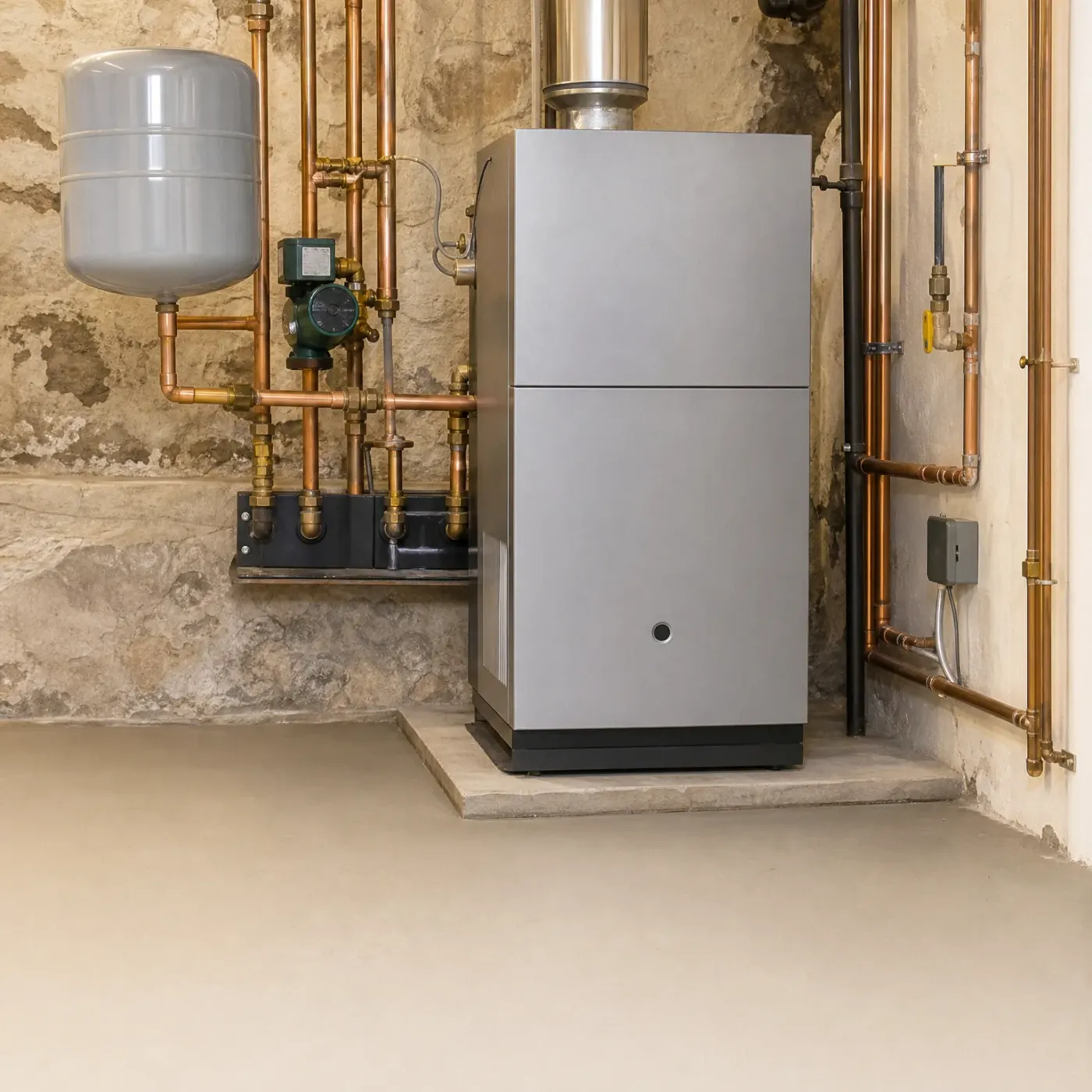
Boiler back up and running
Pressure holds steady on the gauge, the pump pushes water through the copper lines, and the expansion tank does its job. The flue draws properly and the burner cycles on when the thermostat calls for it. This is what a clean restart looks like.
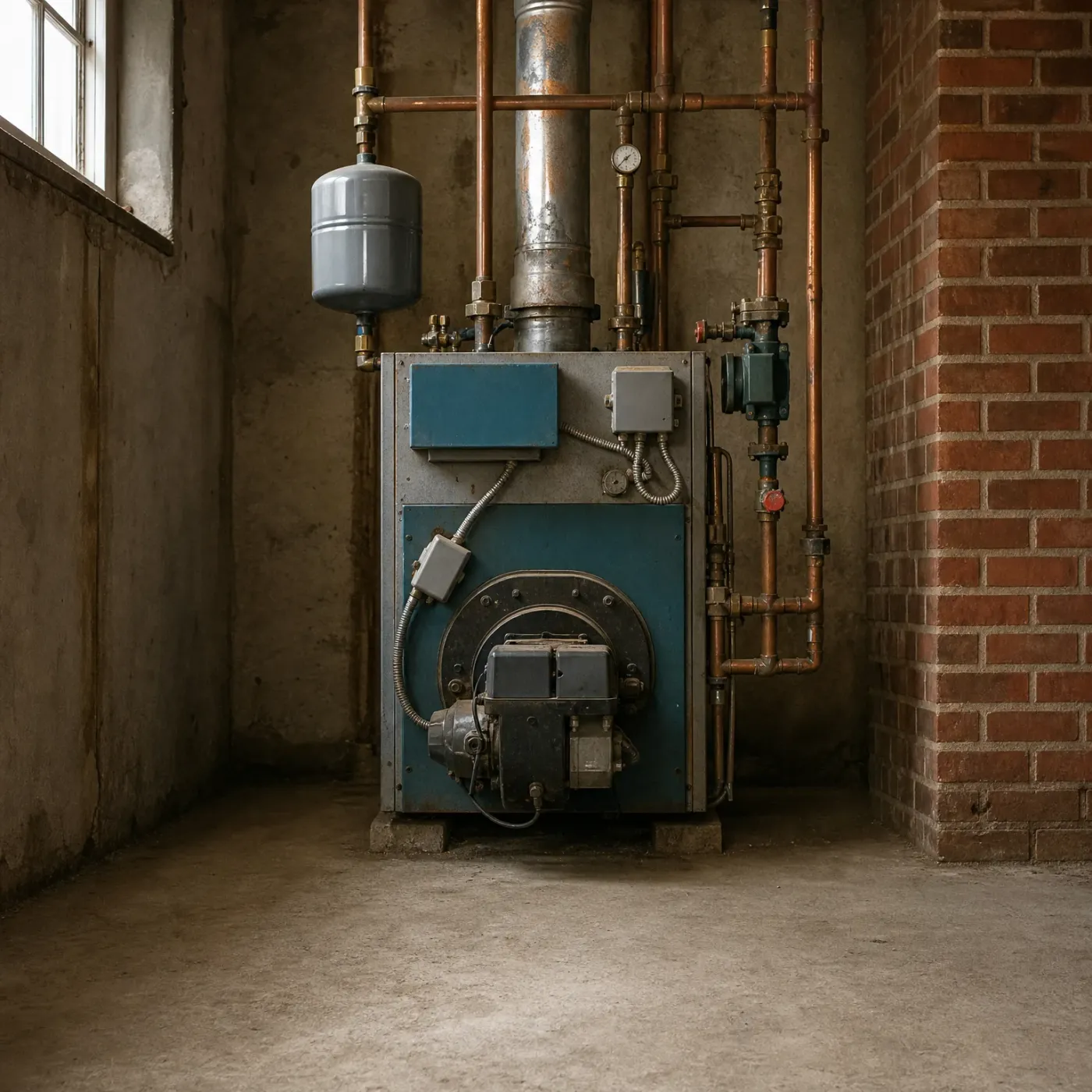
Boiler still down
The gauge needle sits low or dead, and nothing in the piping is moving. An old gas or oil-fired unit like this one can lock out after a power outage and stay cold until someone resets it in the right order. Left alone, it won't fix itself.
What are you noticing right now in the house
The thermostat is calling for heat but the radiators or baseboards stay cold, or only lukewarm. No hum from the burner, no click from the circulator pump. If you put a hand on the pipes near the boiler, there's no warmth moving through them. Some homeowners catch a faint gas smell near the unit if a standing pilot went out, that's worth noting before you touch anything. The house itself will tell you how long this has gone on: a slow drop in room temperature at first, then the chill setting into the floors. In Connecticut, with outside temperatures where they are, that cold works into exterior walls and uninsulated pipe runs faster than most people expect.
It's just past six and still dark. You come downstairs in socks and the floor near the window is cold in a different way than the rest of the room. The radiator under it, the old cast-iron one, hasn't ticked or hissed since last night. A thin skin of ice has formed on the inside of the glass, right where your breath would fog it in summer. Outside, Connecticut is sitting in the low 20s. You put a palm flat on the radiator's top ridge. Nothing. Not warm, not even the memory of warm. The power's been back since midnight, the lamp by the couch proves that, but the house never caught up.
A boiler that won't restart isn't guesswork
A boiler that stays cold after the power comes back is either locked out, unlit, or stuck on a pump that needs a manual push. Those are three specific problems with three specific fixes, and a licensed contractor can tell which one you've got by checking the gauge, the switch, and the burner in the order that matters. Connecticut winters don't leave much room to wait on that answer.
Once you send the form, you're done hunting for the right person to call. A contractor who handles boiler repair in your area gets your details and reaches out to you directly. You don't have to diagnose the lockout yourself or guess at the sequence twice.
Boiler Repair
A boiler pro near you
Describe your boiler job, and a local pro who handles it gets in touch.
After this form, you can stop searching for a boiler pro.
One request and the search for a pro is handled.
Answer a few questions instead of calling shop after shop.
Describe your boiler job once, to one pro.
The pro who reaches out is licensed in Connecticut.
Only one pro gets your request, so you hear from one company.