
Sediment cuts tank capacity fast
A tank built to hold enough hot water for a shower starts falling short once sediment settles along the bottom and eats into that space.
A boiler that runs out of hot water is usually working with too small a tank, or an aquastat or mixing valve that's set wrong, or a buildup of sediment inside the tank eating into how much water it can actually heat. Connecticut winters push these systems hard for months at a time, and a boiler that was just barely keeping up in November can start falling short by January as sediment builds and parts drift out of adjustment. Sometimes it's simpler: a failing heating element or a thermocouple that's not reading right can cut your hot water short even on a system that's otherwise fine. None of these are things to live with. A boiler quietly losing capacity now is one that's more likely to leave you with a bigger failure, and a bigger repair, once the cold really sets in.
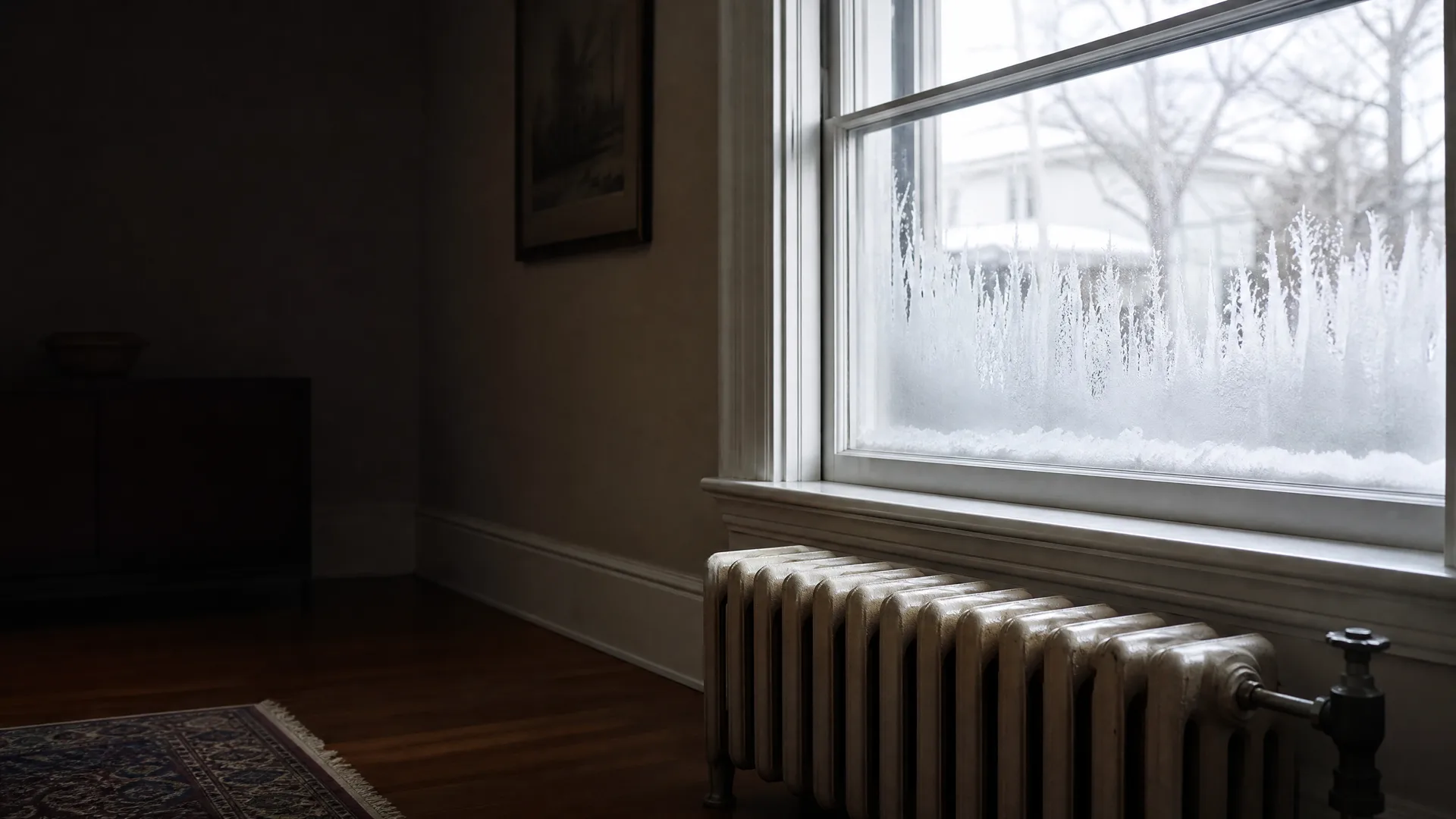
The radiator under the window has been ticking since five, but the room never warmed past the chill that settled in overnight. Ice has crept up the inside of the glass, a thin white film spreading from the corners. You press a hand to the cast iron and it's barely warm, not the heat it should be throwing this time of year. Outside, the thermometer hasn't cleared twenty. You think about running upstairs to check the water heater, then stop. Not yet. First you want to see if turning the thermostat up another two degrees does anything at all, or if you're about to spend the morning on hold with someone, again.




A tank built to hold enough hot water for a shower starts falling short once sediment settles along the bottom and eats into that space.
Instead of calling around and explaining the same problem twice, get matched with a contractor who handles boilers like yours and hears from them directly.
You notice it mid shower, the water going from hot to lukewarm faster than it used to. Maybe it's the second shower in the morning that never gets hot at all. The tank refills and reheats, but slower than you remember, and the wait between uses keeps getting longer. Some mornings you hear the burner kick on and off more than it used to, cycling short instead of running a steady stretch. If the aquastat is set too low, the water coming out of the tap won't feel as hot as it should even right after the burner fires. Left alone, a tank losing capacity to sediment only holds less over time, and a boiler running longer to make up for it burns more fuel doing it, which shows up on a bill that's already high enough in a Connecticut winter.
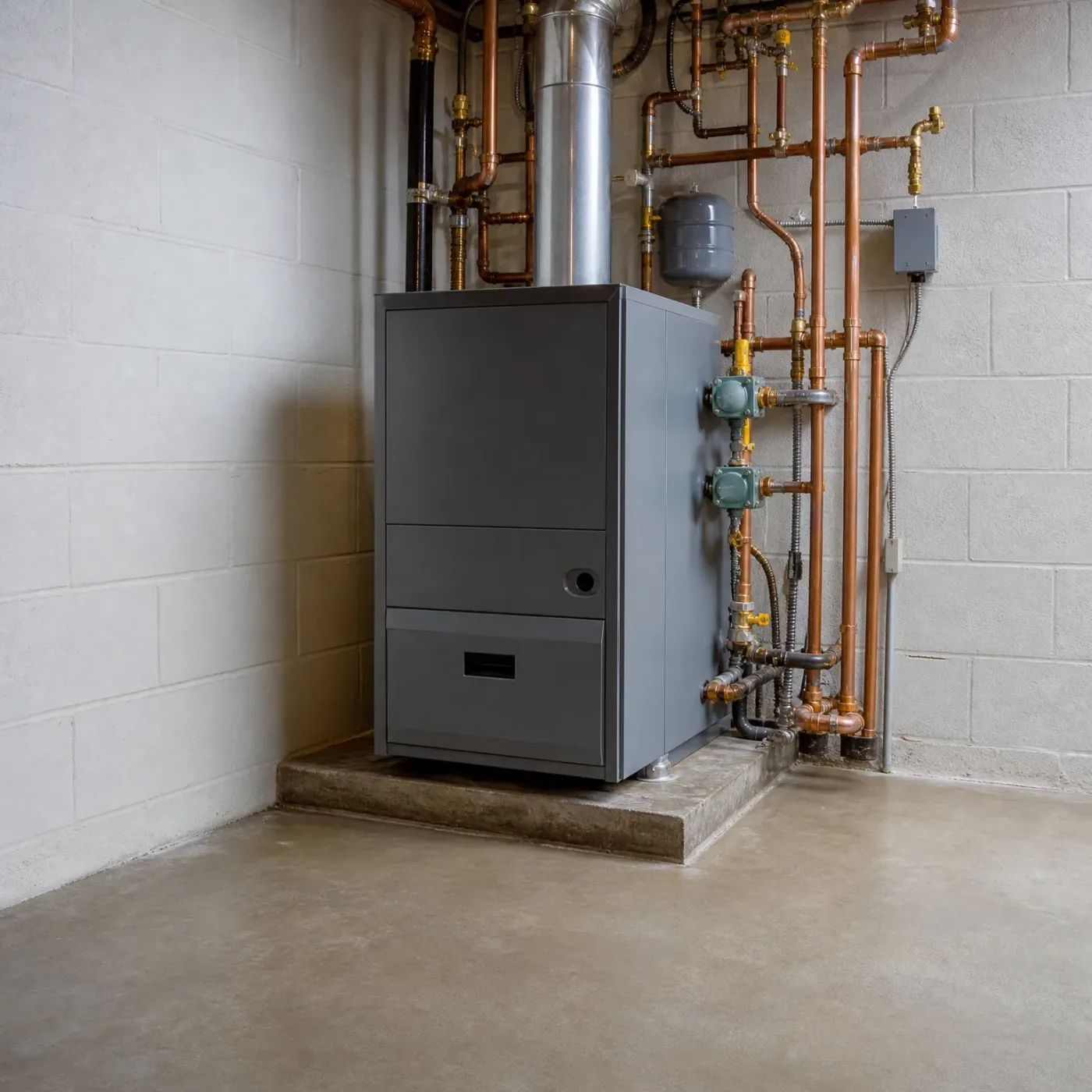
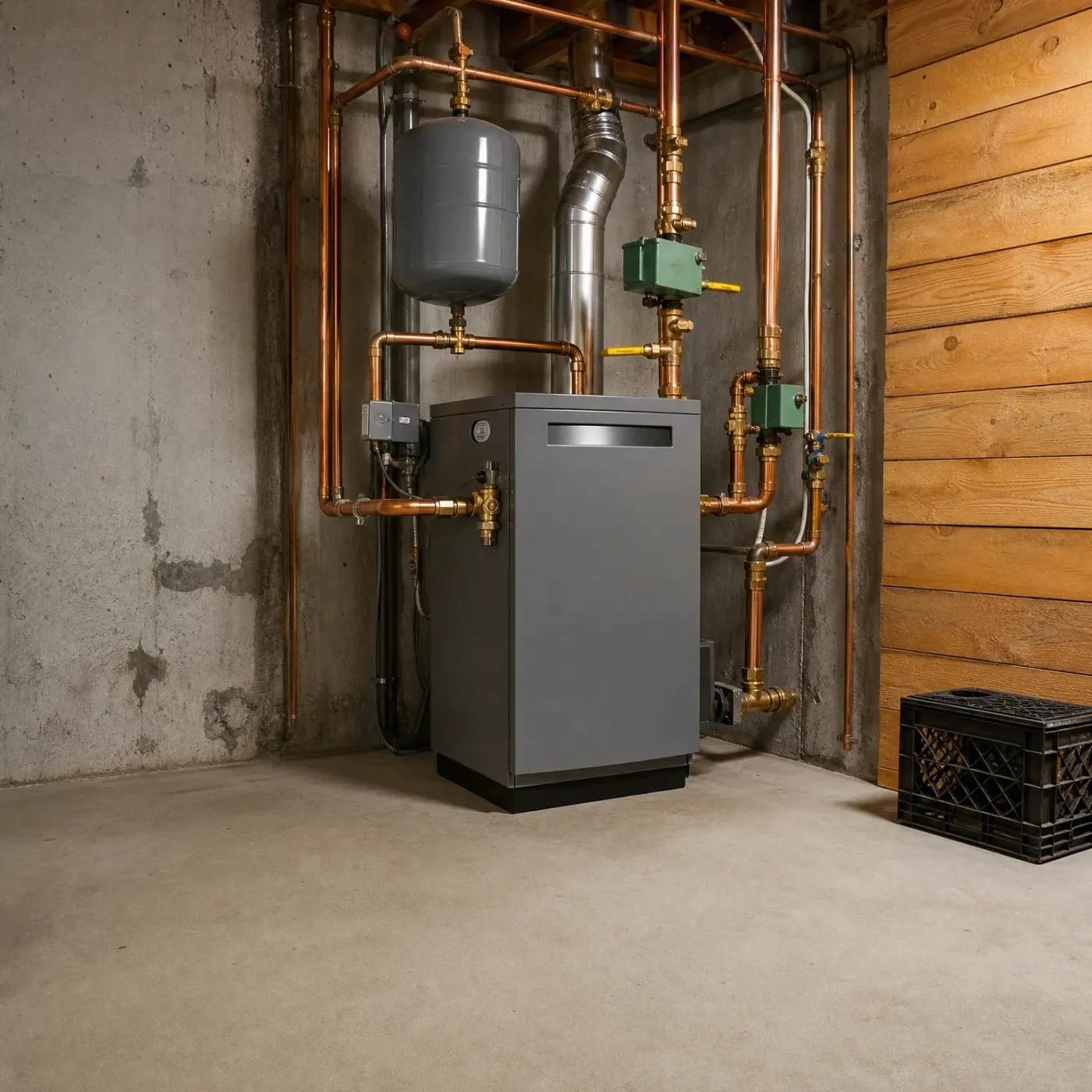
Copper pipes and brass fittings run clean along the wall, the expansion tank mounted square, the flue drawing straight up through the ceiling. A boiler set up and maintained like this heats water at the rate it's supposed to, shower after shower.
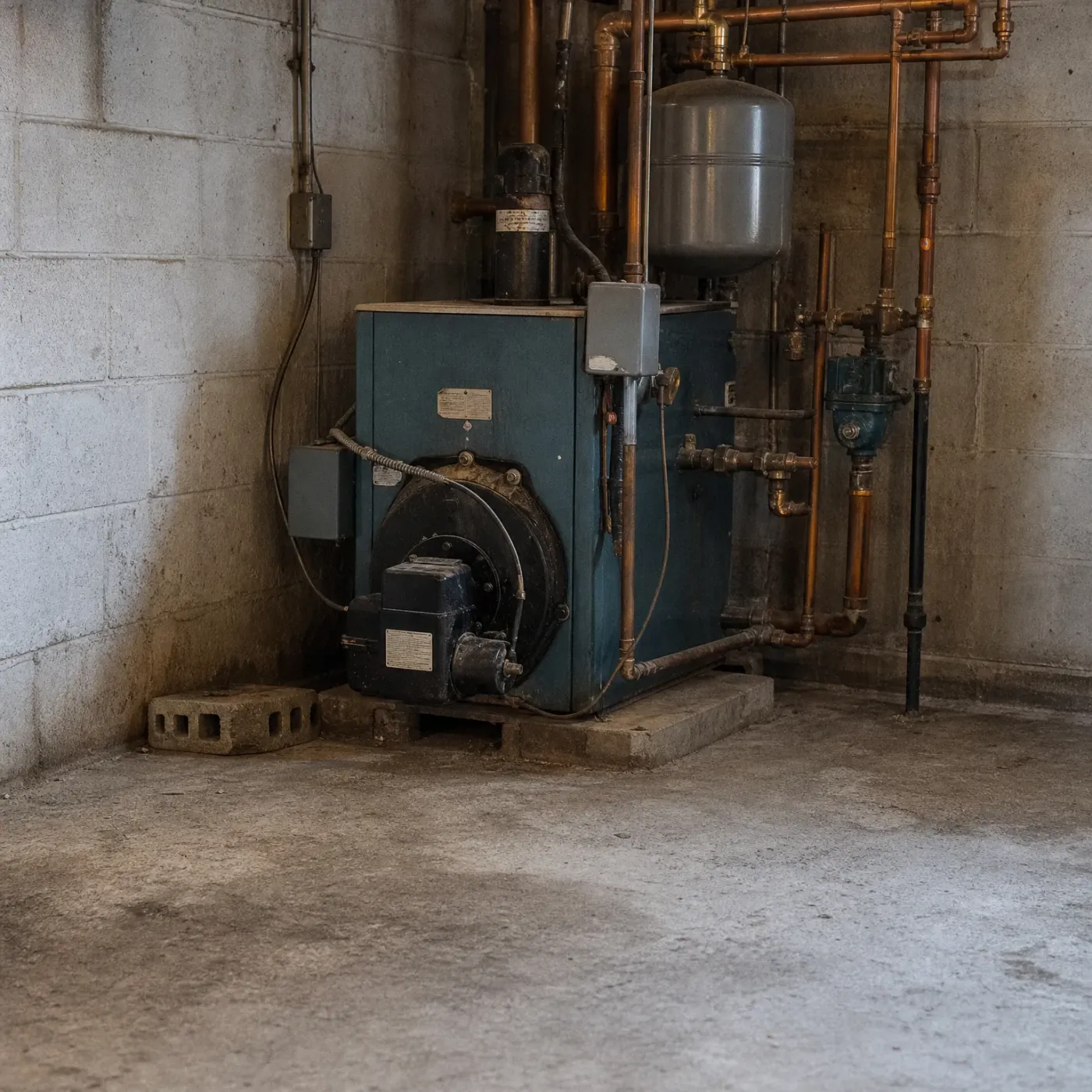
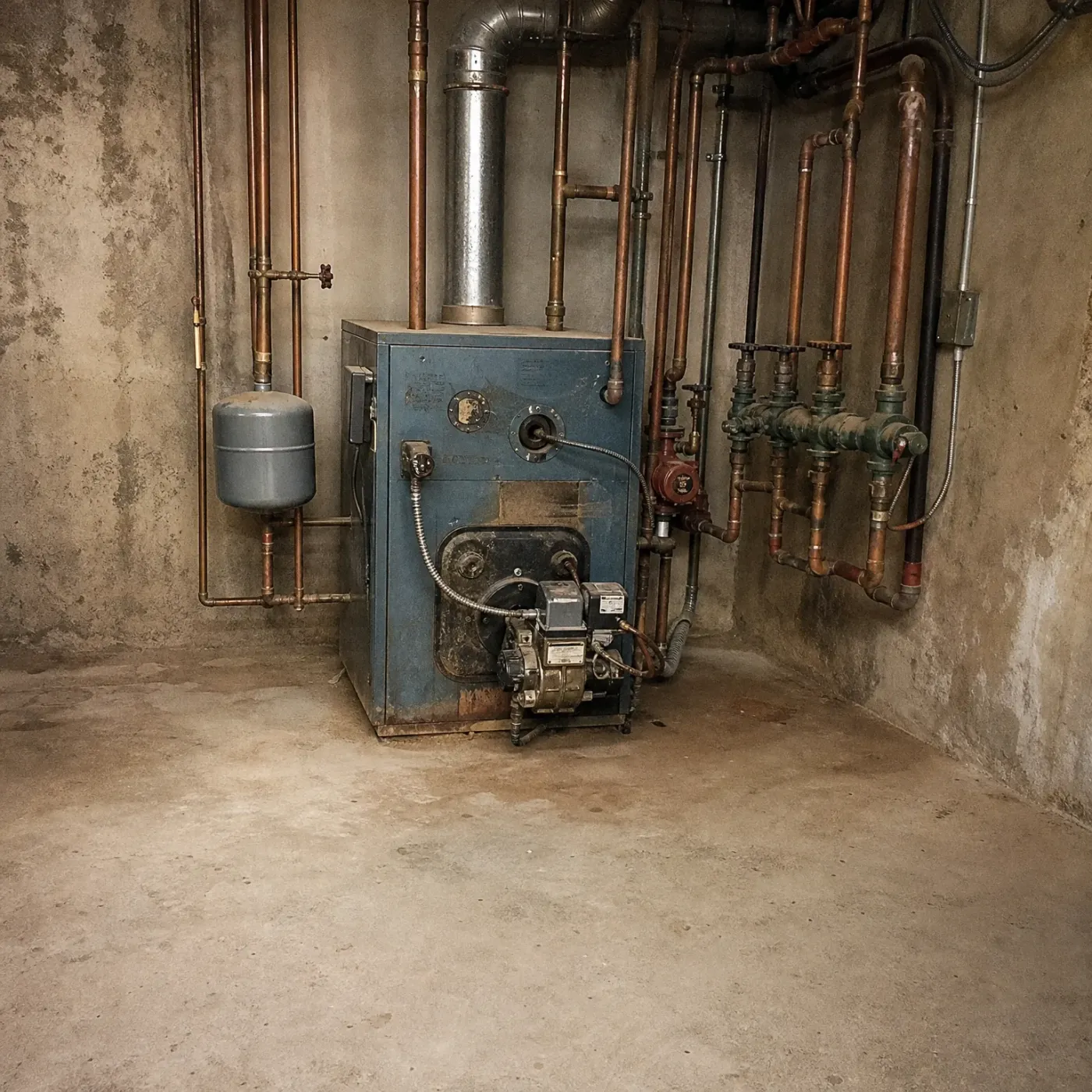
Black iron pipe has been patched into the copper over the years, and the expansion tank sits bolted above a unit that's seen a few winters too many. When a boiler gets to this point, sediment and worn parts start taking bites out of your hot water before you're done with it.
You keep hearing "indirect water heater" from contractors but nobody explains what that means for your actual shower. If you understand how the boiler and the tank work together, you can tell whether the problem is the boiler side, the tank side, or just how the system was set up to run.
An indirect boiler doesn't make hot water directly. It heats water in its own loop, then sends that heat through a coil sitting inside a separate storage tank, warming the water around the coil the way a kettle warms what's in it. The aquastat tells the boiler when to fire based on the tank's temperature, not your demand at the faucet. So if the aquastat is set low, or the coil has scaled up from years of hard water, the boiler still runs, but less heat makes it into the tank. You get warm water instead of hot, or a full tank that cools faster than it should. The tank size and that coil's condition decide how many showers you get before it falls behind.
Burner fires and heats water inside the boiler itself
Hot boiler water circulates through a coil inside the storage tank
Coil transfers heat into the tank water without mixing the two
Aquastat reads tank temperature and tells the burner when to fire


One form replaces the calls you'd make to find a boiler pro.
There's no charge for the request.
You call around in January trying to find someone who services boilers, and half the numbers you dial don't pick up or can't come out until next week.
Get matched with a contractor who handles this instead, and skip explaining the same problem to four different people before anyone shows up.
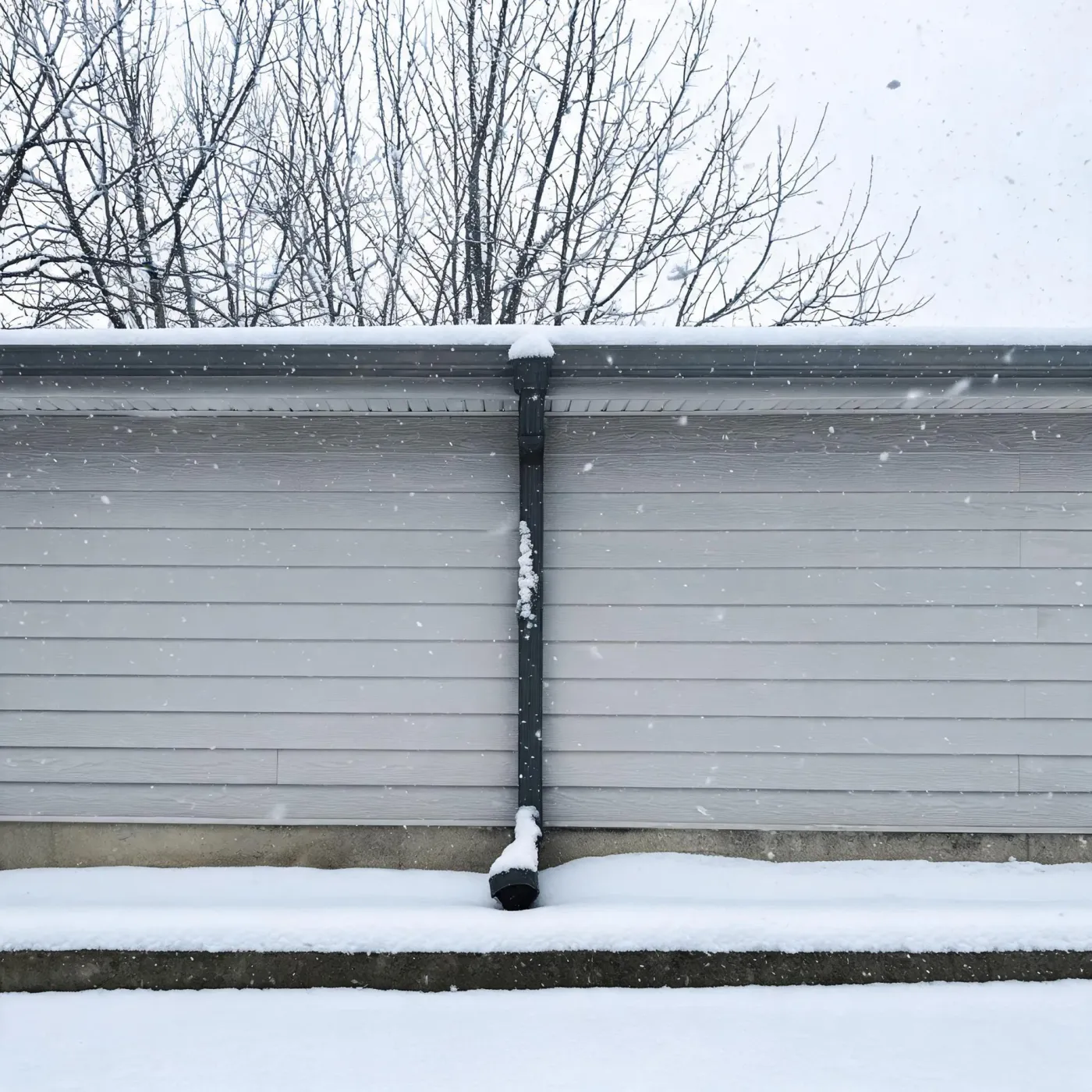
Statewide, winter nights average 23°F, according to NOAA climate data. At that temperature, your boiler is firing often just to hold the house steady, and every one of those cycles pulls from the same tank that has to supply your shower. If sediment has already settled along the bottom, there's less room for the water your burner is working overtime to heat. You end up noticing it on the coldest mornings first, when the second shower runs lukewarm faster than it did in October, because the boiler is split between warming rooms and refilling the tank at the same time.
NOAA nClimDiv 1991-2020 county normals weighted by homes


At 23°F overnight, your boiler is cycling most of the night just to keep the house warm, and it draws on the same tank your shower needs in the morning. There's less reserve left by the time you turn the water on.
NOAA nClimDiv 1991-2020 county normals weighted by homes
The tank, the aquastat, the mixing valve, or sediment built up along the bottom: one of these is almost always why your shower turns cold early. Connecticut winters don't cause the problem, but they expose it. A boiler cycling all night to hold the house at temperature is drawing on the same tank your shower needs by morning, so a system that's borderline in October can be failing you by January. Sediment is the one that gets worse the longer it sits, since a recent layer flushes out while years of scale can bake onto the tank walls and stay there. None of this means tearing the system apart. Most of the time it means a contractor checking the aquastat setting, looking at the mixing valve, and flushing the tank if that's what's cutting into capacity. Catching it now, before a cold morning turns into a dead tank, usually means a smaller job and fewer mornings standing under water that won't heat up. The harder part is usually getting someone out to look at it. Instead of calling around in the middle of winter, getting voicemail, and explaining the same problem to every number you try, you answer a few questions once and get matched with a contractor who already knows boilers and what to check first. No more repeating yourself four times over just to get someone to show up.
You only hire the pro if you want to.
A boiler that keeps falling short on hot water usually isn't fixing itself, and each cold month adds another layer of sediment to the tank. Getting it looked at now means one call instead of several, and mornings where the shower stays hot until you're done with it.