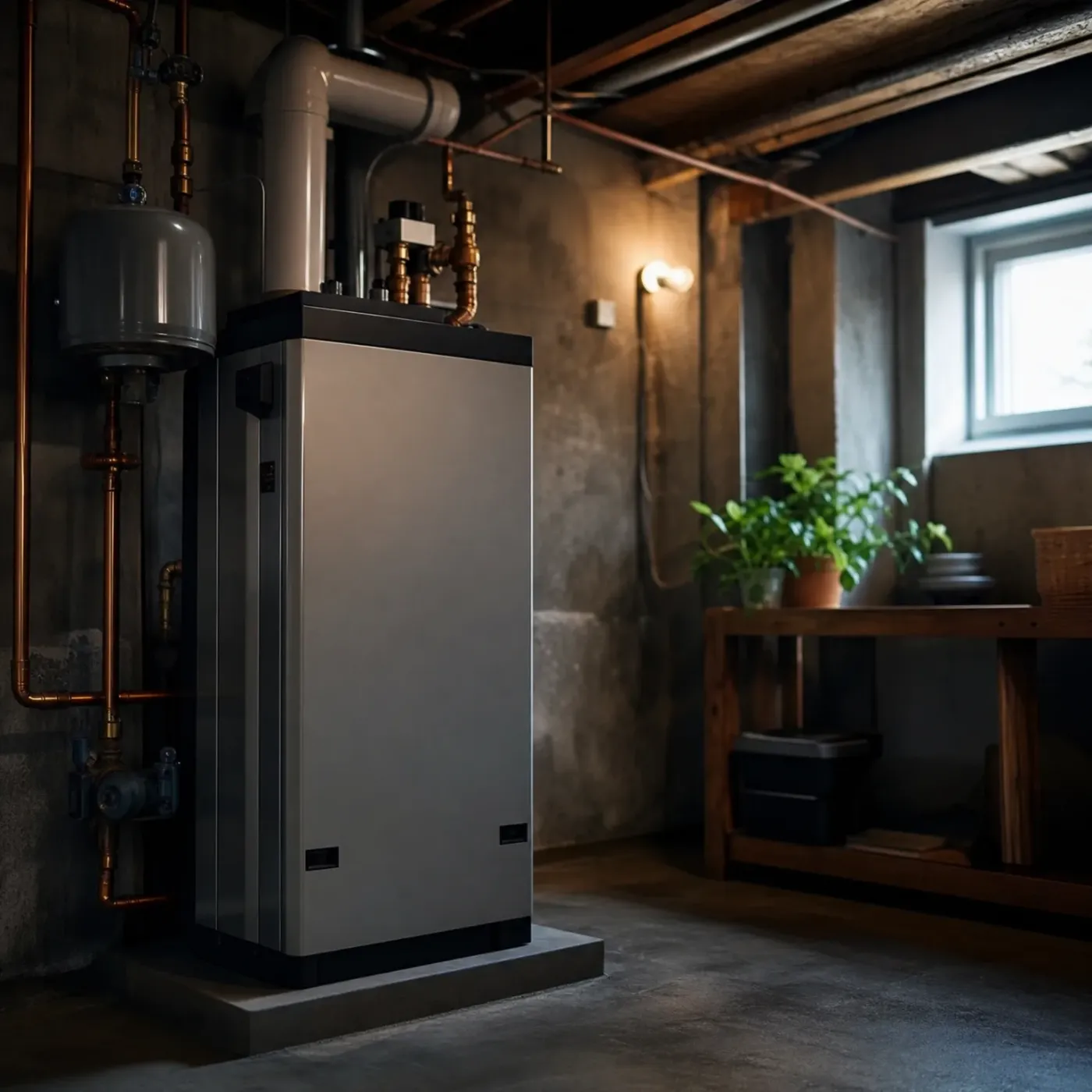
A floor-standing gray boiler unit on a concrete plinth in a basement, with copper pipes, an expansion tank, and a flue pipe above, a wall light, a small potted plant on a wooden shelf, and a window in the background.

A local pro for your boiler repair

Why your boiler is gurgling in Connecticut

Gurgling usually means air or water movement somewhere it shouldn't be, inside the boiler or in the pipes feeding your radiators. This page walks through what causes it and when it points to something worth having looked at. Connecticut winters put boilers to work for months at a stretch, and a contractor who services this equipment locally can tell you what's behind the noise in your system.

Get matched

That gurgling is usually air trapped in the system, or water moving somewhere it shouldn't be. Boilers push hot water through a closed loop, and if air gets into that loop, through a refill, a bleed valve, or a leak, it collects in the pipes and the radiators and makes that noise as it works its way through. Low water pressure can cause the same thing, letting air pockets form instead of a full column of water. A clogged or scaled heat exchanger can gurgle too, as water boils and churns against buildup instead of flowing smoothly. If your boiler just got refilled or bled, a little gurgling for a day or two is normal. If it keeps up through a full heating cycle, or comes with banging or whistling, the system is telling you something is wrong with the water or the pressure inside it, and it's worth having someone look before it strains the heat exchanger.

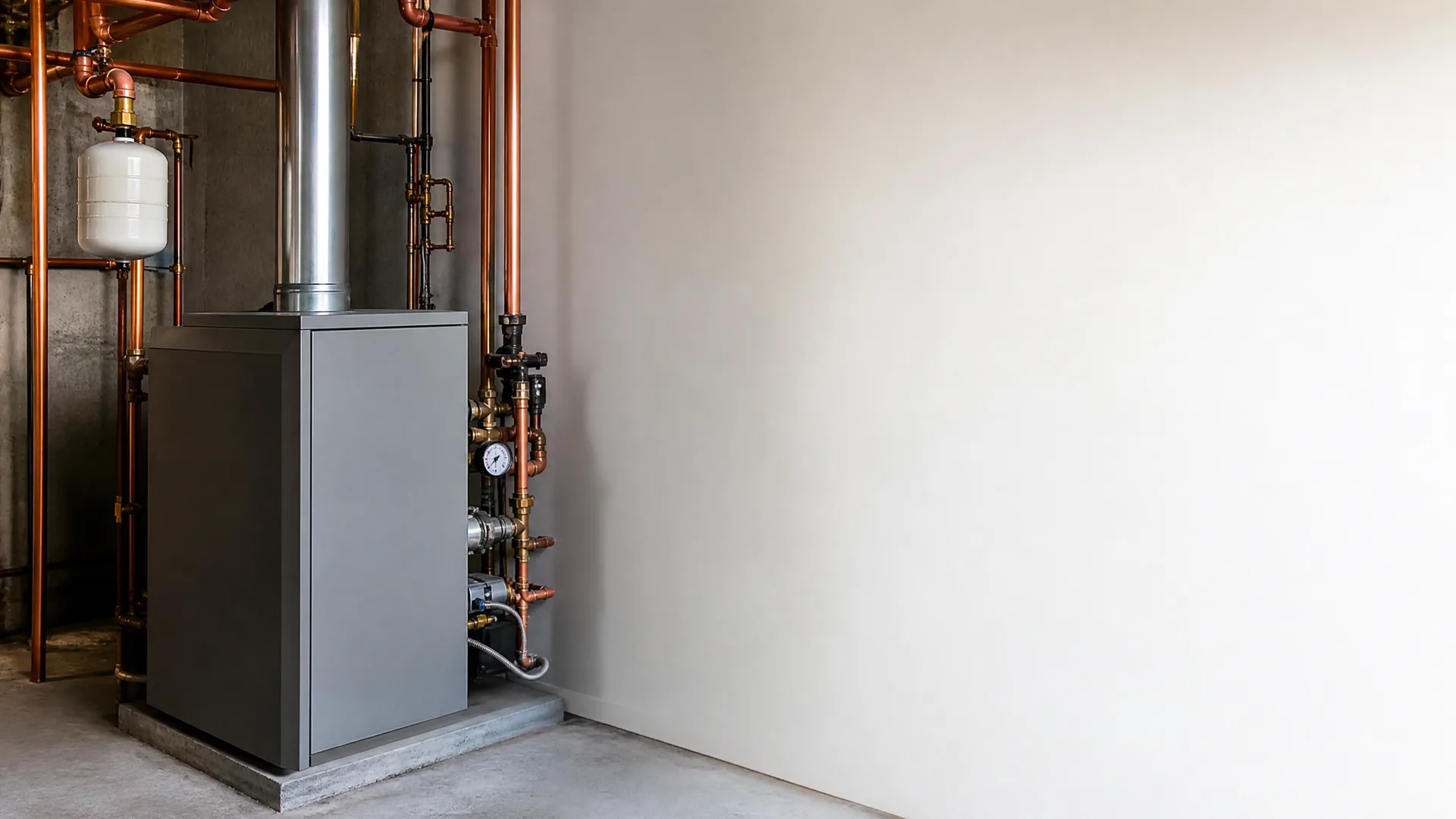
A grey floor-standing boiler with a metal flue and copper pipework, valves and a pressure gauge stands in the corner of a room with plain light walls and a concrete floor.

Why trapped air moves and knocks

A boiler loop has no room for air. Water fills it end to end, and a pump pushes that water through the pipes and up into each radiator. If air gets in, it rises, because air is lighter than water, and it settles at the highest points it can reach. That's usually the top of a radiator or a bend in the pipe near the ceiling. Water trying to pass that pocket has to push through it, and that push is what you hear.

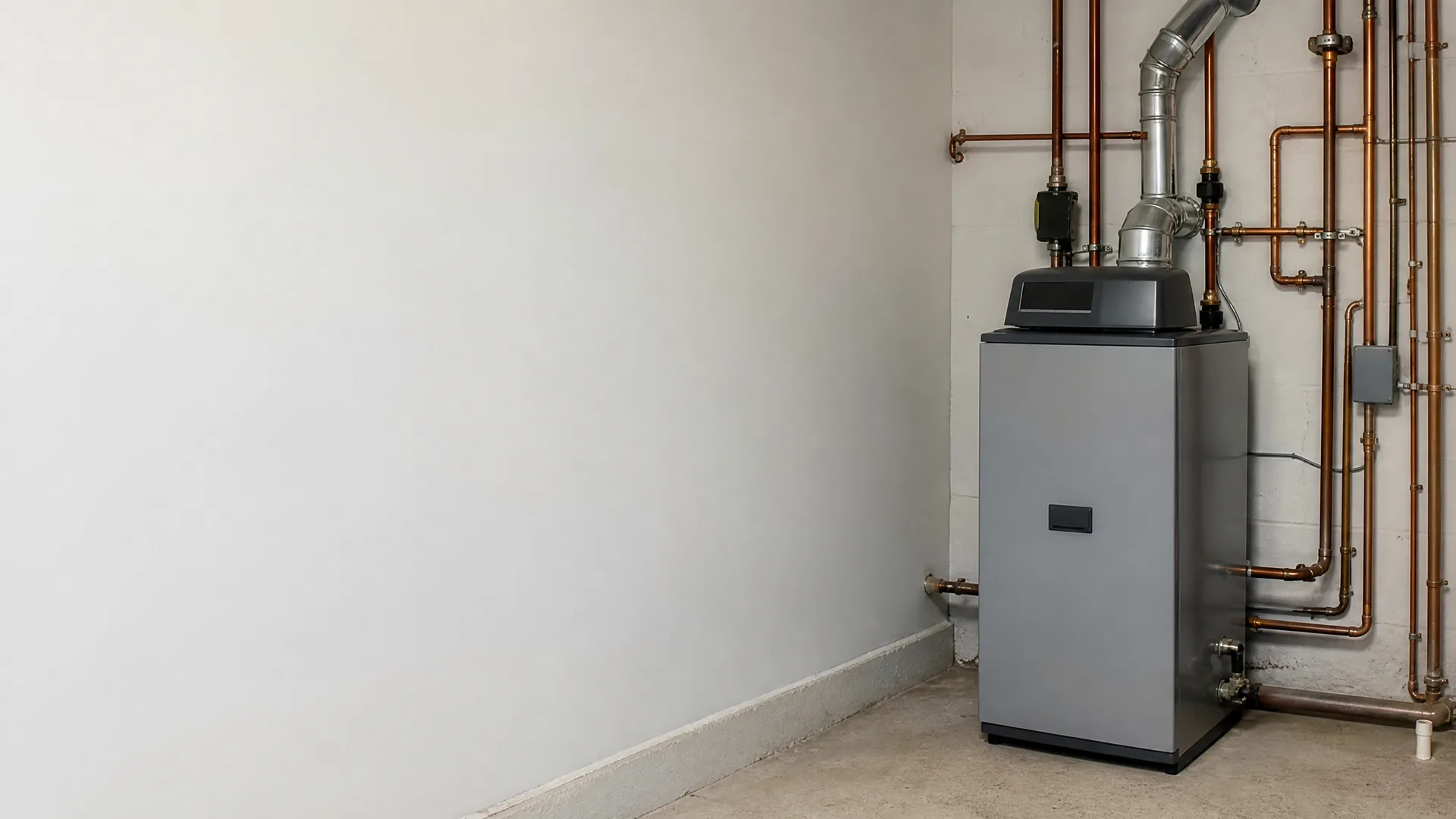
A gray floor-standing boiler with a metal flue pipe stands in the corner of a plain painted basement room, connected to copper pipes running along the wall.

What the sound tells a tech

Where the gurgling happens points to where the air or water problem sits. A radiator that gurgles only when it first heats up usually just needs bleeding. Gurgling from the pipes themselves, or from near the boiler, can mean the circulator pump is drawing in air, or that the pressure has dropped low enough for air to pull in at a fitting. A tech checks the pressure gauge first, then traces the sound back from there.

Bleed It or Call a Tech

Bleed it yourself

  • A radiator that gurgles but still heats up fully is usually just air trapped at the top of that one unit.
  • Bleeding it means opening the small valve with a key until water comes out steady, no hissing left.
  • This only works if the problem is air in a radiator, not a failing pump or a leak feeding more air in over time.
  • If the gurgling comes back within a week or two, bleeding didn't fix the cause, it just cleared the symptom.
  • You need the right key for your radiator's valve, and a cloth, since water will come out once the air clears.

Get it looked at

  • If more than one radiator gurgles, or the same one keeps filling with air after you bleed it, something upstream is feeding air into the loop.
  • A boiler tech checks the expansion tank, the automatic air vent, and the feed valve, the usual places air gets pulled in or trapped.
  • Low system pressure often causes the same gurgling and knocking, and that's a gauge reading, not something you can judge by ear.
  • A local contractor who services boilers all winter has likely seen this exact noise come from the same two or three causes in homes nearby.
  • Working on a closed water loop under pressure means a mistake can waste water or strand you without heat, which is why this isn't a repair most homeowners take on themselves.
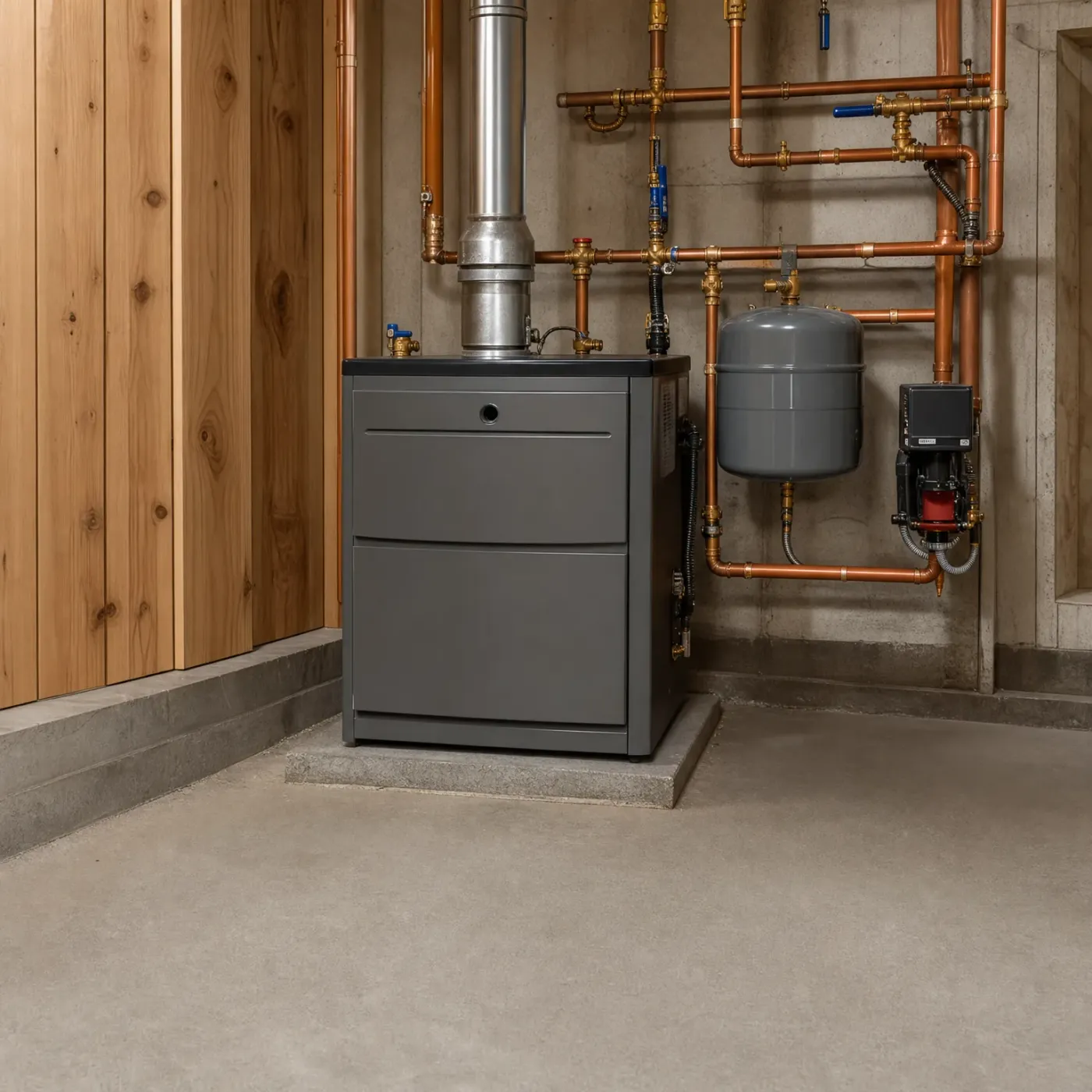
A gray boiler on a concrete pad in a basement, with a metal flue pipe and copper piping, brass valves, a gray expansion tank and a circulator pump mounted on the concrete wall beside wood paneling.

Quiet, and the water level holding

This is what a boiler loop looks like with no air in it. Water fills the pipes end to end, the expansion tank sits ready to take the water's expansion as it heats, and the pump moves it through without a sound. Nothing to bleed here.
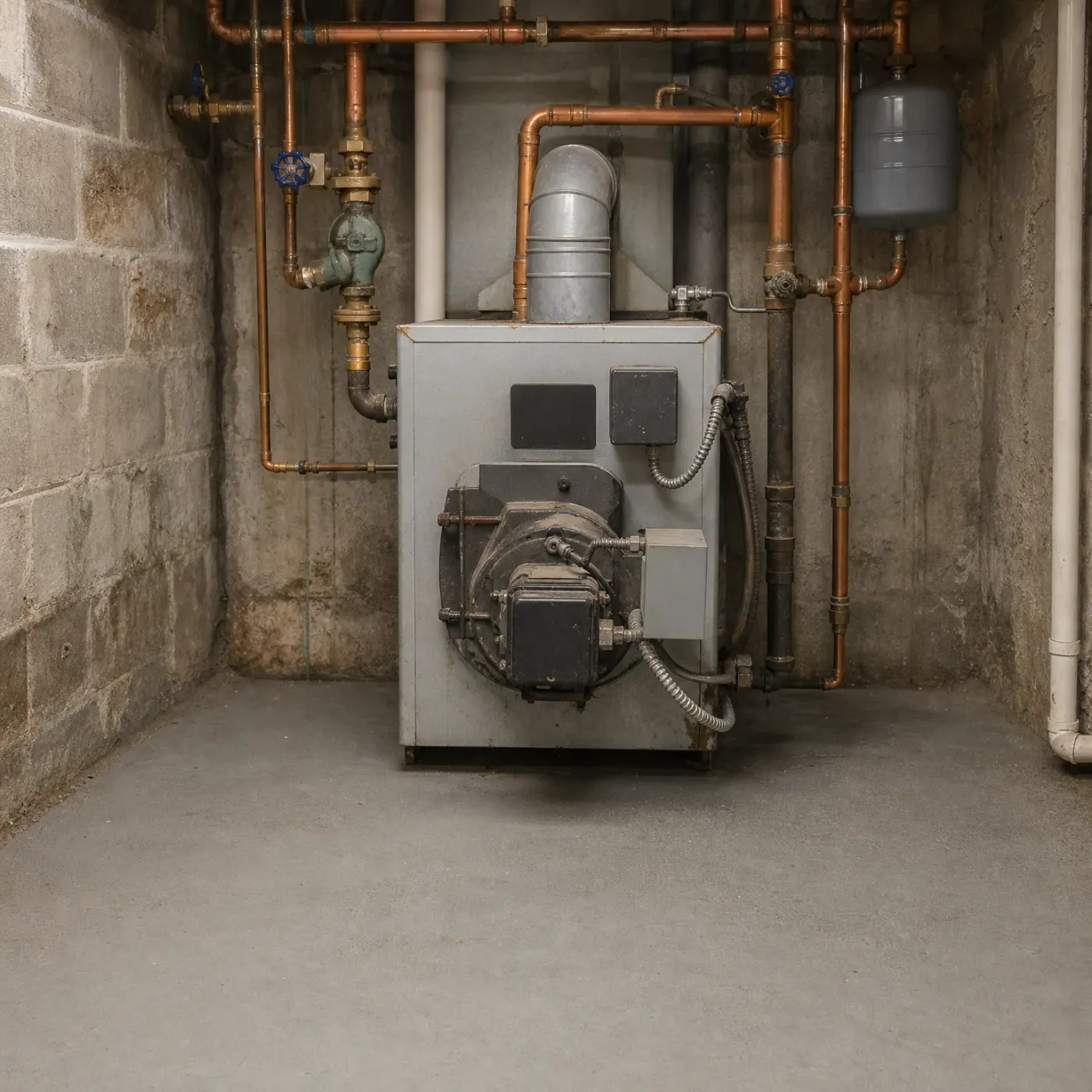

A gray boiler with a flue pipe and burner unit stands against a concrete block basement wall, surrounded by copper and steel piping, valves, and a gray expansion tank, on a bare concrete floor.

Open piping, old valves, a loop losing ground

Exposed pipe runs like this one have more joints and more shutoffs where water can seep out slowly. Once the system loses enough water, it draws in air to replace it, and that air is what you're hearing. The valves here are worth a look too.

A gray-haired man in a dark sweater sits on a light gray sofa in a living room, looking toward a sunlit window with trees outside.
A gray-haired man in a dark blue sweater sits on a light gray sofa in a sunlit living room, looking off to the side, with a potted plant, shelving unit, and large glass doors behind him.
A bearded man with graying hair in a dark green sweater sits on a sofa in a living room, looking off to the side, with a sliding glass door and a dim kitchen doorway behind him.
A gray-haired man in a dark knit sweater sits on a light gray sofa in a living room, looking toward a sunlit window, with houseplants, a lamp, and framed art in the background.

Get the right pro for your boiler

A boiler that's lost pressure or taken on air usually doesn't fix itself, and the longer it runs that way, the more it stresses the pump and the heat exchanger. In a Connecticut winter, that's not something to let ride. Bleeding one radiator yourself is one thing. Figuring out why the system keeps taking on air, or why the pressure keeps dropping, takes someone who's inside boilers like yours all season and knows which parts tend to go first. That's a different job than a quick fix, and it's worth getting right before the cold months are over. A local contractor who works on this equipment regularly can look at what's actually happening in your system rather than guess from a description of the noise. Your request goes to one contractor, not several, matched to boilers like yours and to Connecticut winters. From there, it's a phone call, not a truck showing up.

What you'll hear at the radiators

A radiator with air in it makes a knocking or gurgling sound right at the unit, and you'll likely notice one or two running cooler than the rest, maybe cold at the top while the bottom stays warm. If the noise is coming from inside the walls or near the boiler itself instead of the radiators, that's a different problem, usually low water or a pump pulling in air, and it won't clear with a bleed key.

What it does to your heat and your bill

A radiator half full of air gives you half the heat it should, so that room runs cold and you reach for the thermostat instead of the bleed key. The boiler ends up running longer to make up for rooms that aren't getting warm, and with Connecticut's power costs among the highest in the country, a boiler working harder than it needs to shows up on the bill fast, all winter long.

Winter nights average 23°F statewide

At 23°F, a boiler with air in the loop is working against both the cold and itself. That trapped air keeps water from reaching parts of the system that need it, right when your house is asking the most of it. Nights like that aren't the time to let a gurgle go unchecked.

NOAA nClimDiv 1991-2020 county normals weighted by homes

Bleed the radiators yourself and the gurgling stops, and that's the end of it. Air was the whole problem, and it's gone.

Bleed them and the gurgling comes back in a few weeks, and that points to something feeding air or losing pressure on its own, worth having a contractor look at before a cold snap finds it first.

A middle-aged woman with shoulder-length dark hair, wearing a gray cardigan over a cream top, sits in an upholstered armchair and looks toward a sunlit window, with a shelf holding framed pictures and a plant behind her.
A woman with her hair in a bun holds a sleeping young child against her chest, both wrapped in a textured beige knit blanket on a sofa in a dimly lit room with a lamp, framed picture, and bookshelf behind them.

Where That Leaves Your Boiler

  • Gurgling means air or water moving where it shouldn't, and bleeding the radiators tells you which one it is.
  • If the sound stays gone after bleeding, air was the problem and it's resolved.
  • If it comes back within weeks, something is feeding air or losing pressure, and that calls for a look at the boiler itself.
  • A Connecticut winter is a hard time to run a boiler that's losing pressure or taking on air.
  • A contractor who works on boilers all winter in this state has seen which parts usually cause this and checks those first.
  • You'd be matched with one local, licensed contractor for your situation, not a list of companies calling you.

Gurgling comes down to one of two things: air sitting where it shouldn't, or water moving somewhere it shouldn't. Bleeding the radiators is how you find out which. Stops for good, and it was air, simple as that. Comes back in a few weeks, and the system is feeding itself air or pressure from somewhere, which means the boiler itself needs a look, not just the radiators.

None of that is a good thing to leave sitting through a Connecticut winter. A boiler losing pressure or taking on air is working harder than it should right when the house needs it most, and that's hard on the pump and the heat exchanger both.

This is also the kind of problem that's easy to misread if you don't see it every day. Someone who works on boilers all winter in this state has already seen what usually causes a loop to keep losing pressure or pulling in air, and knows where to check first instead of guessing.

If you request a repair through this page, you're matched with one contractor, licensed and local to Connecticut, not a handful of companies competing for the job. That contractor reaches out to you directly about your boiler, not a general case. For a system that's already told you something's off, that's the more useful way to get it looked at.

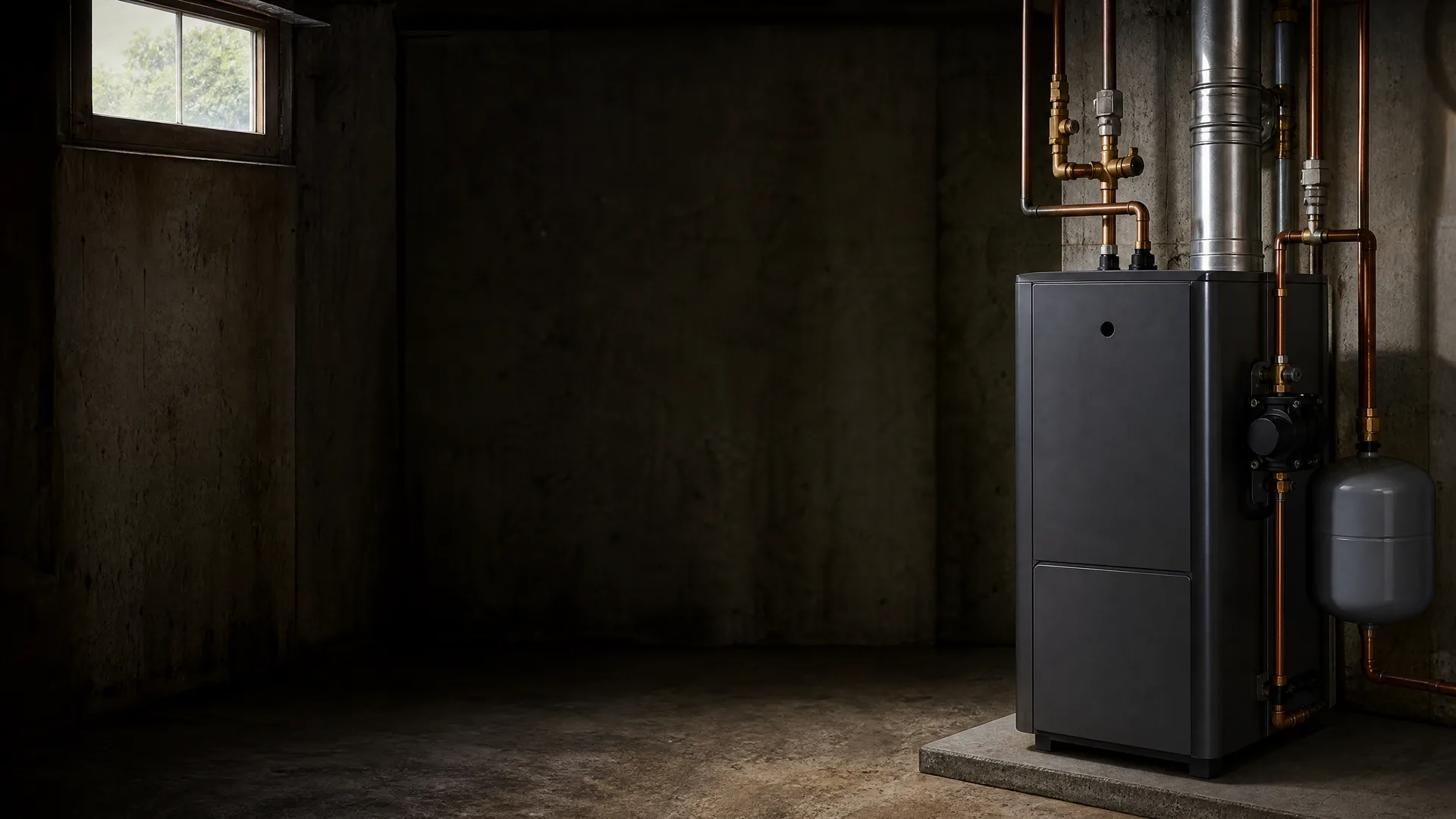
A dark grey boiler unit on a concrete pad in a dim basement, with copper pipes, a metal flue, and a grey expansion tank on the wall, and a small window with daylight on the left.

A pro who works on boilers

Only one pro gets your request, so you hear from one company.

RepairBoilerConnecticut
Step 1 of 2

What ZIP code is the job in?