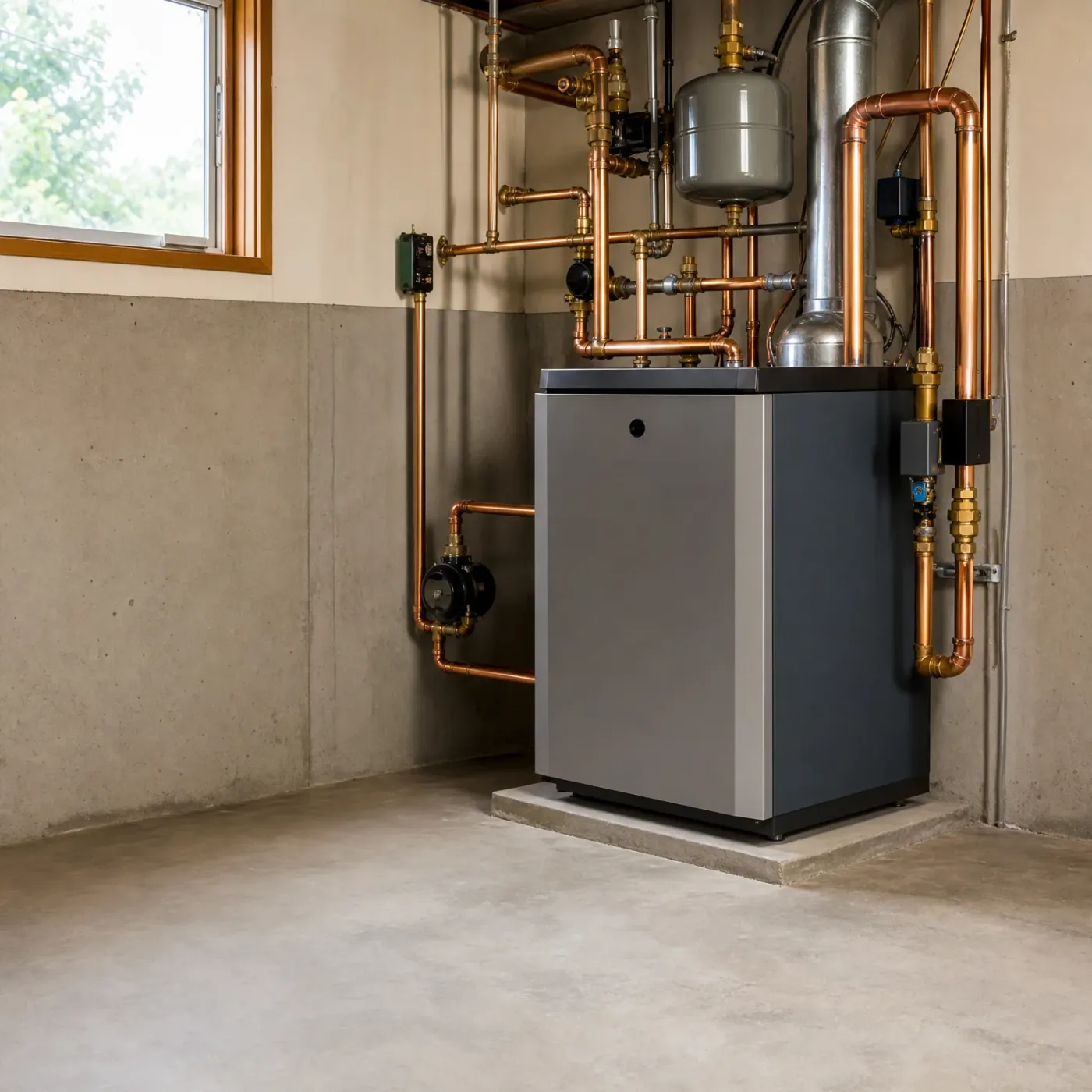
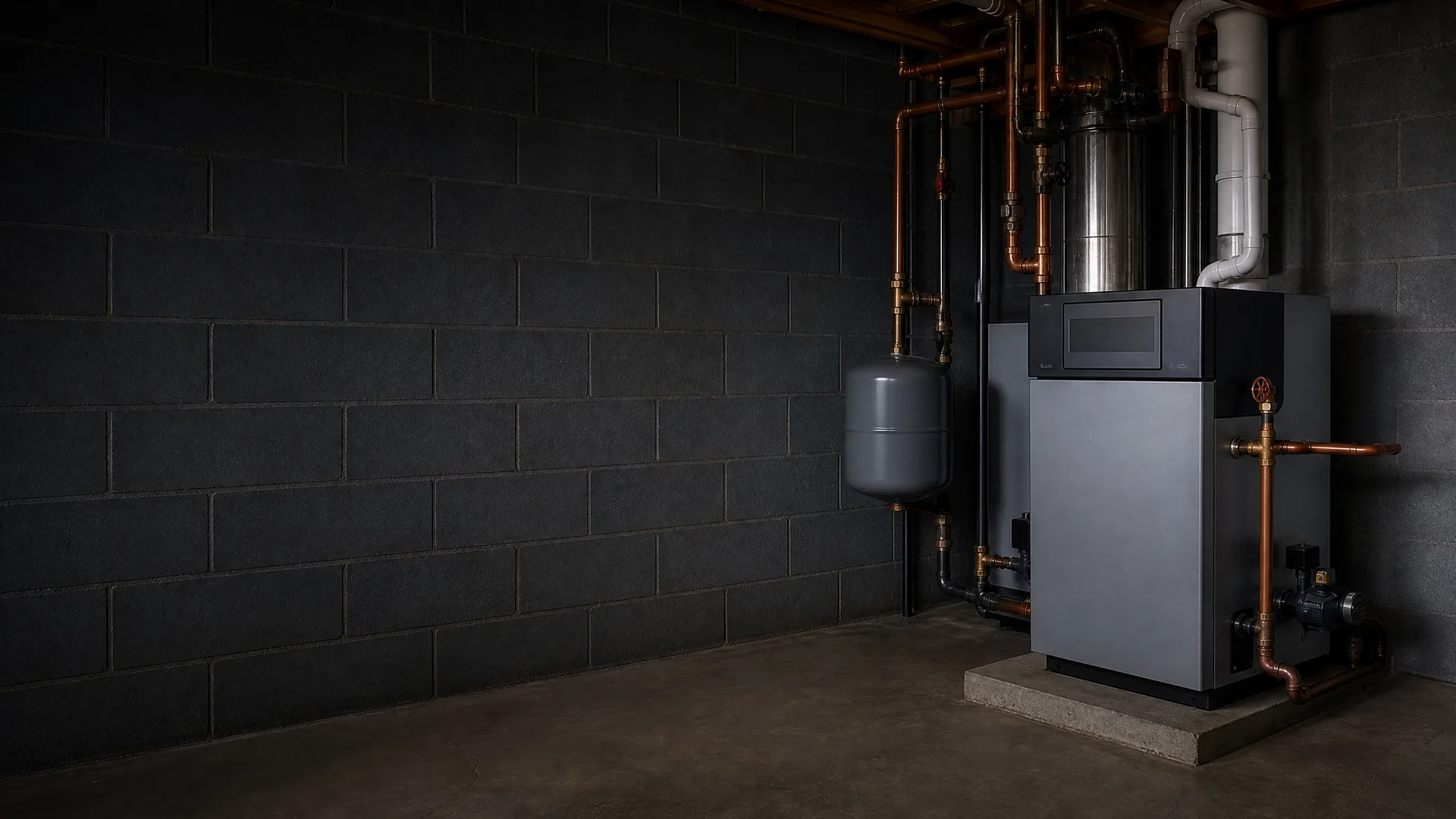
A dark grey floor-standing boiler with a metal flue stands against a concrete basement wall, surrounded by copper pipework, valves and a wall-mounted expansion tank, with ivy and a shelving unit at right.

Let someone else find the pro

Boiler carbon monoxide signs in Connecticut

A boiler leaking carbon monoxide doesn't always set off an alarm right away. Soot near the flue, a yellow flame instead of blue, a headache that only shows up at home, these are the signs worth knowing. This page goes through what to look for and what it means for a Connecticut boiler. Once you send the form, you're done hunting for someone to look at it.

Let a pro reach out

A yellow or flickering flame where it used to burn blue is usually the first real clue, because it means the boiler isn't getting enough air to burn gas cleanly, and carbon monoxide is a byproduct of that incomplete burn. Soot staining around the flue pipe or the front of the unit points the same way. So does rust or water streaking near the vent, since a cracked heat exchanger or a blocked flue can push exhaust back into the house instead of outside. Watch for the signs in your body too: headaches, nausea or feeling drowsy only when you're home and better when you're out of it, especially in the rooms closest to the boiler. Connecticut winters mean this boiler runs for months at a stretch, so a venting problem that starts small in November doesn't get a break before spring. If you notice any of this, the boiler needs to be looked at and shut off until it is.

A smiling man in a gray long-sleeved shirt stands in a kitchen looking to the side, with open shelves of dishes, a white mug on the counter, a potted plant, and a view through a doorway into a living room.
A smiling bearded man in a green sweater sits at a white marble kitchen island with a mug, potted plant and bowl of fruit, in a bright white interior with open shelving and an arched doorway.
A smiling man with dark curly hair and a beard, wearing a dark green knit sweater, stands at a white marble kitchen counter with a dark blue mug, with open shelving, pendant lights and a houseplant behind him.
A smiling man in a green ribbed sweater stands behind a wooden table holding a ceramic mug of coffee in a kitchen with white subway tile, shelves of potted plants, and a bowl of fruit.

Most of this comes down to venting and air. A boiler burns gas cleanly when it has enough air to work with and a clear path up the flue for the exhaust. When either one is off, the signs show up in places you can actually see. Check the draft hood above the burner. If warm air is drifting back into the room instead of pulling up and out, the exhaust isn't leaving the house the way it's supposed to. Look at the flue pipe itself for rust or wet streaks, since that's often flue gas condensing where it shouldn't. A pilot that won't stay lit, or burns orange instead of a steady blue, is struggling with the same air problem. Rooms around the boiler running warmer or stuffier than the rest of the house can mean combustion air is escaping somewhere it shouldn't. Even a chalky stain on the burner compartment is residue from gas that didn't burn all the way. None of these need a diagnosis on the spot, but none of them are nothing either. A detector that trips twice is telling you something real, not something to silence.

What a closer look turns up

  • A draft hood or draft diverter that keeps spilling warm air into the room instead of up the flue means exhaust gas is coming back inside.
  • Condensation or rust streaks on the flue pipe itself often point to flue gas that isn't venting the way it should.
  • A pilot light that keeps going out, or that burns orange and lazy instead of steady, is working with the same bad air supply that produces carbon monoxide.
  • Rooms near the boiler that feel noticeably warmer or more stuffy than usual can mean combustion air is leaking out where it shouldn't.
  • A chalky white or yellow stain forming on the boiler's burner compartment is a residue left by incomplete combustion over time.
  • If a carbon monoxide detector near the boiler trips more than once, that is not a false alarm to reset and ignore.
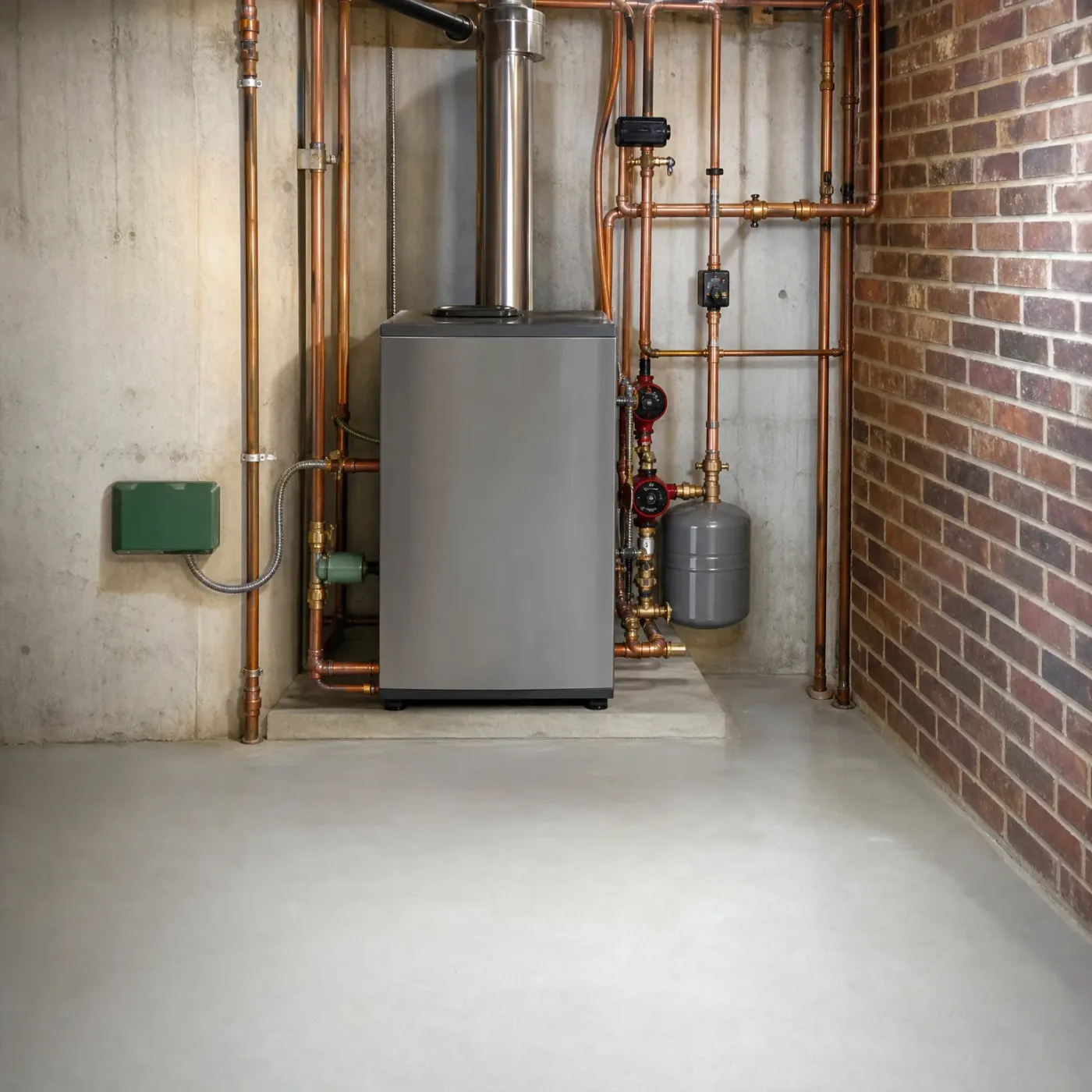
A gray boiler on a concrete pad in a basement, connected to copper piping, valves, pumps and a gray expansion tank, with a concrete wall on the left and a brick wall on the right.
A boiler venting correctly burns clean, with a steady blue flame and every pump and pipe doing its job out in the open.
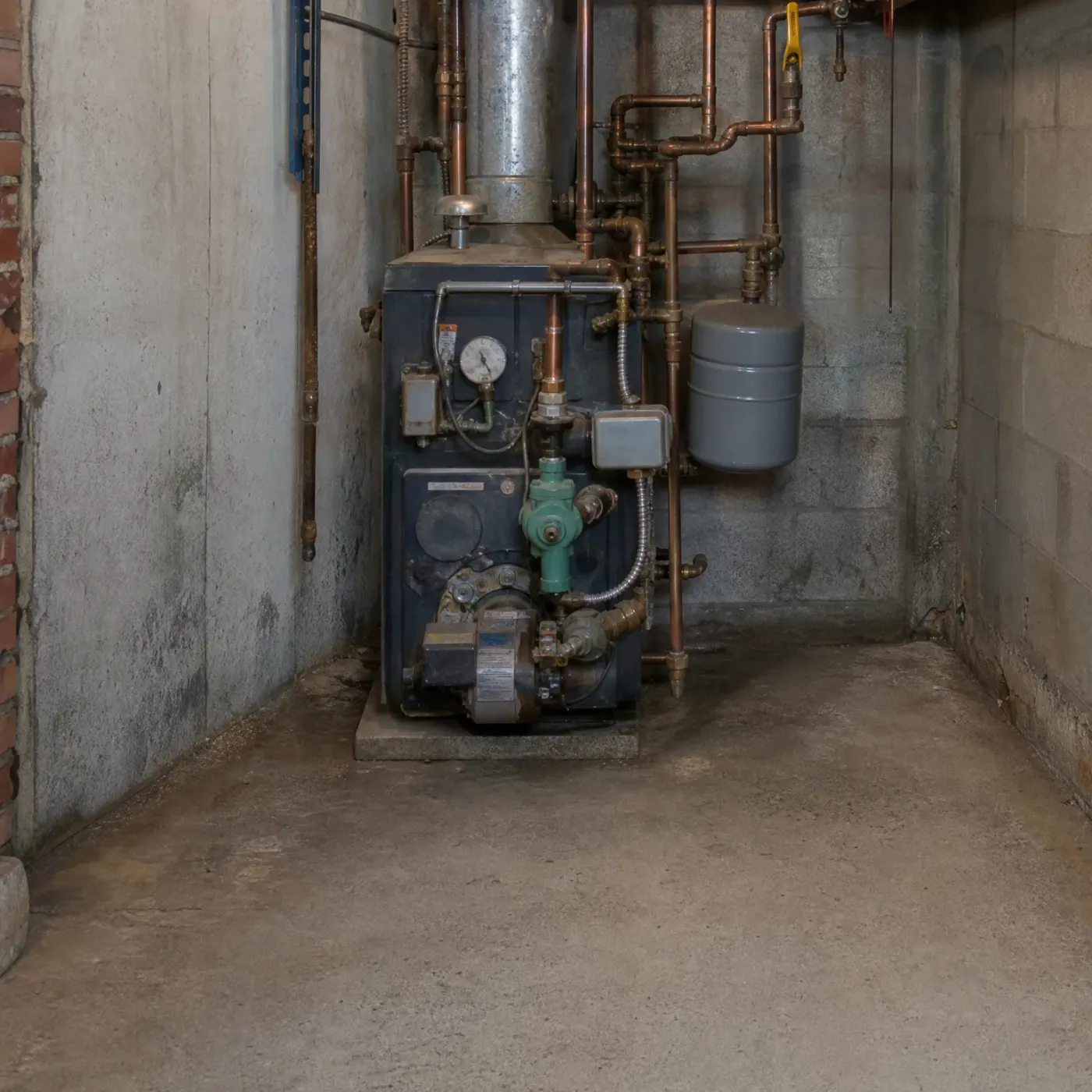
A dark cast-iron boiler with copper piping, pressure gauge, and a gray expansion tank sits on a concrete pad in a basement corner with concrete block and brick walls.
A boiler venting poorly can look just as ordinary, with the danger sitting unseen inside the flue and the firebox.
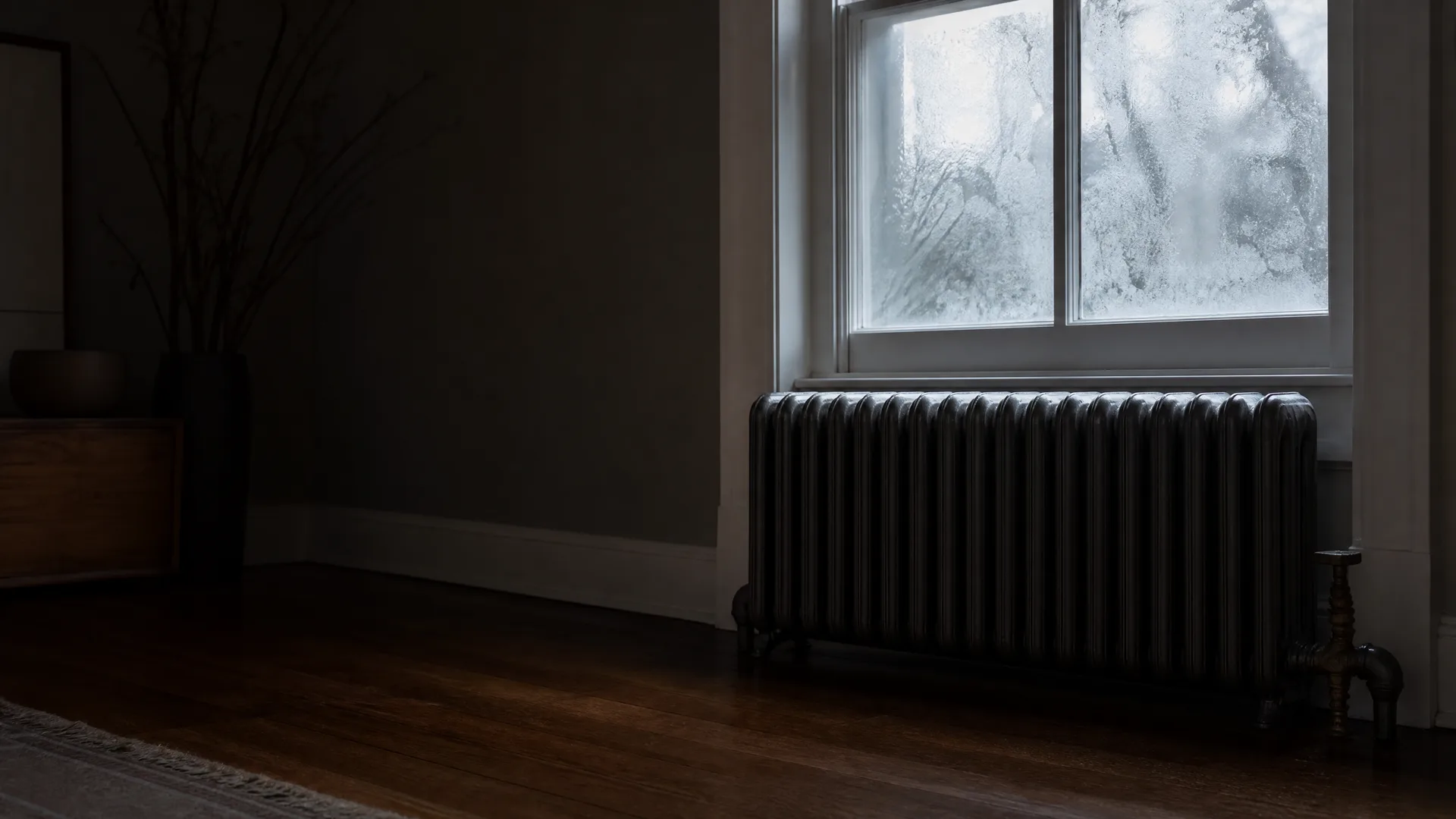
A cast-iron column radiator stands beneath a frosted window in a dim room with dark walls, a wood floor, and a vase of bare branches on a low cabinet at left.

The radiator under the living room window has been ticking since five, but the glass is still cold enough to fog from the inside. You notice it when you sit down with your coffee: a skim of ice on the lower pane, right where the cast iron should be throwing heat. The boiler's been running most of the night to hold the house against a Connecticut January, and the air near the window smells faintly off, almost like a struck match that didn't catch. You crack the sash an inch out of habit more than thought. Downstairs, the burner cycles on again, and you find yourself listening to it a little longer than you used to.

One request and it's handed off

A furnace tech can check a boiler's flame, flue, and draft in one visit and tell you for certain whether carbon monoxide is getting into your house. Finding that person yourself in Connecticut means calling around, asking who's licensed, who actually works on boilers instead of just furnaces, and who can come before another cold night goes by with that flame burning yellow. Send the request here and that search is done for you. One contractor gets it, not five, so you're not stuck comparing quotes or repeating the same description of a sooty flue pipe to every plumber you reach. There's no cost and no obligation to send it. A boiler that's venting poorly doesn't announce itself loudly, and with Connecticut winters running the heat for months at a stretch, that's not something to sit on while you figure out who to call. Let the finding part be someone else's job so you can deal with the boiler itself.

How the Flue Actually Works

  • A boiler's burner pulls combustion air from the room or a dedicated intake, and anything blocking that air starves the flame.
  • The flue should carry exhaust straight up and out, pulled by either natural draft or an induced draft fan depending on the boiler.
  • A cracked heat exchanger lets flue gas mix with the water loop's air supply instead of staying sealed off from the house side.
  • Backdrafting happens when something depressurizes the room, like a bath fan or dryer running, and pulls exhaust back down the flue.
  • A technician checks draft with a smoke pencil or manometer at the hood to see which way the air is actually moving.
  • Spillage at the draft hood for more than a minute after startup usually means the flue isn't pulling the way it should.

A boiler burns gas and needs somewhere for that combustion air to come from, either the room around it or a dedicated intake pipe. Block that path, even partly, and the flame starves for oxygen and burns dirty. The flue's job is to take the exhaust from that flame and carry it straight outside, either on its own through natural draft or pushed along by an induced draft fan, depending on how the boiler was built. When that path works, the draft hood or diverter pulls room air in to dilute the exhaust, and nothing spills back out. When it doesn't, you get backdrafting, which is just exhaust finding the easiest way out, and sometimes that way is back into the house instead of up the flue. A bath fan, a dryer, even a strong range hood running at the same time can drop the pressure in the house just enough to pull exhaust down instead of letting it rise. A cracked heat exchanger is a separate problem but a related one, since it lets flue gas cross into the water side of the system instead of staying contained. A technician checking any of this uses a smoke pencil or a manometer right at the draft hood, watching which way the air actually moves rather than guessing from the outside. Spillage that lasts past the first minute of startup, after the flue has had time to warm and start pulling properly, is usually the sign that something in that path isn't doing its job.

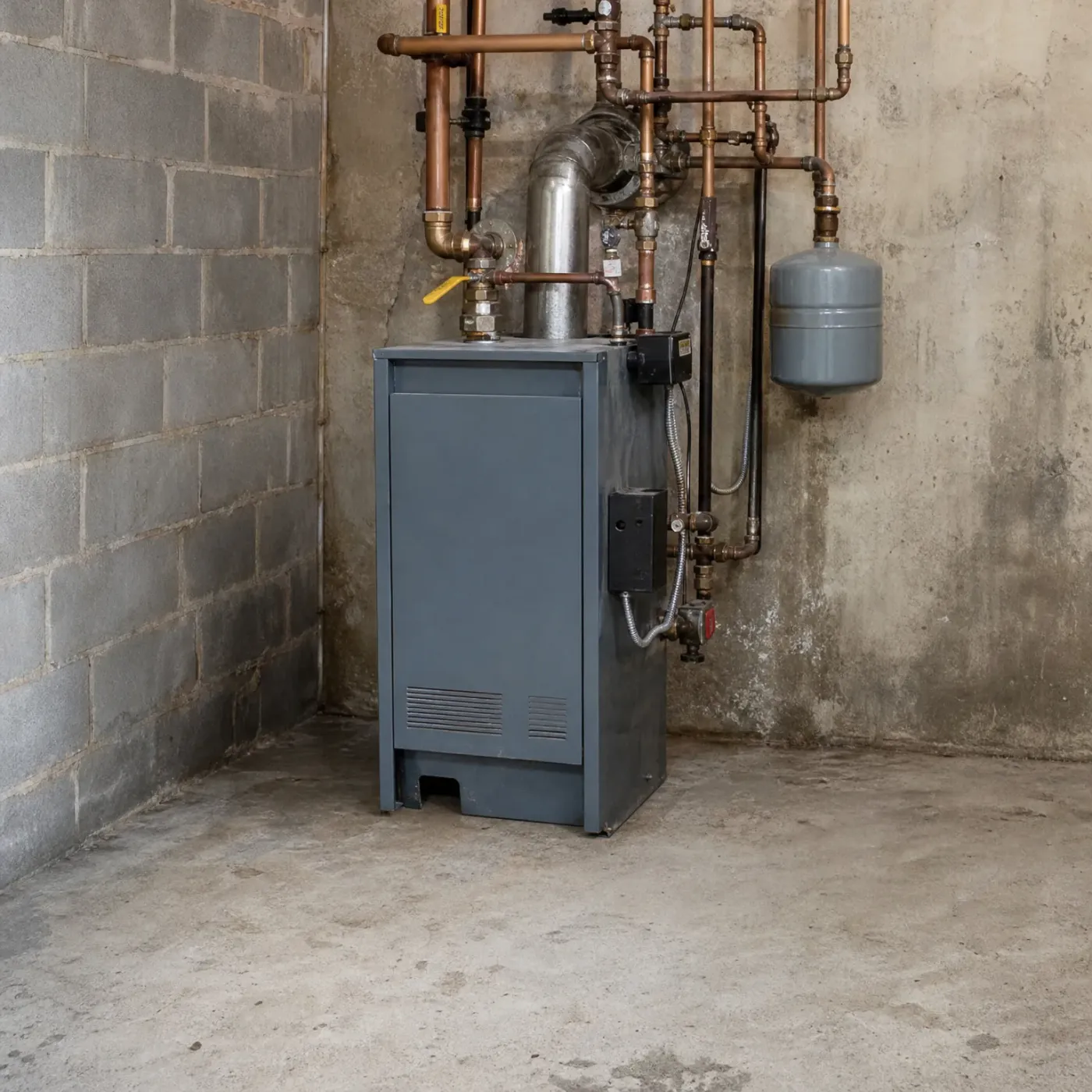
A gray floor-standing boiler in a basement corner with copper and black piping above it, a flue vent, and a gray expansion tank mounted on the concrete wall beside a concrete block wall.
Before you get your boiler repair
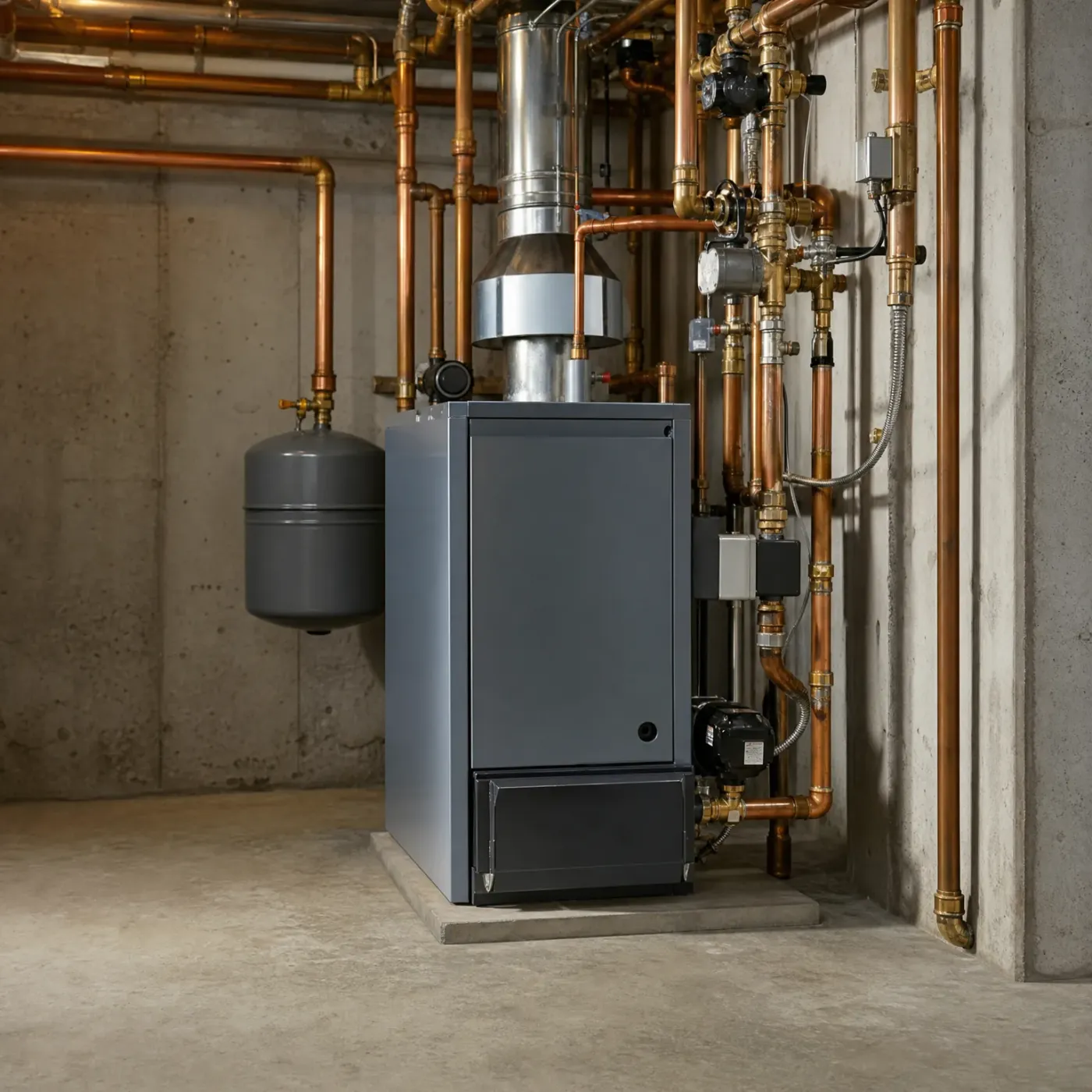
A gray floor-standing boiler on a concrete pad in a basement corner, connected to copper piping, brass valves, a circulator pump, an expansion tank, and a metal flue, with a window at upper left.
After you get your boiler repair
A gray boiler on a concrete pad in a basement, connected to copper piping, valves, circulator pumps, a metal flue, and a wall-mounted expansion tank.

Venting clean

This is what a boiler burning correctly looks like. The flame stays blue, the flue carries exhaust straight up, and the pipes and pumps around it just do their job without any smell or stain to notice. Nothing here calls attention to itself, which is the point.

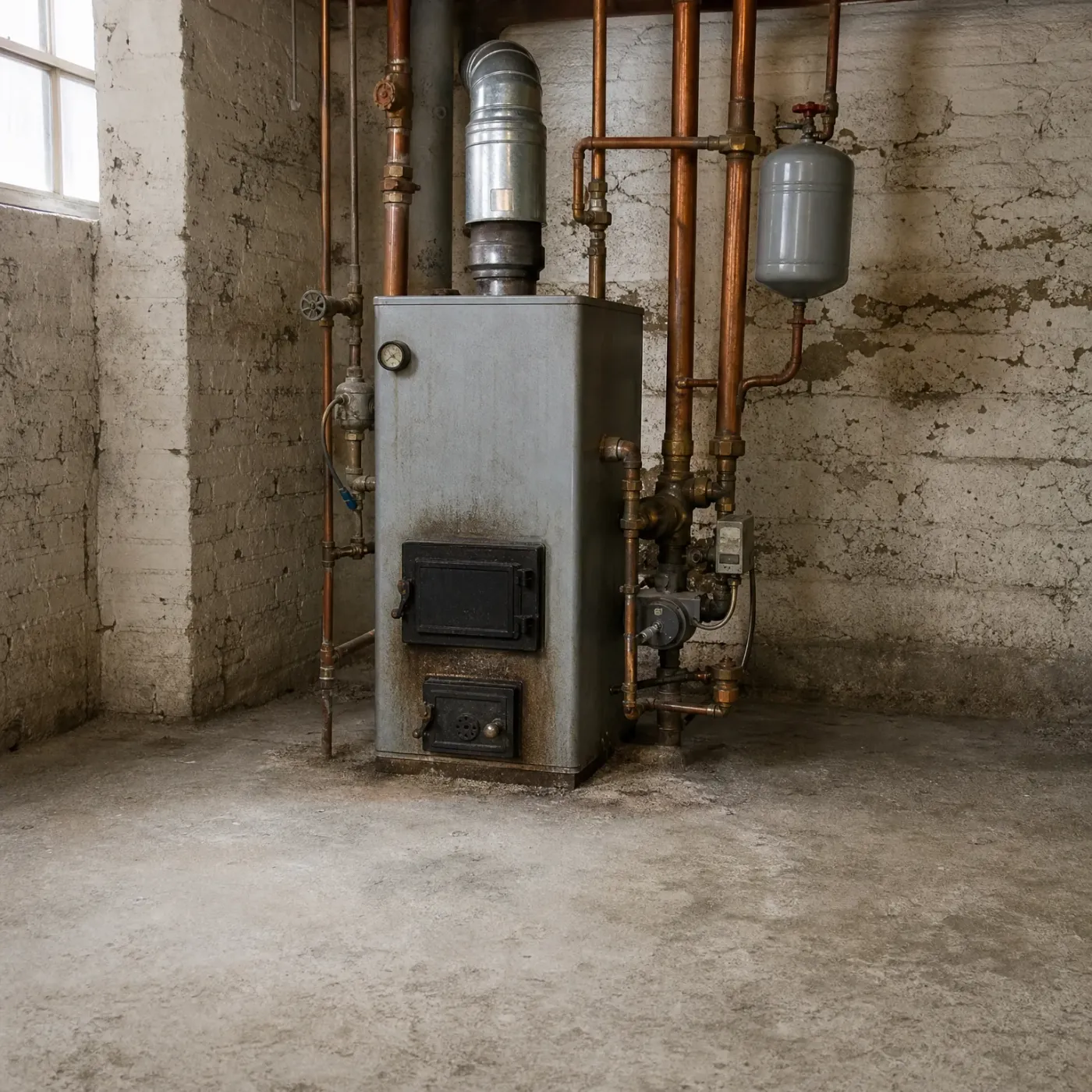
An old gray boiler with copper piping, a flue duct, pressure gauge and an expansion tank stands in the corner of a basement with painted masonry walls and a bare concrete floor.

Venting poorly

This boiler can look just as normal sitting in the corner. The trouble is in the flue and the firebox, not on the outside, so staring at it won't tell you what's wrong. A furnace tech checking the flame and draft will catch what your eyes can't.

Winter nights average 23°F statewide

On a 23°F night your boiler is running close to flat out for hours at a stretch, and it stays there most of the winter. That's long burn cycles with no break to show a bad flame or a flue problem on its own. A quick check now catches what a short, mild night would hide.

NOAA nClimDiv 1991-2020 county normals weighted by homes

A smiling man with dark curly hair in a navy t-shirt sits on a gray couch indoors, with a large-leafed plant and a window in the background.
A bearded man in a plaid flannel shirt stands in a kitchen looking out a window toward snow-covered shrubs, with a steaming mug on the windowsill and potted plants on a shelf behind him.
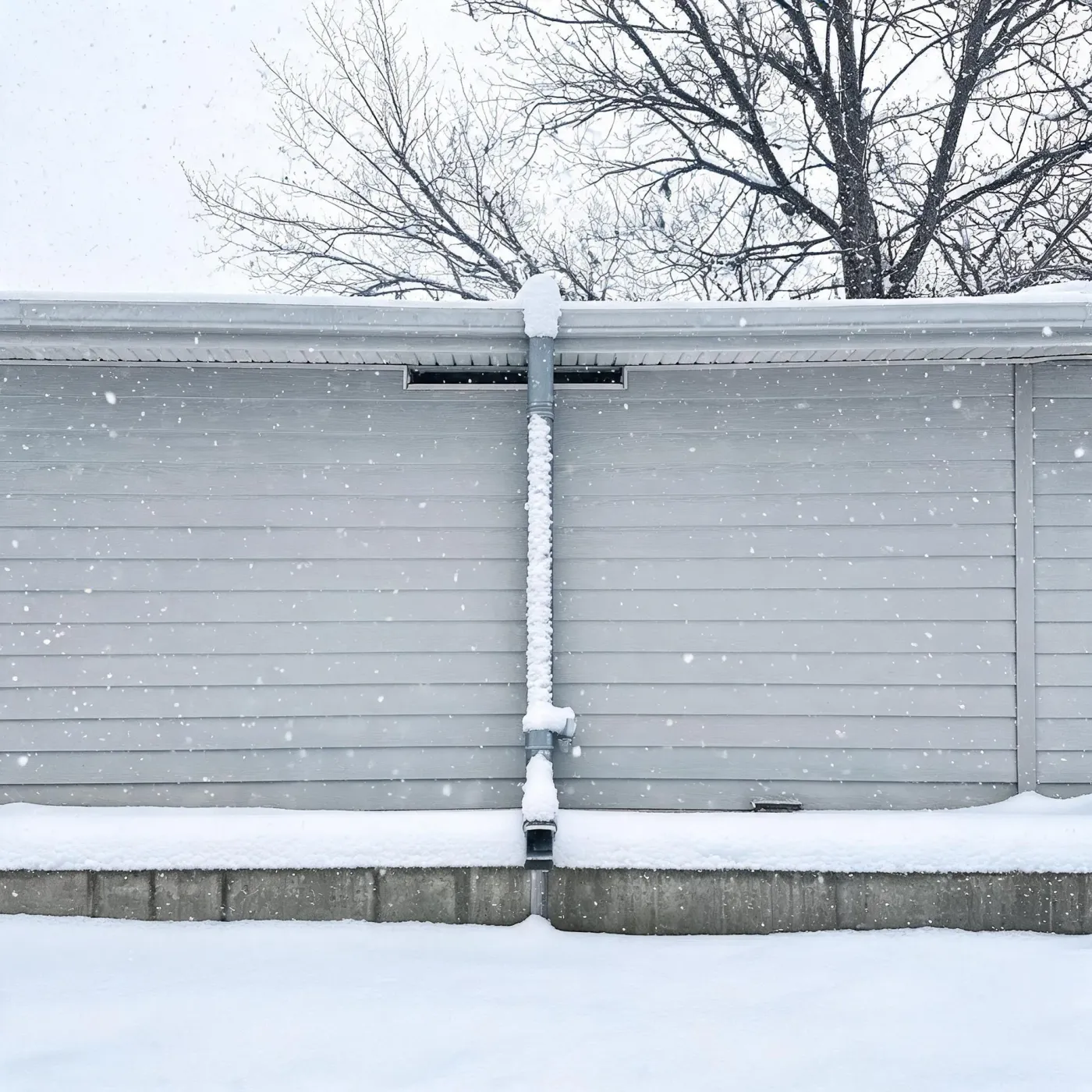
Exterior wall of a building with light gray horizontal siding and a snow-covered downspout running down its center, with bare trees behind the roofline and falling snow over deep snow on the ground.

Statewide, winter nights average 23°F, and Connecticut boilers answer that by running long, steady cycles instead of short bursts. A long burn is exactly when a starved flame or a blocked flue does the most damage, because the boiler has hours to push exhaust wherever it's escaping to instead of up the flue. You might notice a room that stays stuffy with the windows shut, a flame that looks more orange than blue once the burner's been going a while, or a headache that eases as soon as you step outside. None of that is normal boiler behavior in cold weather. It's worth checking before the next cold snap settles in.

NOAA nClimDiv 1991-2020 county normals weighted by homes

A closed laptop and a cream mug of coffee on a coaster sit on a dark wooden table, with a potted plant at left and a kitchen counter, tiled backsplash and shelf of ceramics in the background.

A blue flame, a clear flue, no smell in the house

That's what you're checking for. A boiler running right burns blue and quiet, vents straight up through the flue, and leaves no soot, no rust streak, no headache that clears up the moment you leave the house. If your boiler is showing any of the signs this page went through, that's a reason to get it looked at, not a reason to panic.

What a furnace tech saves you is the part you'd otherwise be stuck doing alone: calling around to find someone licensed who works on boilers, explaining the yellow flame and the soot and the cold window all over again to each one, then sitting with a stack of quotes trying to tell them apart. Send the form and that work is off your plate. Someone qualified gets the message, and you can stop chasing it down yourself.

A living room corner with a light beige sofa holding a textured taupe cushion, a large ceramic vase of olive branches by a window, a framed neutral artwork on the wall, and a dark bowl with stacked books in the foreground.
A gray boiler unit with a control panel sits on a concrete pad in a basement room with dark concrete block walls, connected to copper and metal piping, a gray expansion tank, and an insulated flue.

Done looking for a boiler pro

Describe your boiler job once, to one pro.

RepairBoilerConnecticut
Step 1 of 2

What ZIP code is the job in?