





Why your boiler relief valve is leaking in Connecticut

RepairBoilerConnecticut
Step 1 of 2

What ZIP code is the job in?

Why is the relief valve on my boiler leaking?

A drip from that valve on top of or near the boiler usually shows up on the floor or in the pan underneath, and it's enough to make anyone with a family at home want to shut the system down. Before you do that, it helps to know what the valve is actually for and what it's reacting to.

It's releasing pressure or temperature the boiler shouldn't have

The relief valve exists to open when pressure or water temperature inside the boiler goes above a safe limit, so a leak there almost always means it's doing its job in response to something else going wrong. Too much pressure can come from a bad expansion tank, a feed valve letting in too much water, or a fault in the system that's raising the temperature past what the valve is rated for. A valve can also leak on its own once it's old, even with normal pressure, because the seal inside wears out. Either way, a leaking relief valve isn't something to ignore or just tighten down. It's telling you the boiler is under more pressure than it should be, and that needs a look before it causes bigger damage.

A cast iron column radiator with a valve stands beneath a window with a frosted pane showing snowy trees outside, in a dim room with dark walls and wood flooring.

You're up before the rest of the house, and the living room is cold enough that you can see your breath near the window. The radiator under it ticks as it heats, but the glass above has frosted on the inside, a thin skin of ice at the corner where the sash meets the frame. You go to check the boiler and find water pooled in the pan beneath it, a slow drip still falling from the valve. Outside it's well below freezing, the kind of Connecticut morning where the furnace or boiler can't really stop. You stand there weighing it: let the drip keep going, or shut the system down and let the house go cold with everyone still asleep upstairs.

Is this leak something you need to worry about

A wet patch on the floor near the boiler is the first thing most people notice, or a stain on the pan underneath if one was installed. Sometimes it's just a few drops after the burner runs, drying before you see them, and sometimes it's a steady drip that never stops. You might hear a hiss from the valve itself, or notice the smell of hot metal if water is hitting the burner below. Left alone, a steady drip wastes water and can rust the valve and the fittings around it, and a valve that's seized from scale can fail to open when the boiler actually needs it to.

A woman in a knitted shawl sits in a living room with a fireplace, shelves, a sofa with cushions, and a lamp by a bright window, looking off to the side.
A woman with long brown wavy hair in a green shirt over a white top stands in a living room with built-in white shelves, a ceiling fan, a potted plant and a sliding glass door.
A woman with shoulder-length gray-streaked hair in a light gray knit sweater stands smiling and looking off to the side in a living room with a sofa, houseplant, framed picture, and sunlit sliding glass door.
A woman with shoulder-length curly gray hair wearing a gray knit sweater stands near a window with a sheer curtain, looking to the side, with a blurred interior room behind her.

Hand off the search today

Your request stays with one local pro.

There's no charge for the request.

What the valve is built to do

The relief valve exists to open before pressure gets high enough to do damage. It's set to lift around 30 psi, which is well above the 12 to 15 psi a boiler normally runs at. So when it starts weeping, the system is telling you something upstream has changed. It might be a bad expansion tank, a fill valve stuck open, or just a worn seat that won't seal anymore at normal pressure. Either way, the valve itself is doing its job. It's the rest of the system a contractor needs to look at.


Why the drip gets worse with cold

A boiler works harder on the coldest mornings, and that means more cycles, more pressure swings, and more chances for a weak valve to show it. If you've noticed the drip picking up on the days the radiators run longest, that's not a coincidence. A valve that only seeps a little in October can be leaking steadily by January once the burner is firing most of the night. Connecticut winters put that kind of strain on a system every year, which is why a small leak rarely stays small on its own.

A woman and a child wrapped together in a knitted gray blanket on a couch, with the child's head resting on her shoulder and a lit table lamp and houseplant in the background.
An older woman with gray hair in a bun and glasses, wearing a beige knit sweater, smiles while looking to the side in a warmly lit kitchen, with a loaf of bread on the counter in the foreground and a snowy scene outside the window.

High pressure versus a worn seat

Sometimes the valve is doing its job. If the pressure gauge reads above 20 psi, something upstream is pushing the system too hard, often the feed valve or the expansion tank, and the relief valve opens because it's supposed to at that point. That's a different repair than the valve itself. Other times the gauge sits right where it should, 12 to 15 psi, and the valve still drips. That points to the valve itself: the rubber seat inside has worn down or picked up a bit of mineral buildup and won't seal anymore once pressure drops back down. One case means checking what's feeding the boiler. The other means the valve needs to come off.

A drip versus a steady stream

A few drops after the burner shuts off and stops is a different situation than water that keeps coming no matter what the boiler is doing. The occasional drop can mean a valve that's close to the end of its life but still mostly holding, something to get looked at before it gets worse. A steady stream, or water that won't stop even with the burner off, means the valve has failed and is no longer sealing at all. At that point the boiler is losing pressure continuously, and in Connecticut, where a cold snap can hit hard and fast, a boiler that can't hold pressure is a boiler that won't heat the house.

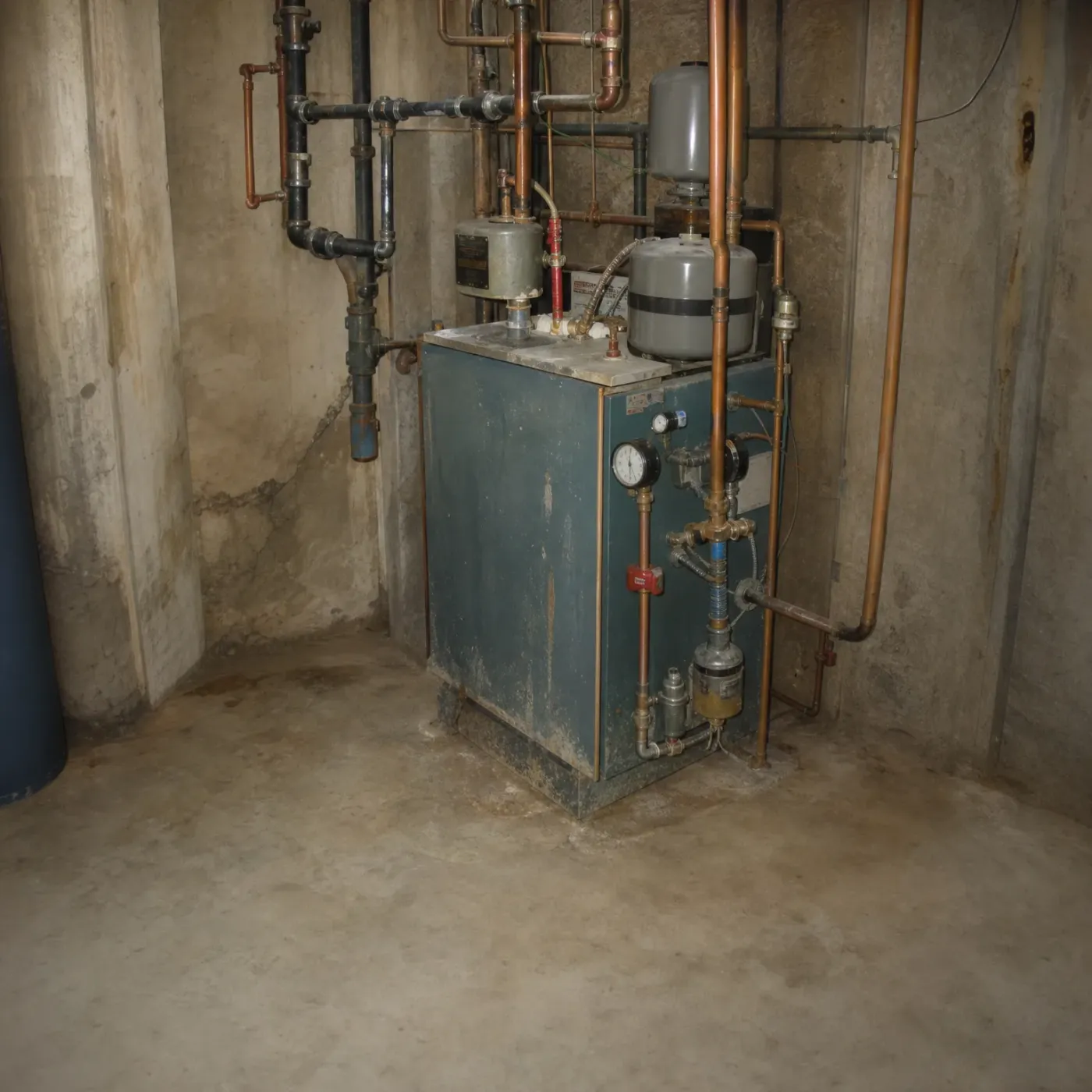
A green metal boiler with pressure gauge stands in a concrete basement corner, surrounded by copper and black iron pipes and two tank-shaped vessels.
Before you get your boiler repair
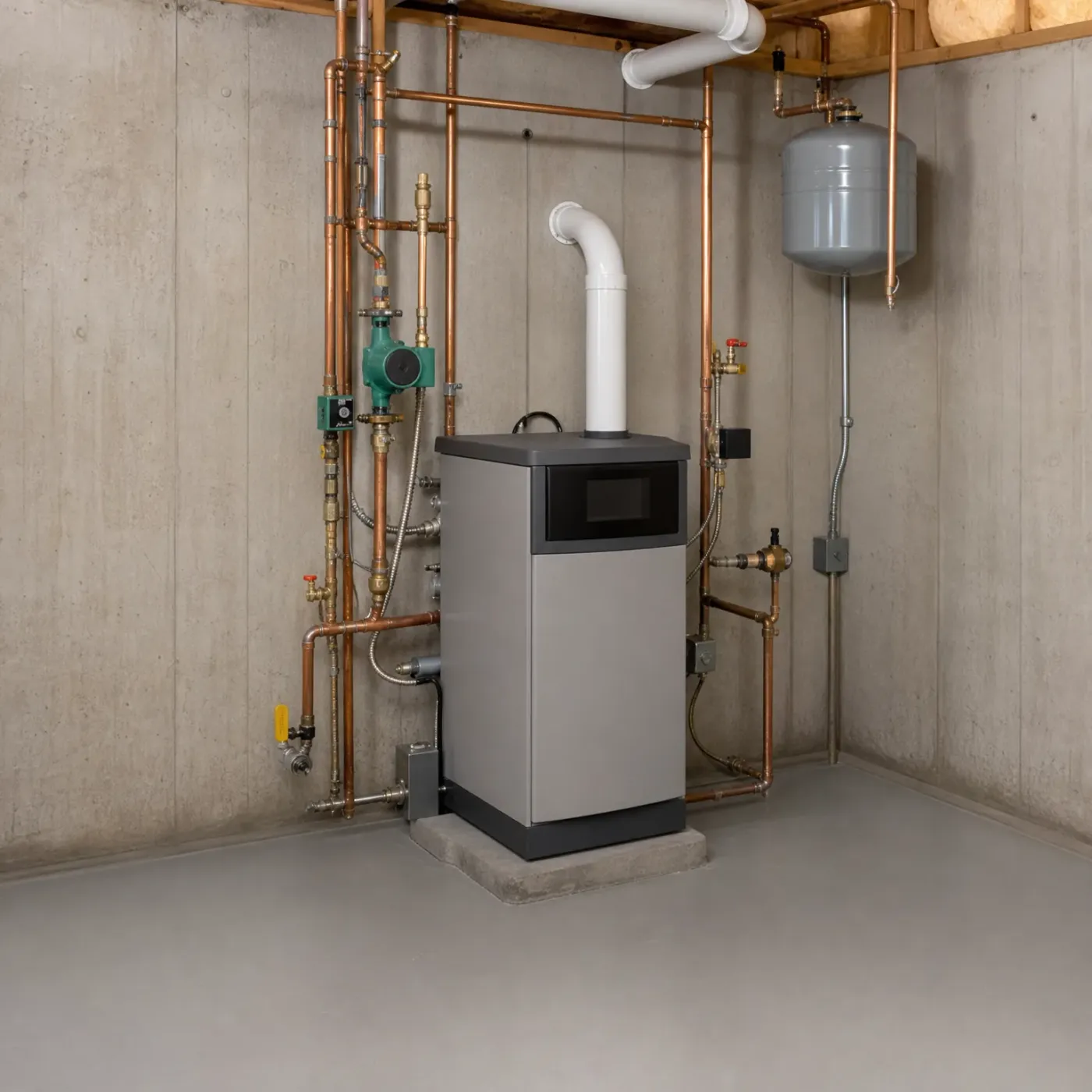
A gray floor-standing boiler on a concrete pad in a basement corner, with copper piping, a circulator pump, a white PVC flue, and a gray expansion tank mounted on the wall.
After you get your boiler repair

Winter nights average 23°F statewide

At 23°F, your boiler is working hard most of the night to keep up, cycling on and off to hold the house steady. That extra run time pushes pressure higher more often, which is exactly when a relief valve on its way out starts to show it.

NOAA nClimDiv 1991-2020 county normals weighted by homes

A relief valve that drips is either doing its job or failing at it, and the pressure gauge tells you which one you're dealing with. Either way, it isn't something to leave alone through a Connecticut winter, with the burner cycling hard on the cold nights and pressure climbing right along with it. A local plumber who works on boilers all season knows the difference between a feed valve pushing too hard and a seat that's worn past holding, usually within a few minutes of looking at your system. That's the kind of call this connects you to: one licensed contractor near you, not a handful of companies competing for your callback. You won't be sorting through quotes or explaining the problem over and over. Just the valve, the pressure, and someone who's seen this exact leak before and knows what to check first.

Sunlit corner of a room with a wooden sideboard holding a ceramic vase of olive branches and a dark wooden bowl, beside a white-framed window, a hardwood floor and woven rug.
A wooden cabinet holding a pale ceramic vase with leafy branches stands beside a beige wall in a sunlit room with hardwood floors, a jute rug, and a window showing green foliage outside.
Sunlit room corner with a beige upholstered sofa holding a rust-brown cushion, beside floor-length linen curtains at a window, over a wood floor with a woven rug.
Corner of a room with beige walls, a framed photograph, a floor-length linen curtain beside a window, an upholstered armchair with a knit pillow, white baseboards and trim, wood flooring and a pale rug.
Sunlit living room corner with a beige upholstered armchair with a cushion, linen curtains beside a wooden-framed window, green vertical panelled wall with a framed print, and a wooden table edge over a woven rug.

Hand off the boiler problem

Your request goes to one pro, not a list of companies.

Get one local pro

You only hire the pro if you want to.