



Profile view of a bearded man wearing a dark green baseball cap and a dark gray T-shirt against a plain light background.

How to keep boiler pipes from freezing in Connecticut

Tune-up, service, or cleaningBoilerConnecticut
Step 1 of 2

What ZIP code is the job in?

Keep the boiler running and keep heat moving to every radiator or baseboard it feeds, including rooms you keep shut off. Pipes freeze where water sits still in a cold space, like a basement corner, an uninsulated run along an outside wall, or a line that feeds a room you've closed the heat off to. Once ice forms, it expands and can split the pipe, and you won't know until it thaws and leaks. A Connecticut winter gives pipes in an unheated crawlspace or a drafty basement plenty of time below freezing to do that. Keep the thermostat set to run through the night rather than dropping low, let any room with exposed piping get some heat even if you don't use it, and have the boiler itself checked before the cold sets in so it isn't struggling to keep up on the night it matters most.

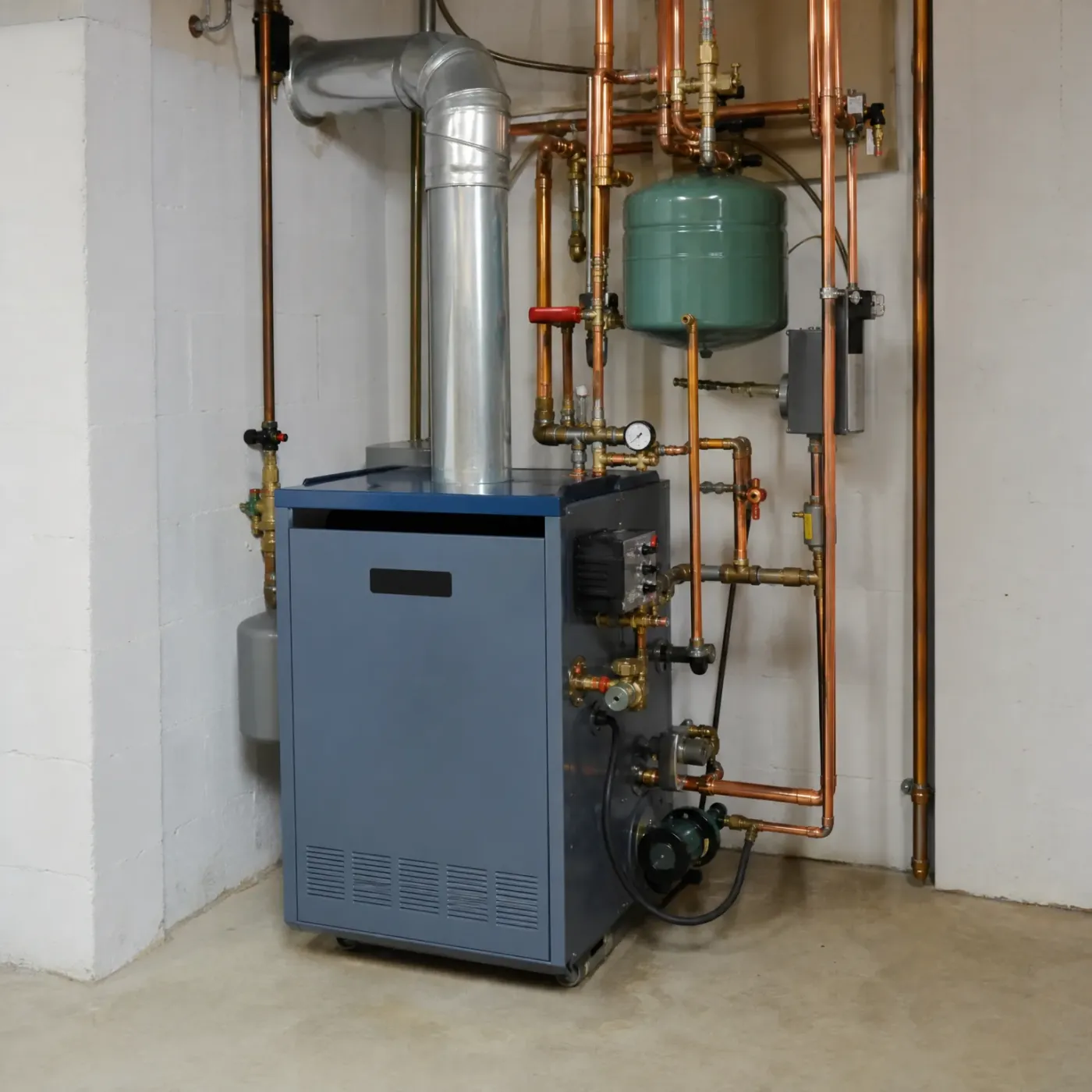
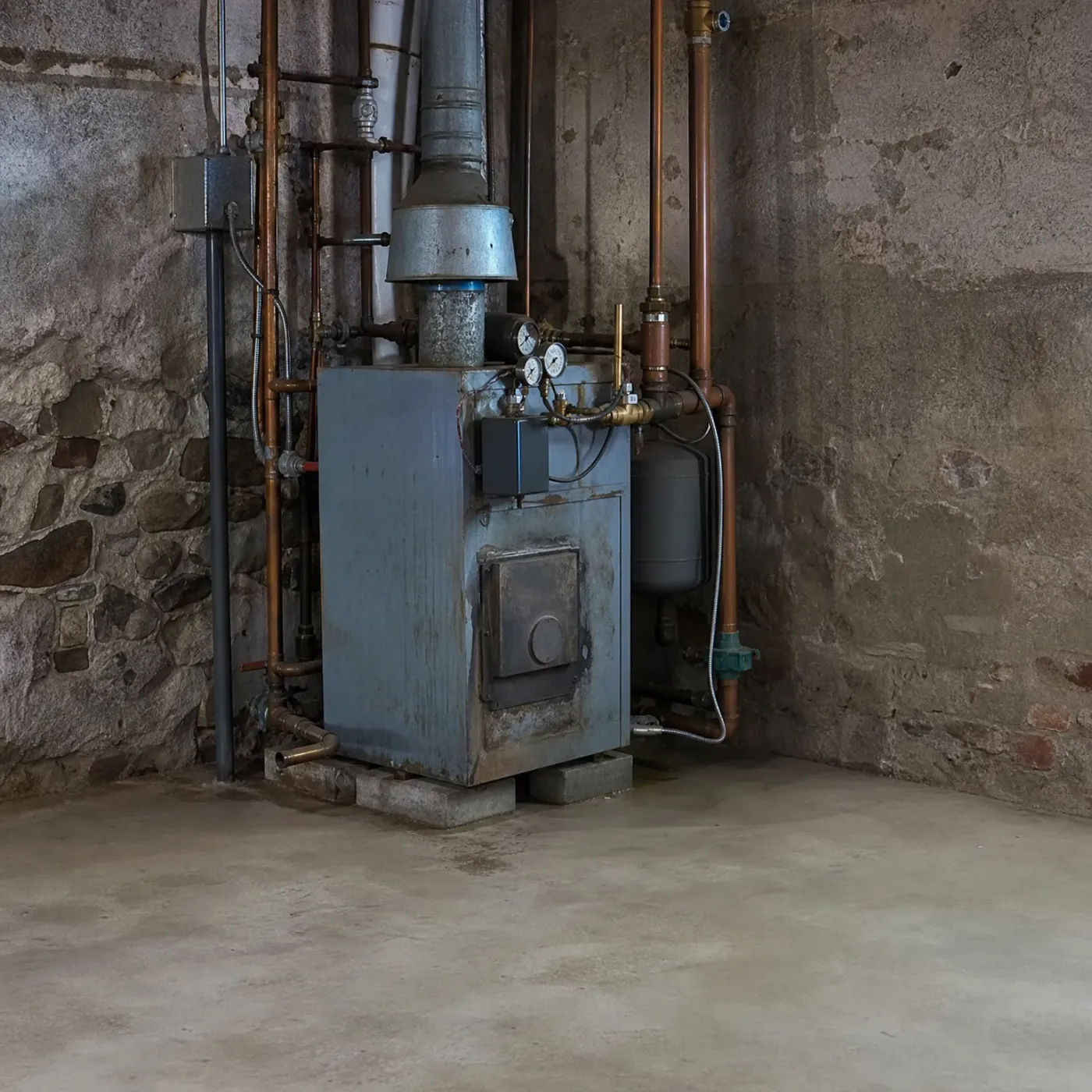
A blue-gray residential boiler in a basement corner, connected to copper piping, a green expansion tank, a circulator pump, gauges, and a metal flue pipe against painted block walls.
A boiler kept up front runs like this: tight fittings, steady pressure, heat reaching every pipe that feeds off it.
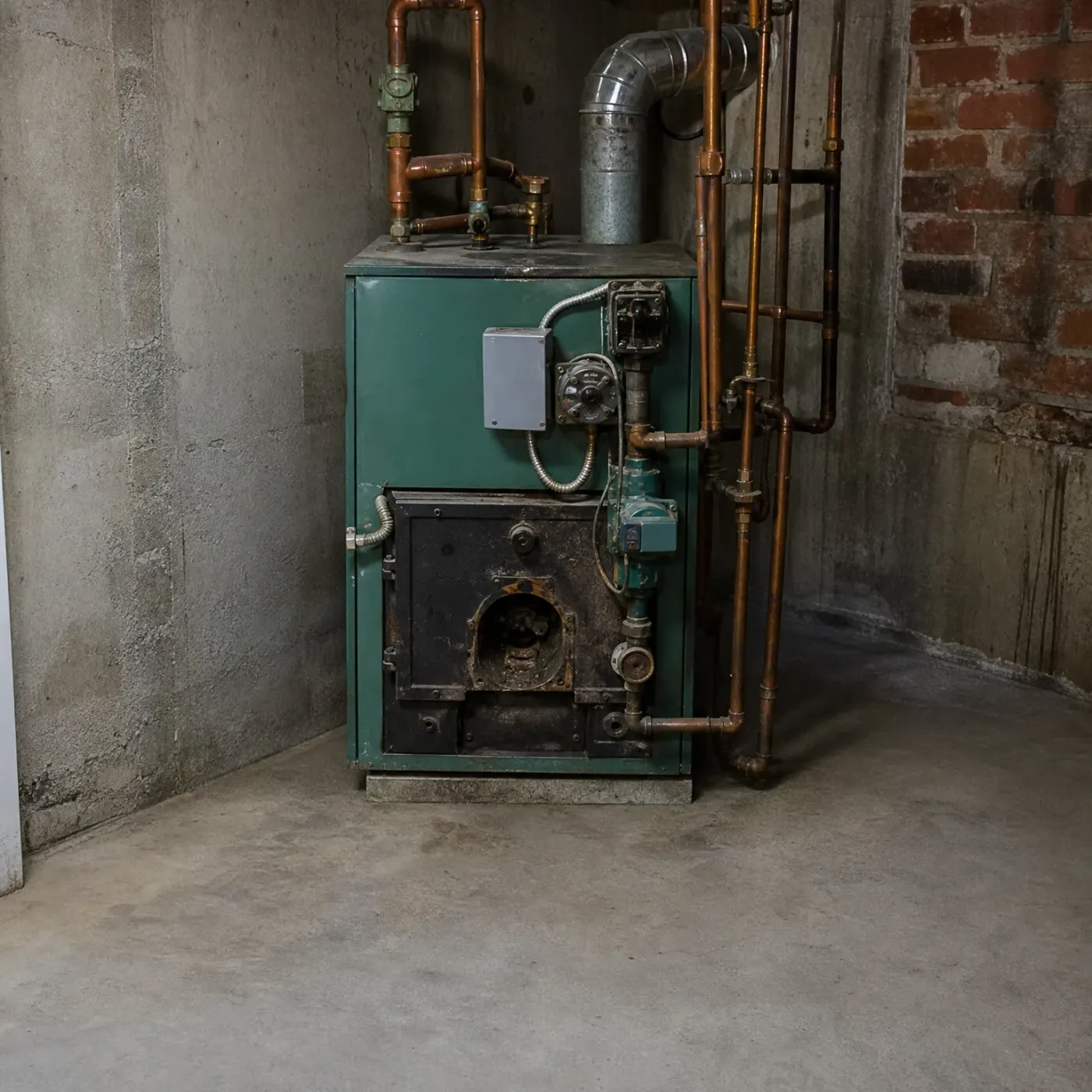
A green cast-iron boiler with a soot-stained front door, copper piping and a metal flue, standing on a concrete floor in a basement corner with concrete and brick walls.
Left alone, a boiler ends up like this: a corroded firebox and open pipe runs with nothing keeping the water in them moving.

A boiler doesn't heat a house so much as it heats one loop of water, over and over, and sends it out through pipes to every radiator or baseboard on the system. The circulator pump is what actually moves that water. Nothing that pump can't reach gets any benefit from the boiler running at all. That matters because most systems have zone valves or shut-offs that can close a loop off on purpose, maybe to a guest room or a finished basement nobody uses. Closed off, that water sits. Still water loses heat faster than water that's moving, so the first pipe to freeze is usually the one behind a valve that's shut, running along an outside wall or through an unheated space. If a fitting on that frozen stretch cracks, the system can lose enough water or pressure that the low-water cutoff shuts the boiler down entirely, which stops heat to every other zone too. Wrapping a pipe in insulation slows how fast it loses heat, but insulation alone can't make up for water that's no longer moving through it.

How a boiler actually protects its pipes

  • A boiler heats water in a closed loop, so the same water keeps circulating through pipes, radiators, and back to the boiler all winter.
  • A circulator pump pushes that water through the system, and it only moves heat where the pump can actually push water to.
  • Zone valves or shut-off valves can cut off flow to a radiator or baseboard loop, which is exactly what leaves that run of pipe sitting still.
  • Water near freezing loses heat fastest where it's not moving, so a closed-off zone in an unheated basement or an exterior wall run is the first place to freeze.
  • A low-water cutoff will shut the boiler down if pressure or water level drops too far, which can happen if a frozen section has already cracked a fitting.
  • Pipe insulation slows heat loss along a run, but it doesn't replace the heat that moving water carries past that same stretch of pipe.
A man in a blue sweatshirt reclines with closed eyes in a brown leather armchair in a living room with a bookshelf, houseplant, sofa, window, and a side table holding newspapers and a dark mug.
A bearded man in a gray pullover reclines with closed eyes on a brown leather sofa in a sunlit room with a window, framed picture, potted plant, and a wooden cabinet holding papers and a dark mug.
A man in a gray sweater leans back with closed eyes in a brown leather armchair beside a wooden side table holding a dark mug and a folded newspaper, with bookshelves and a window seat behind him.
A man in a green sweater reclines in an armchair with his eyes closed and a slight smile, beside a window with plants, a small table holding a mug and folded newspaper, and bookshelves behind him.

Why shut-off rooms freeze first

A guest room or a back bedroom with the radiator valve closed still has pipe running through it. That pipe stays full of water whether the room gets heat or not. With the radiator off, nothing moves that water, so it sits at whatever temperature the room reaches. On a night in the teens, a closed-off room can drop close to outside air, and the pipe inside the wall drops with it. The boiler can be running fine in the rest of the house and that one line still freezes.
What a tune-up checks for this

A technician doing fall maintenance on a boiler looks at more than the burner. Pressure that's drifted low, a circulator pump that's lost strength, or a zone valve stuck half open can all mean certain pipes get less flow than they used to, even with the boiler itself working fine. Catching that in October, before Connecticut's cold sets in, means every radiator still gets the water it's supposed to, instead of finding out in January which pipe the system stopped reaching.

An older gray boiler with a metal flue, copper piping, pressure gauges and an expansion tank sits on concrete blocks in a basement corner with stone and concrete walls.
Before you get your boiler maintenance
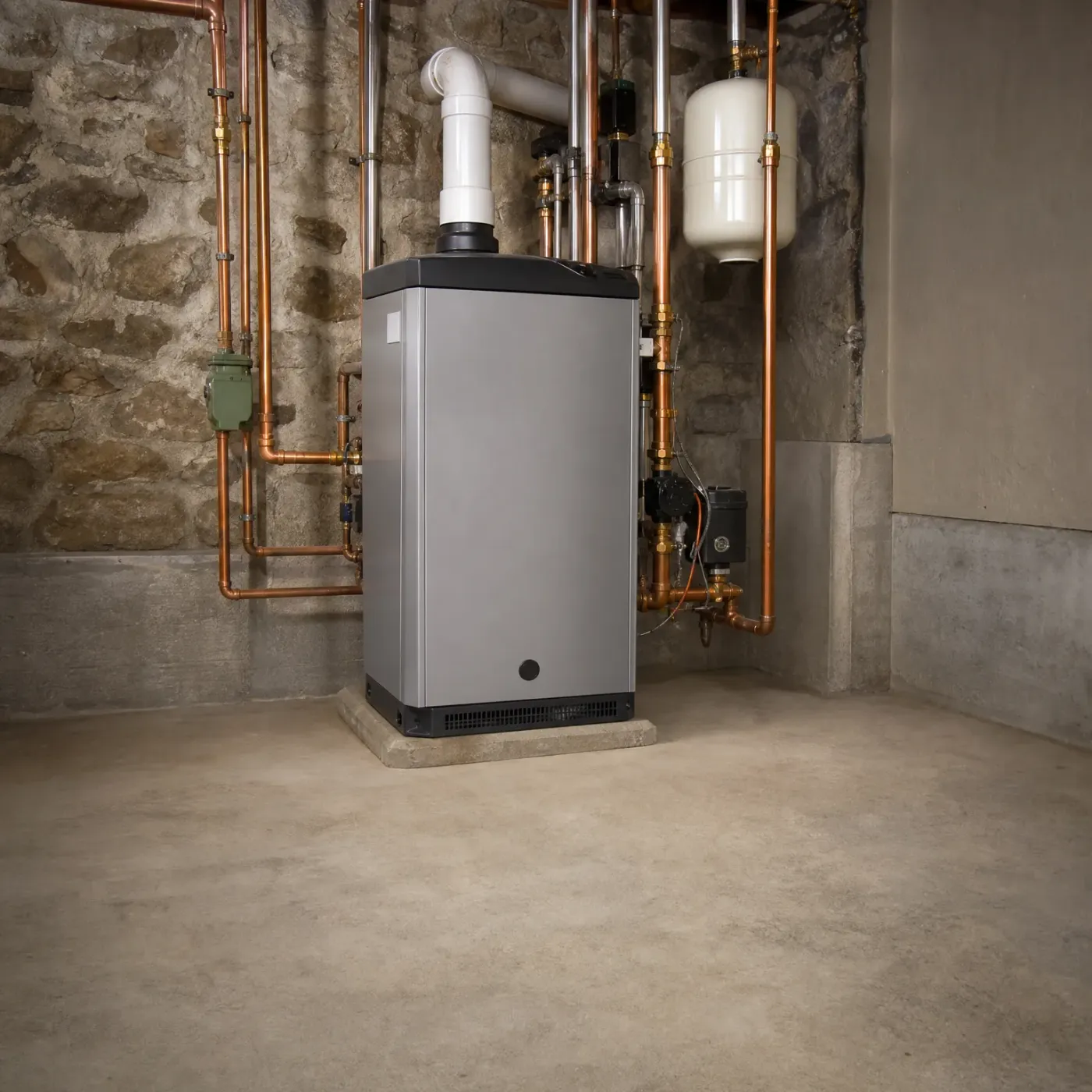
A gray floor-standing boiler on a concrete pad in a basement, connected to copper pipes, a white expansion tank, and a white PVC vent against a stone and concrete wall.
After you get your boiler maintenance

It's off your list after this

Fill out one form instead of calling around for a boiler tune-up.

Asking costs nothing, and the choice to hire stays yours.

What a frozen pipe costs you

A pipe that freezes behind a wall or under a floor doesn't just stop working. It can split, and you won't know until it thaws and water is running into your ceiling or down through a floor joist. That's a flooded basement, soaked insulation, maybe drywall torn out to get at the break. It also means no heat in that part of the house while you wait for a plumber, in the middle of whatever cold snap caused the problem in the first place. The boiler itself can take damage too, if a frozen line keeps water from returning to it the way it should.

What a season-ahead check catches

A boiler looked at before the cold sets in gets its pressure checked, its fittings checked for the slow weeps that turn into stuck valves, and its circulator confirmed to be pushing water where it needs to go, including out to that back bedroom you keep closed off. Low pressure or a failing circulator are two of the quieter ways a boiler stops moving water to a far pipe without ever shutting itself off. Catching either one in October means you're not finding out about it in January, when the same problem shows up as a pipe that's already frozen solid.

Winter nights average 23°F statewide

23°F is the average overnight low here, not the coldest it gets. Pipes along an outside wall or in a back corner of the basement can sit well below that when a cold snap moves through. That's the range your boiler has to keep ahead of, all night, every night, from December through February.

NOAA nClimDiv 1991-2020 county normals weighted by homes

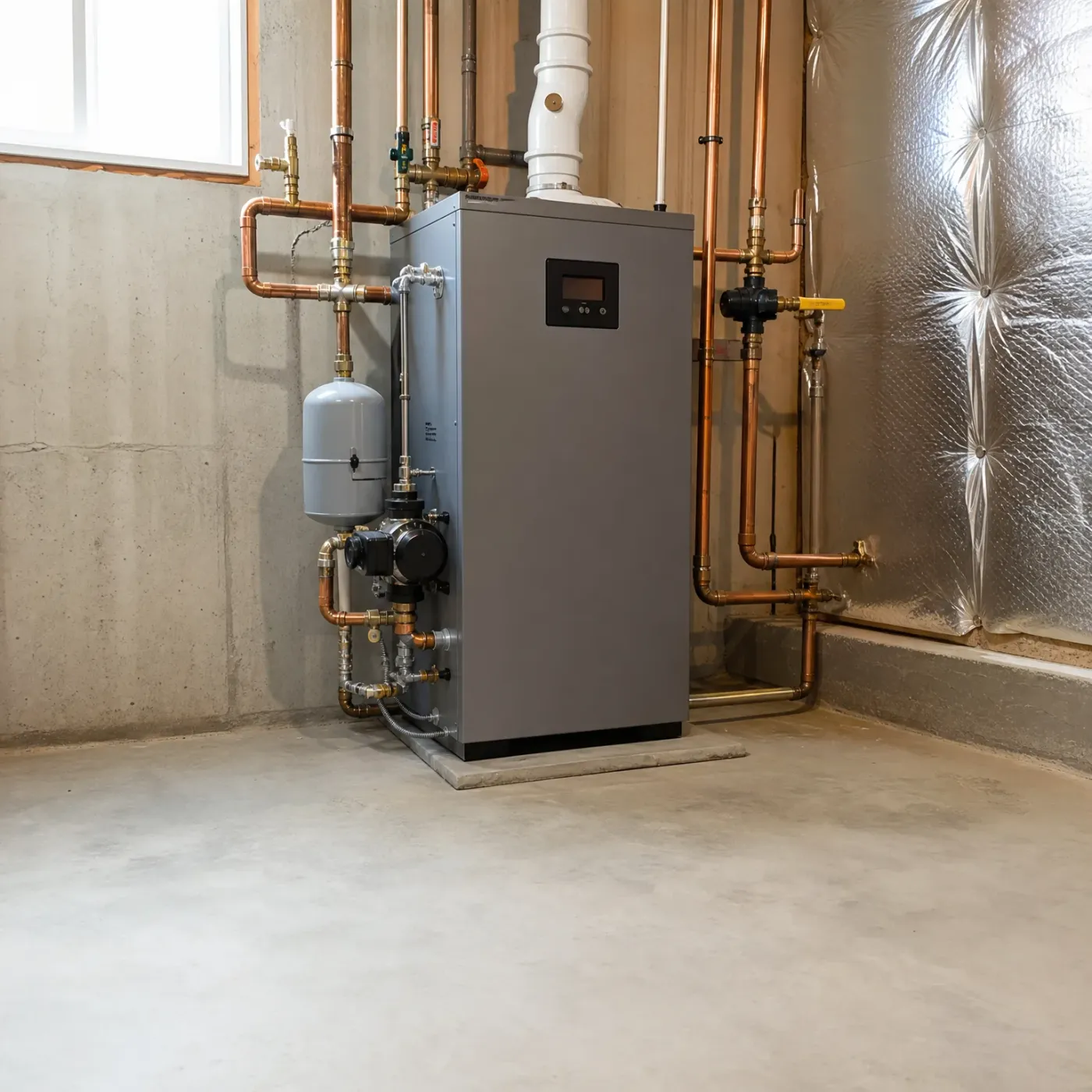
A gray boiler unit with a digital display stands on a concrete basement floor, connected to copper piping, a gas valve, a circulator pump and an expansion tank, beside a concrete wall and foil-faced insulation.

Boiler kept up

This is a system under maintenance. The copper runs are tight, the expansion tank is sized right, and the circulator has enough pressure behind it to push water through every line, even the ones feeding a room you keep shut. Nothing here is fighting to keep up on a cold night.

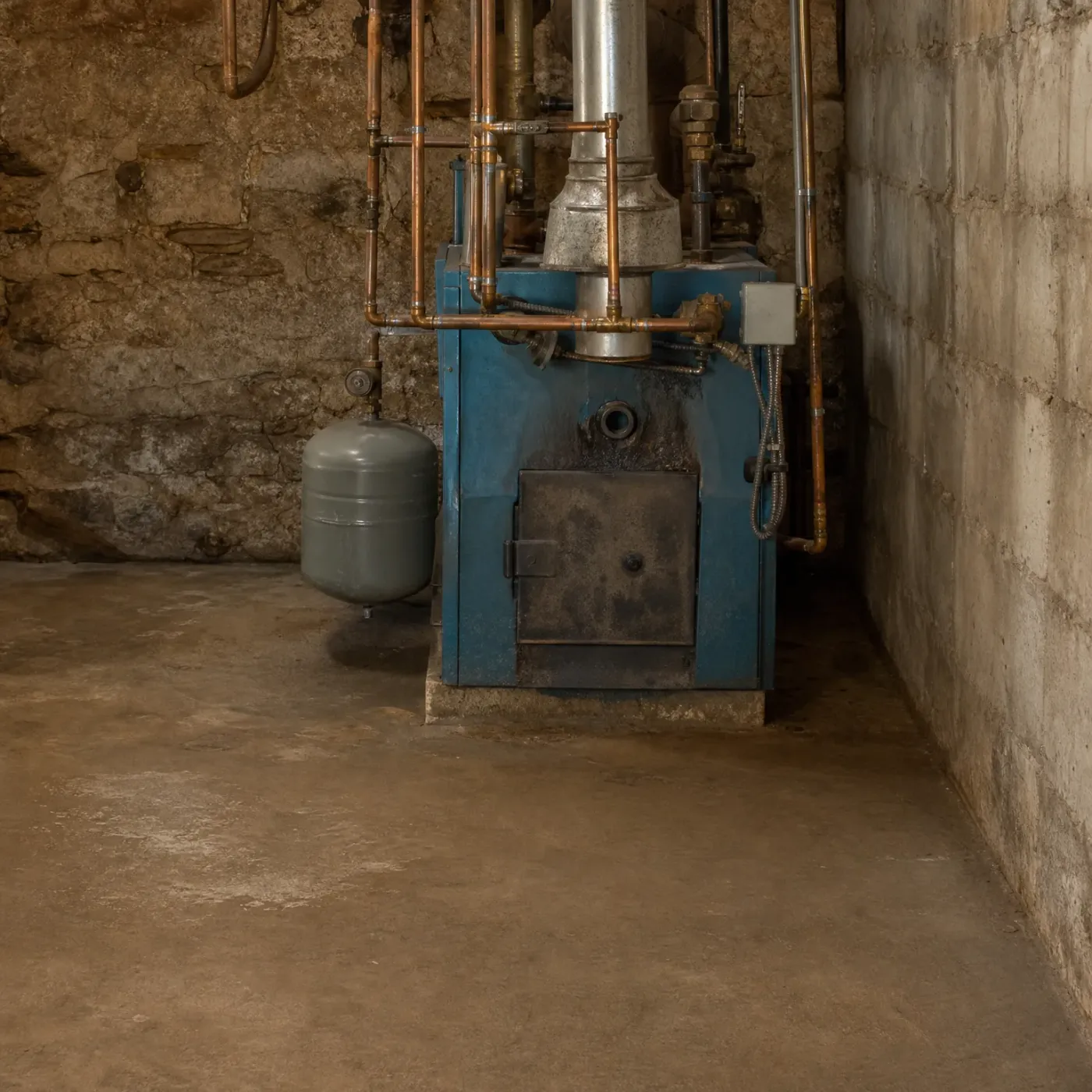
A blue cast-iron boiler with a metal flue pipe and copper piping stands against a stone and concrete block basement wall beside a gray expansion tank on a bare concrete floor.

Boiler left alone

Corrosion on the access door means the firebox isn't sealing the way it should, and a unit working that hard loses ground fast once temperatures drop. If the circulator or the pressure in that gray expansion tank has been slipping for a while, some far pipe run stops getting enough water movement to stay warm.

Shut-off room, or checked room

Room stays shut all winter

  • The radiator valve is closed but the pipe behind the wall is still full of water, same as every other line in the house.
  • With no heat reaching that pipe and no water moving through it, it sits at whatever temperature the wall around it reaches.
  • On a night in the 20s or colder, that pipe can freeze while the rest of the house stays warm and nobody notices.
  • If it splits, the water doesn't show up until a thaw, often behind drywall or under a floor you don't check daily.
  • You find out from a stain on the ceiling below or a damp spot on the basement floor, not from the room itself.

Room gets checked and opened

  • Cracking the valve partway keeps water moving through that pipe instead of sitting still in a cold wall.
  • A tech checking the system during maintenance can find a line that's colder than it should be before a hard freeze tests it.
  • Insulating an exposed run along an outside wall or in a basement corner costs nothing in heat you were using anyway.
  • If the circulator and pressure are right, water reaches that back room the same as it reaches the kitchen or living room.
  • Catching a weak spot in the fall means you're not the one finding a split pipe in January.
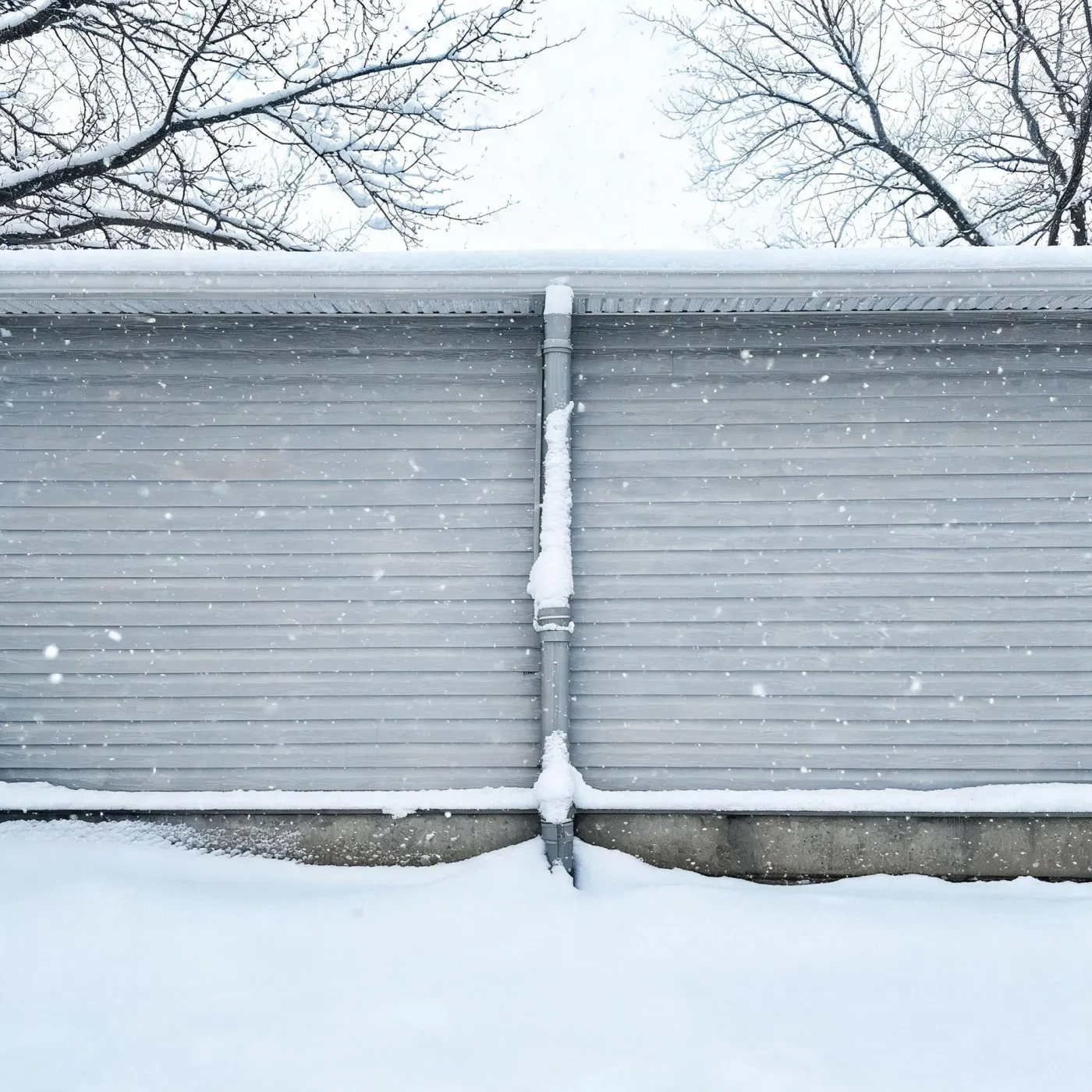
Exterior of a gray horizontal-lap-sided building with a snow-covered roof edge and a central downspout, seen during falling snow with deep snow on the ground and bare tree branches above.

State data puts the average overnight low here at 23°F across the winter. That's cold enough to sit below freezing for hours at a stretch, not just on the worst night of the year. Your boiler is working against that every night it runs, pushing hot water out to every radiator or baseboard on the loop. If a circulator is weak or a line to a back room has gone cold, that's the number it's losing ground against. You'd notice it first as a room that never quite warms, or a radiator that's cool at the bottom while the top is warm. That's usually where a pipe is closest to trouble.

NOAA nClimDiv 1991-2020 county normals weighted by homes

An older man with gray hair and a beard leans back on a beige sofa with his eyes closed, in a sunlit room with potted plants, a wicker chair and large windows behind him.
A woman in a cream knit sweater sits in an armchair with her eyes closed and a slight smile, beside an open window showing orange autumn foliage, with a mug, books and a lit candle on a small side table.
A closed dark laptop and a ceramic mug of coffee on a wooden dining table, with wooden chairs, a dark kitchen cabinet with cutting boards and a potted plant, and a leafy plant by a window in the background.

A boiler that keeps every pipe fed is the whole answer

Pipes freeze when water sits still in a cold spot. A boiler that holds pressure, keeps its circulator strong, and pushes heat into every line it feeds, including the ones behind a closed door, keeps that from happening. That's the answer, and it doesn't change room to room or week to week once the system is caught up.

Getting there is the part that eats a weekend otherwise. Finding a contractor who works on boilers, checking they're licensed, waiting on a callback, explaining the same thing to three different companies so you can compare what they quote. Send the form and that search is off your plate. You'll know who's coming and what they're looking at, and you can stop thinking about it until they do.

A gray upholstered sofa with a matching cushion sits beside a potted plant and a wooden table holding a small green plant in a stone pot, near a curtained window.
A curving paver walkway runs alongside a house with beige lap siding and a white-trimmed window, bordered by low shrubs, grassy plants, and trees in sunlight.
A dark-framed casement window with divided upper panes set in a stucco wall beside a stone-clad section, with hydrangeas, hostas and trimmed shrubs in a mulched bed above a lawn.
White horizontal lap siding wall with a single six-pane double-hung window, above a mulched bed of hydrangea shrubs with browning blooms, bordered by mown grass in low sunlight.
Interior corner with tan plaster walls, a potted olive tree in a large terracotta urn beside a floor-to-ceiling window, and a wooden bench with a beige cushion on a herringbone brick floor partly covered by a woven jute rug.
A wooden bench beneath a window holds a green linen cushion and a fringed cream throw, with a woven basket stored underneath on a wood plank floor.

Stop chasing a boiler pro

Skip calling around to set up a boiler tune-up.

Start one form

No fee to send it, and nothing to sign.