





Two white multi-story colonial houses with lit windows and black shutters photographed at night, fronted by a stone wall.

Furnace Repair in New Haven, CT

Tell us about the job

Takes about a minute. No obligation.

RepairFurnace or heatingSouth Central Connecticut Planning Region, CT
Step 1 of 2

What ZIP code is the job in?

Furnace here starts up in October after sitting idle since September. A weak igniter or a cracked heat exchanger doesn't show itself while the system is off. It shows up on that first cold morning when the furnace has to run hard right out of the gate. That's why so many repair calls come in during the opening weeks of the season rather than later on. If yours is acting up now, it's worth having someone look before the real cold settles in for the months ahead.

8 months
October through May, your furnace is on duty
25°F
the average winter night it heats against
Isometric cutaway illustration of a single-story house showing interior rooms with furniture, a furnace unit with connected ductwork and a tall vertical flue pipe extending above the dark shingled roof.
Your furnace works hardest from November through March.

NOAA 1991–2020 monthly normals

Furnace here runs about eight months a year, October through May.

A long season like that still comes down to a weak igniter or a cracked heat exchanger, not something the cold itself caused.

Half the furnaces in this region are working in houses built in 1964 or earlier

Half the homes here were built by 1964
Heat runs October through May
Winter nights average 25°F

A power outage will shut a furnace down, blower and igniter and all, same as any appliance in the house. Connecticut sees its share of outages. 20% of households here went at least 24 hours without power in 2024. When the power comes back, most furnaces start right back up on their own. If yours doesn't, that's worth a call, but it's not usually the outage itself that did the damage. More often the outage just caught a part that was already close to failing.

The usual furnace problem costs more every month it waits

Gas in Connecticut runs $16.36 per million Btu, and a furnace that short-cycles or runs longer than it should to heat the house will show up on the bill before it shows up as a breakdown. The fix is usually the same igniter or heat exchanger problem, not anything particular to a New Haven winter. Worth having someone find the actual cause now.

Find a contractor
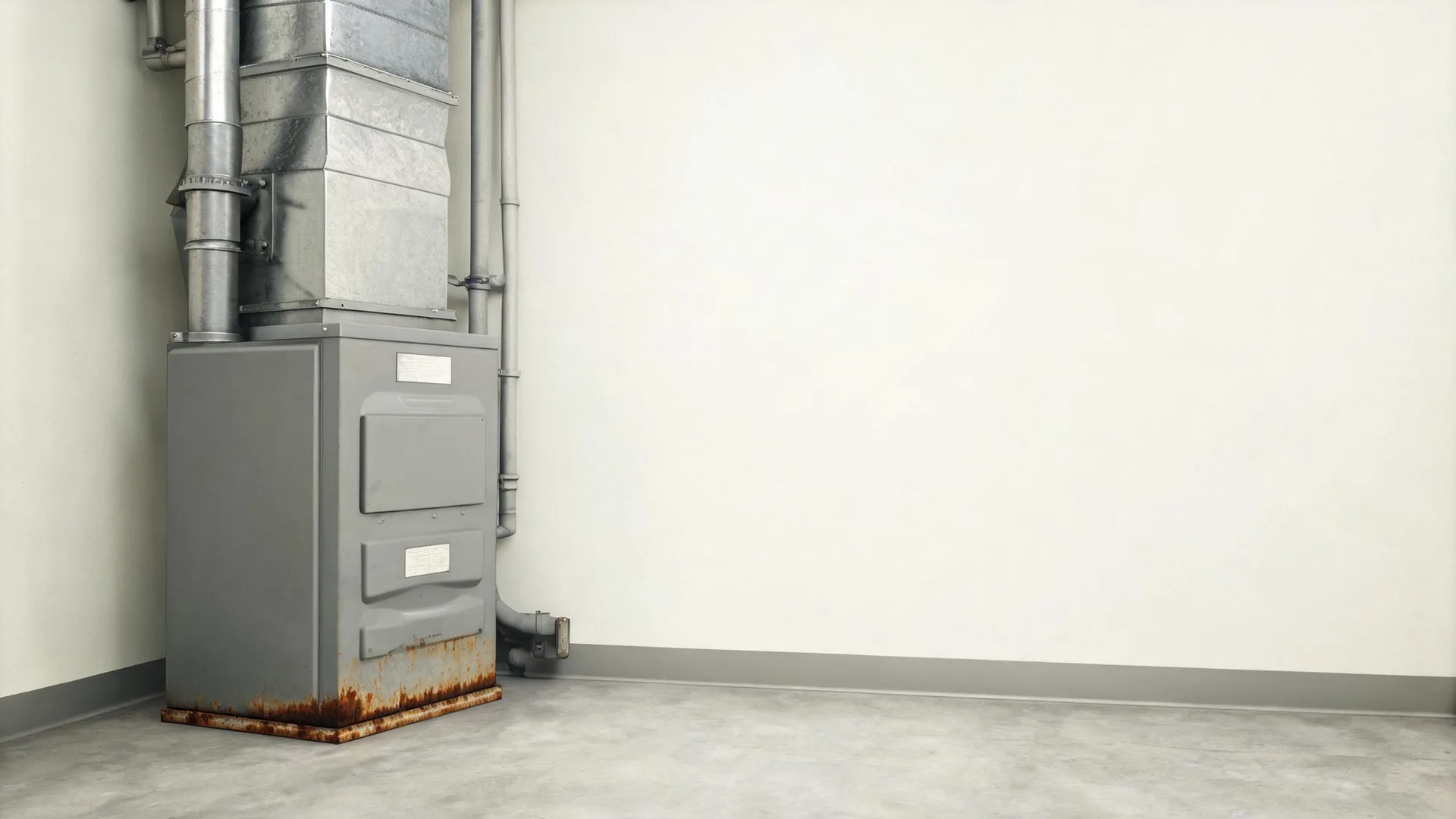
A gray residential gas furnace installed in an unfinished basement, surrounded by ductwork, a metal flue pipe, and a gas supply line.

Ask how much life is left before you pay for the repair

A furnace that came with a house built in 1964 or earlier has been running a long time. If yours is one of them, ask the technician straight out whether this repair is worth doing or whether the furnace is close enough to the end that the money is better spent on a new one. That's a different question from what's broken today, and it's one they can answer while they're already there looking at it.

A cracked heat exchanger spreads while it runs

Heat moves through the exchanger every time the burner fires, and metal expands and contracts with it. A small crack gets worked open a little more on each cycle. Shutting the furnace off at the first sign of a problem stops that movement. Leaving it running doesn't give the metal a chance to do anything but keep flexing at the weak spot.

A failing blower motor can take the furnace down with it

When a blower motor strains, it draws more current and runs hotter than it should. Heat builds up around the furnace's limit switch and other parts nearby that were never meant to sit in that kind of heat. A motor that gets replaced early is a parts job. One that's ignored can take the control board or the heat exchanger with it when it finally quits.

A bare concrete basement containing a gray gas furnace with metal ductwork and a vertical flue pipe, lit by a single hanging bulb.

A new furnace would cut about $140 a year off heating for a typical New Haven home.

  • A new high-efficiency furnace$610 a year
  • An older furnace$750 a year

Estimates for a typical New Haven home, compared with an older unit built to the previous federal minimum, from EIA household energy data, Connecticut fuel prices and NOAA climate normals. Your home will differ.

Repair makes sense when one part has failed and the heat exchanger is sound.

Replacement makes sense when the heat exchanger is cracked or the furnace keeps needing parts.

A diagnostic call starts with the thermostat and works back from there. The technician checks for power at the furnace, then for a flame signal, then watches it run through a full cycle start to finish. A furnace that won't ignite and a furnace that ignites then shuts itself off are different problems with different causes, even though both just look like 'the furnace isn't working' from the thermostat. Pressure switches, flame sensors and limit switches get checked in place first, since most of them can be tested without pulling anything apart. Only after those checks come back clean does the technician open the cabinet and look at the heat exchanger and blower assembly directly. The visit ends with what failed, what it takes to fix it, and whether that repair is worth doing on this furnace.