



What winter here actually asks of a heat pump
Your heat runs eight months a year here, October through May, and the overnight low averages 25°F in December, January and February. That's below the 40°F mark where a standard heat pump starts falling short of its rated output, and below the 35°F mark where it often leans on backup heat. On about 105 nights a year here, the temperature at or below freezing, a standard heat pump is working below both marks.
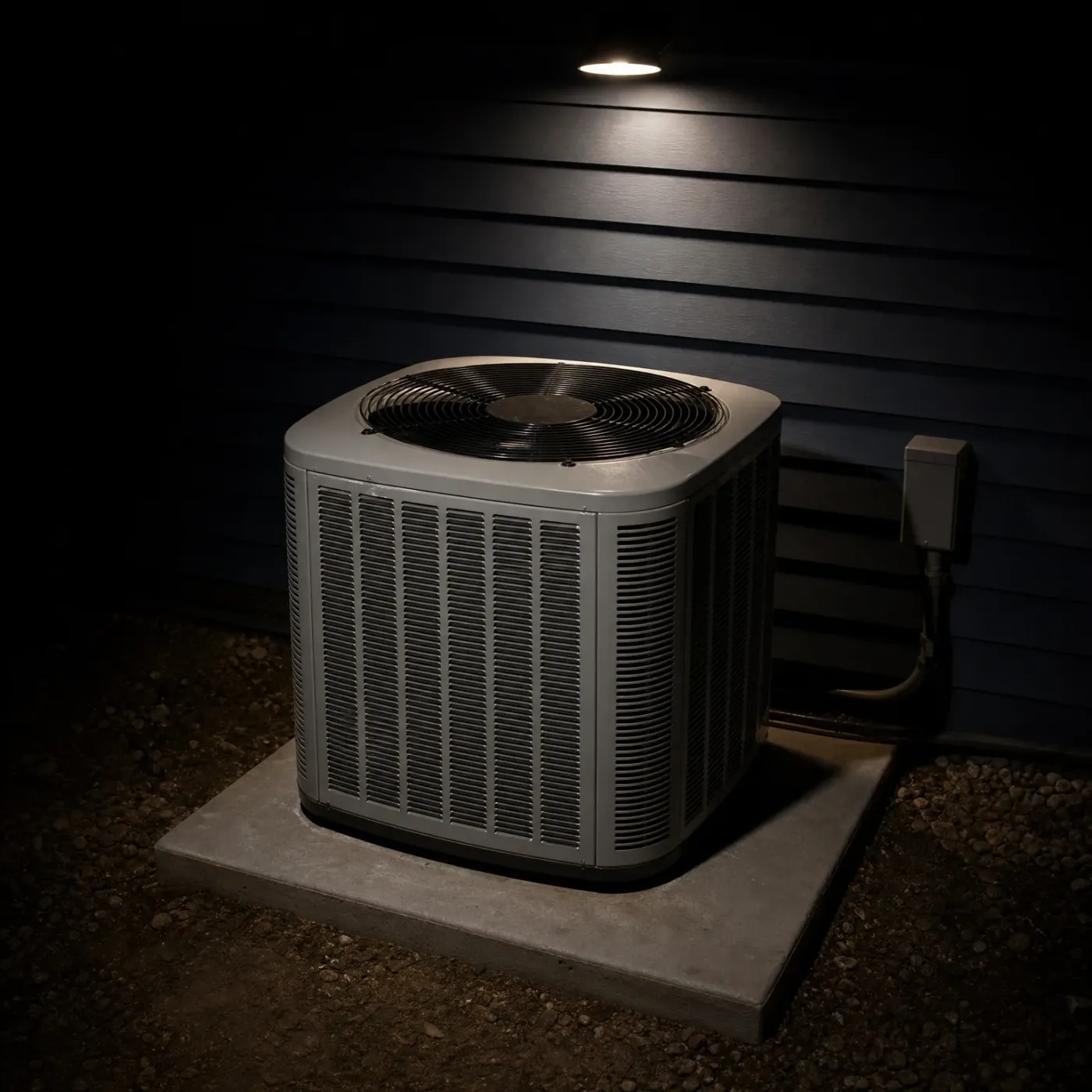
That doesn't mean it can't heat your house. It means two different things happen at once on a cold night: the heat pump makes less heat than its rating says, and it may call on backup heat to cover the gap. A cold-climate heat pump is built for this. To earn that label a unit has to hold onto at least 70 percent of its 47°F heating capacity at 5°F, and still produce at least 1.75 units of heat per unit of electricity at that temperature, tested by a third party rather than claimed by the manufacturer. A standard heat pump carries no such guarantee.
Only about one night a year here drops to 0°F or below, so the extreme cold that gives any heat pump the most trouble is rare, not routine. A two-winter field test of prototype cold-climate heat pumps in occupied homes found backup heat covered only a small share of the output between 0°F and 35°F, and the system running on backup alone was rare even above 0°F. If you buy a cold-climate model, the furnace or electric strip behind it is there for the rare night, not for the whole season.