






A row of illuminated white colonial houses along a road photographed at dusk.

Furnace Installation in Norwich, CT

Tell us about the job

Takes about a minute. No obligation.

New system or replacementFurnace or heatingSoutheastern Connecticut Planning Region, CT
Step 1 of 2

What ZIP code is the job in?

Close to half the homes in this part of Connecticut heat with fuel oil, more than any other fuel. If your old furnace burned oil, going with another oil furnace keeps the tank, the lines and the venting you already have. Electricity comes next at 22%, then gas and propane well behind that. A switch away from oil usually means new gas piping or a propane tank, so it's worth asking what that adds to the job before you decide against replacing like for like.

8 months
October through May, your furnace is on duty
24°F
the average winter night it heats against
80% AFUE
the federal minimum any new unit must meet
Isometric line illustration of a cutaway single-story house showing interior rooms with furniture, ceiling ductwork, a chimney flue, and a furnace unit outside the exterior wall.
Your furnace works hardest from November through March.

NOAA 1991–2020 monthly normals

The old furnace stays connected until the new one is tested and running.

A furnace changeover usually means no heat in the house for part of that day.

September is the month to replace it, before heat season starts in October

Heat runs October through May
Winter nights average 24°F
Half the homes here were built by 1969
A standard furnace is built for Norwich wintersHeat runs October through May here, with overnight lows near 24°F in January

Half the homes in this part of Connecticut were built in 1969 or earlier. A furnace going into a house that old has to work with what's already there, not a layout drawn up for modern equipment. The ductwork, the venting, the spot where the old unit sits, all of it was built around a different furnace in a different era. That doesn't rule out an upgrade. It means the install has to be sized and fitted to the house you actually have, not swapped in as if every furnace drops into the same hole.

A standard furnace, sized right, is the job here

At $21.64 per million Btu, oil isn't cheap to burn, and that's one more reason not to pay for more furnace than this house needs. A standard size and efficiency rating is what fits here. Get the sizing right and the rest takes care of itself.

Find a contractor
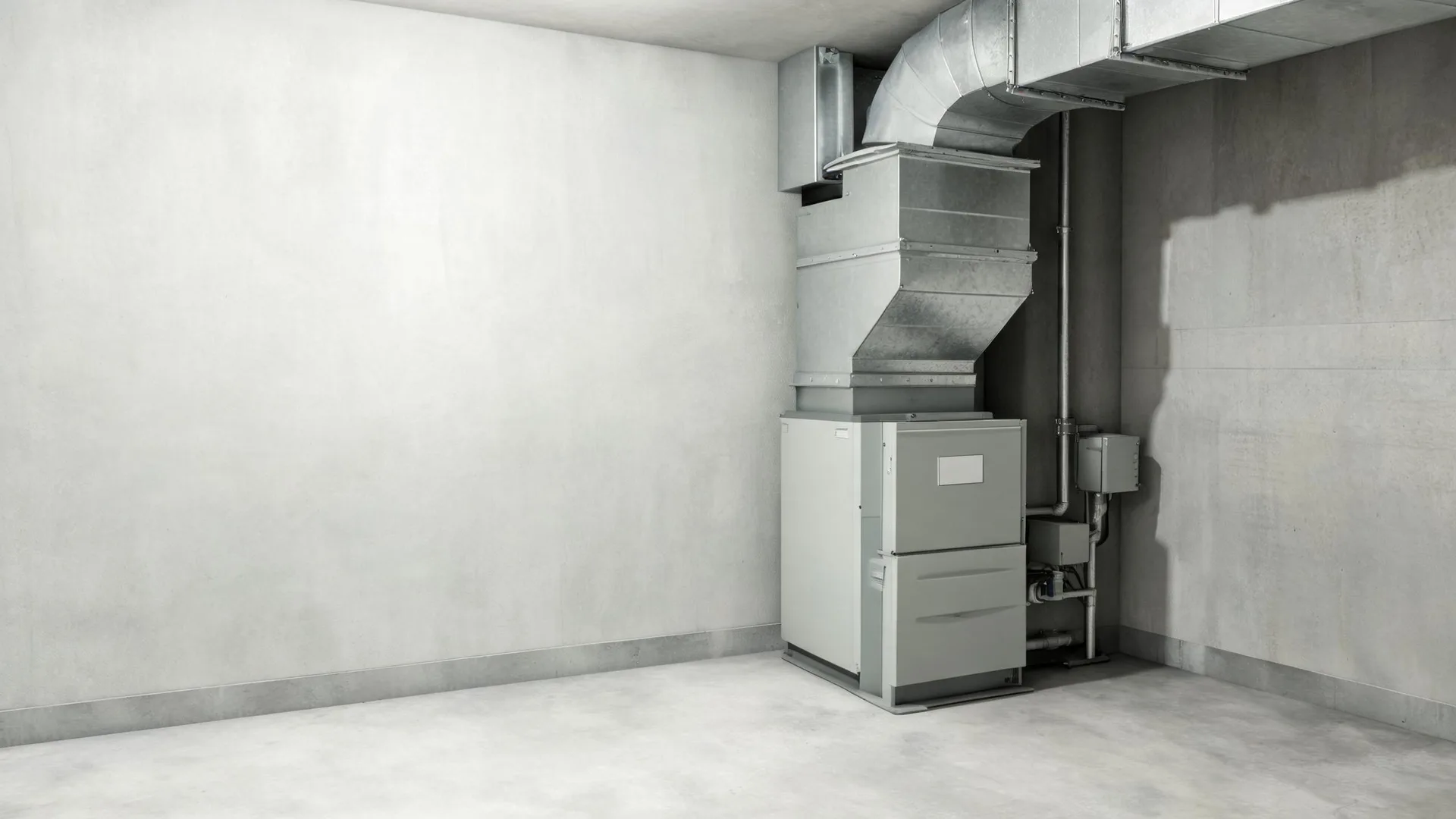
A gas furnace with attached ductwork, gas piping, and condensate lines installed in a concrete-block basement.

Size it to the house, not the old unit

Before anything gets installed, whoever sizes the job should see the house, not just the old unit's nameplate. A load calculation checks the walls, the windows and the ductwork you actually have, not a number pulled from a chart. If your home was built around 1969 or earlier, the ducts and the vent run were fitted to the furnace that came before, and the new one has to work with that same layout unless something gets changed along with it. Ask what the contractor is basing the size on before the work starts.

Ask what the efficiency rating actually means

A furnace's AFUE rating tells you how much of the fuel it burns turns into heat in the house instead of going out the flue. That rating is fixed for the life of the unit, so a furnace quoted at a lower price may also be the one that burns more fuel to do the same job. Ask what rating each quote is built around before comparing numbers on the page.
Ask what happens to the venting

A furnace has to vent its exhaust safely to the outside, and the pipe or chimney it uses has to match what that furnace needs to run. Changing the fuel type or stepping up to a higher efficiency unit can mean the venting already in place no longer works for the new furnace. Find out before the job starts whether the existing venting stays as is or has to be replaced along with it.

A few things push the price of a furnace install beyond the unit itself. Matching the new furnace to the existing ductwork costs nothing extra when the sizing lines up, but a duct that's too small or run wrong for the new unit needs rework, and that's labor on top of equipment. The flue and venting have to suit what the new furnace puts out, and if the old venting won't do that anymore, replacing it adds real cost. Electrical work is its own line item when the new furnace calls for a different circuit than the old one had. Removing the old unit and setting the new one in a tight mechanical closet or crawlspace takes longer than open floor space, and that time shows up on the bill too.

Installation day starts with the old furnace coming out, not the new one going in. The duct connections, the gas line, the flue, the electrical, all of it gets disconnected before anything new goes in its place. Once the old unit is clear, the new furnace gets set and leveled, then the same connections go back together one at a time, each one fitted to the new equipment rather than just reattached the way it was. The gas line gets pressure tested before the burner ever lights, because a leak found after the fact means pulling things apart again. Once it's running, a tech checks the flame, checks the flue draft, and runs the system through a full cycle before calling it done. None of this is fast work, and rushing the venting or the gas connection is how a furnace ends up back on a service call within the year.