






An unfinished basement featuring a forced-air furnace, exposed wooden ceiling joists, bare concrete walls, and miscellaneous items including cardboard boxes and coiled cables on the floor.

Furnace Installation in Bridgeport, CT

Tell us about the job

Takes about a minute. No obligation.

New system or replacementFurnace or heatingGreater Bridgeport Planning Region, CT
Step 1 of 2

What ZIP code is the job in?

Gas heats most homes in this part of Connecticut, close to 6 in 10. If your old furnace ran on gas, a new one almost always makes sense in the same spot, tied into the same line. Oil is the next most common here, at roughly a quarter of homes, and plenty of those furnaces get swapped for gas when the gas line already runs to the street. Electric furnaces and heat pumps cover a smaller share. Whatever is already hooked up to your house is usually the cheapest path to a straight swap, since the fuel line and venting are already there.

8 months
October through May, your furnace is on duty
26°F
the average winter night it heats against
57%
of homes here heat with gas, so most furnaces here burn gas
80% AFUE
the federal minimum any new unit must meet
Isometric cutaway illustration of a single-story house in gray tones, showing interior rooms with furniture, ceiling ductwork, and an exterior furnace unit with a tall flue pipe.
Your furnace works hardest from November through March.

NOAA 1991–2020 monthly normals

The AFUE number on the label says how much of the fuel your furnace burns actually turns into heat.

A higher number costs more up front but turns less of your gas into wasted exhaust, year after year.

Get it done in September, before October asks your furnace to work

Heat runs October through May
Winter nights average 26°F
Half the homes here were built by 1959
Bridgeport's homes are older than mostHalf the homes in this region were built in 1959 or earlier.

A standard furnace sized to your house is the right call here. Nothing about Bridgeport pushes you toward a bigger unit or a higher-end one. The one thing worth building into the installation is what happens if the power goes out, since a gas furnace still needs electricity to run its blower and controls. Close to 20% of Connecticut households went at least a full day without power in 2024. If that is a real concern where you live, ask the contractor about a battery backup or interlock for a generator when the new furnace goes in, rather than adding it later.

A standard furnace is the right call here

At $16.36 per million Btu, gas is the fuel to plan around, and a standard-size, standard-efficiency furnace sized to your house covers it. There's no reason tied to Bridgeport to pay more for a bigger or higher-end unit. Get the sizing right and the install done, and the furnace will do its job.

Find a contractor
A gas furnace with attached ductwork, gas piping, and condensate lines installed in a concrete-block basement.

An old house needs a sizing check, not a guess

If your house is one of the older ones here, built in 1959 or before, have the contractor measure the rooms and check the ducts you actually have before they quote a size. A furnace sized off a floor plan or a guess is not the same as one sized off the house. Ductwork gets added to and rerouted over the decades, and the new furnace has to match what's there now.

Ask what size they're quoting, and why

A contractor should size your furnace from a room by room load calculation, not from the size of the one it's replacing. Ask what numbers they used and whether they counted your windows, insulation and duct layout. A furnace sized too big cycles on and off instead of running steady, and that wears out parts faster.

Ask what happens to your ductwork

The furnace is only part of the job. If the ducts are undersized, leaky, or routed for a different system, a new furnace won't fix that on its own. Ask whether the contractor is checking the ducts you have now or just connecting the new unit to what's already there.

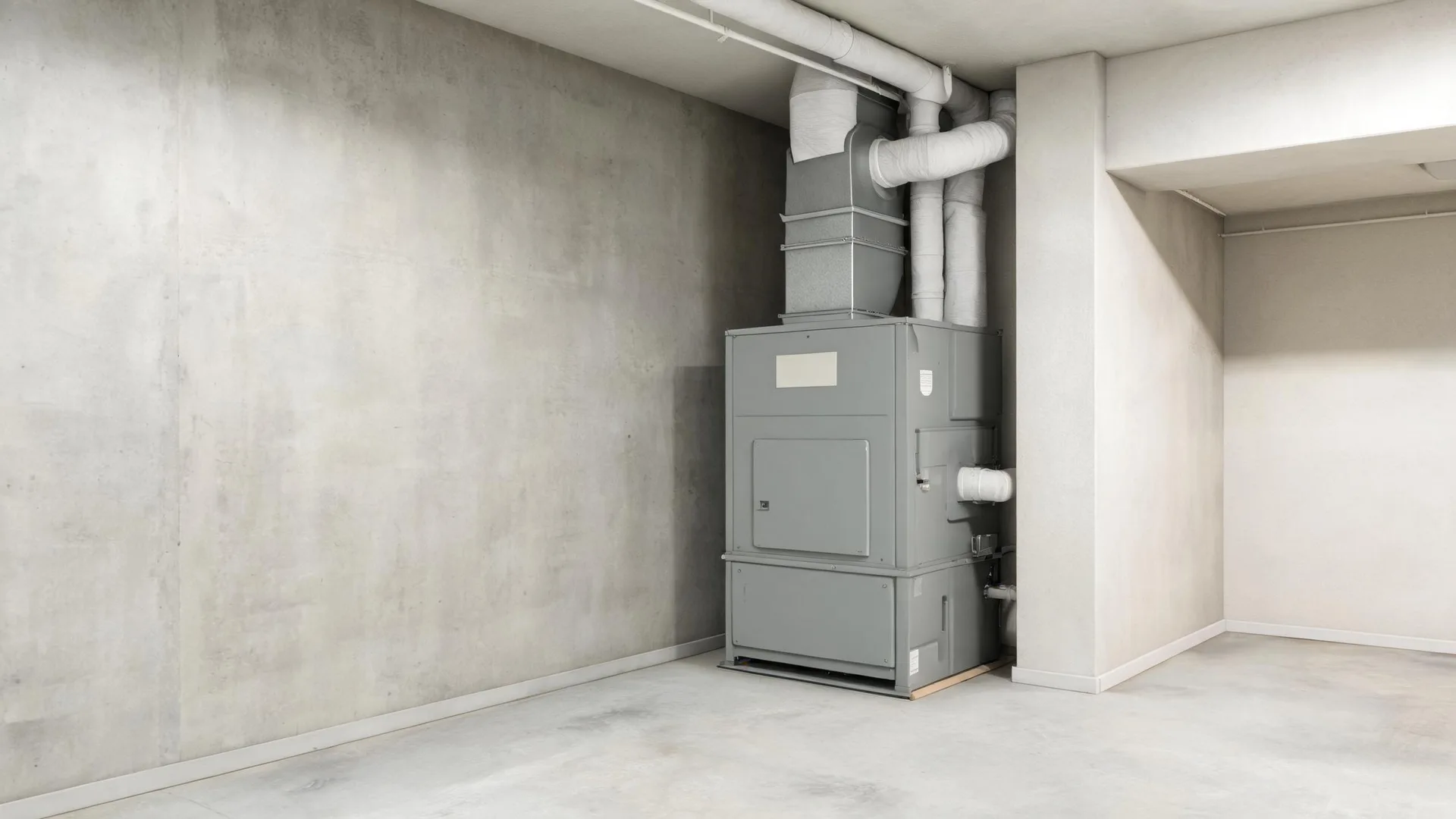
A gray forced-air furnace with metal ductwork stands in an unfinished basement with exposed wooden joists, concrete walls, and a single hanging light bulb.

A high-efficiency gas furnace would save about $130 a year to run in Bridgeport compared with a gas furnace.

  • A high-efficiency gas furnace$580 a year
  • A gas furnace$710 a year

Estimates for a typical Bridgeport home, from EIA household energy data, Connecticut fuel prices and NOAA climate normals. Your home will differ.

Installation day starts with the old furnace coming out, not the new one going in. The contractor disconnects the gas line, the vent pipe, the ductwork and the wiring, then takes the whole unit out before setting the new one in place. The new furnace has to line up with those same connections, even if it's a different size or shape than what you had. Once it's set in place, the gas line gets hooked up and pressure tested, and the vent gets connected. The ductwork gets sealed to the new cabinet so air isn't leaking out around the edges. Last comes the thermostat wiring, then the contractor runs the system through a full cycle, heating up and shutting off, checking the flame, the airflow and the temperature rise before calling it done.