





A bare concrete basement containing a gray gas furnace with metal ductwork and a vertical flue pipe, lit by a single hanging bulb.

Furnace Repair in Waterbury, CT

Tell us about the job

Takes about a minute. No obligation.

RepairFurnace or heatingNaugatuck Valley Planning Region, CT
Step 1 of 2

What ZIP code is the job in?

A furnace near the end of its life tends to break the same way more than once. If the heat exchanger is cracked, that furnace needs to be replaced, not patched, because a cracked exchanger can let combustion gases into the air you breathe. Most other failures are worth fixing on their own. An igniter, a flame sensor, a blower motor, a control board, these can usually be swapped out and the furnace runs fine again. The question is how often you're back in that cabinet for something new. A string of repairs on an older unit in close succession usually means the next thing to fail is already lining up behind the last. A tech who's actually inside the cabinet can tell you which kind of problem you're looking at.

8 months
October through May, your furnace is on duty
22°F
the average winter night it heats against
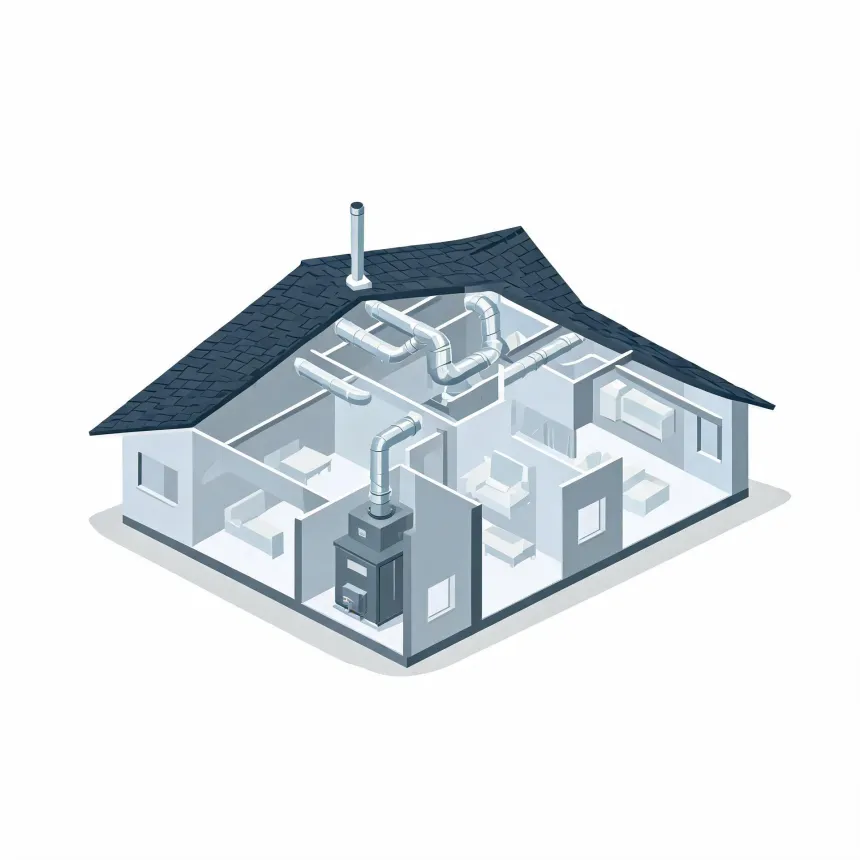
Isometric cutaway illustration of a single-story house showing interior rooms with furniture, a metal ductwork network, and a furnace unit connected to a vertical flue through the dark shingled roof.
Your furnace works hardest from November through March.

NOAA 1991–2020 monthly normals

Furnaces in Waterbury start running in October.

A weak part usually fails in the first cold weeks of October, not months into the season.

Waterbury winters are cold but ordinary, and so is most furnace trouble here

20% of homes statewide lost power a day or more in 2024
Heat runs October through May
Winter nights average 22°F
Half the furnaces in Waterbury sit in houses built in 1969 or earlierHalf the homes in the Naugatuck Valley region were built in 1969 or earlier

Waterbury homes that heat with oil paid $21.64 per million Btu last year. That's the price whether the furnace is running clean or struggling. A furnace with a dirty igniter or a clogged filter works harder to put out the same heat, and every extra minute it runs gets billed at that rate. Left alone, a small problem like that doesn't go away. It just keeps costing you until someone fixes the actual cause.

A furnace that's struggling costs more every day it runs on oil

Oil runs $21.64 per million Btu in Waterbury whether the furnace is working right or not. A furnace burning more of it than it should doesn't fix itself. Get the cause found and fixed now.

Find a contractor
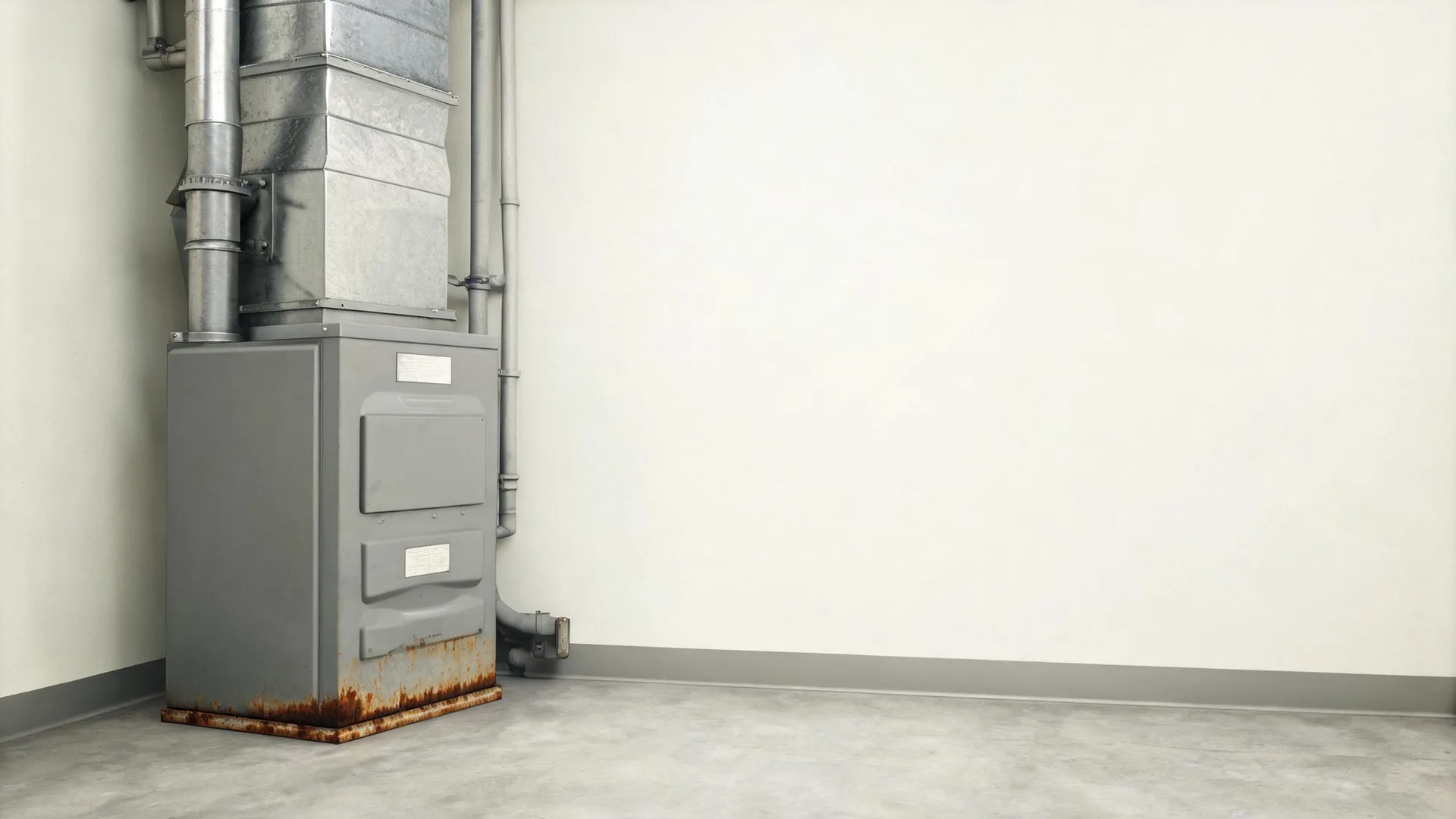
A gray residential gas furnace installed in an unfinished basement, surrounded by ductwork, a metal flue pipe, and a gas supply line.

What an old furnace tells a tech before he opens the cabinet

If your furnace came with the house and the house dates back that far, a tech checking it should ask one more question before touching a single part. Not just what broke, but what else is close behind. On a furnace that old, a repair is still worth doing. But ask the tech straight out how much life is left in it before you pay for another one.

What you can check yourself

Check the thermostat is set to heat and the target temperature is above the room temperature. Find the furnace switch, it looks like a regular light switch mounted near the unit or on it, and make sure it hasn't been bumped off. Look at the breaker panel for a tripped breaker. If the furnace has a standing pilot, see if it's still lit. Pull the filter and look at it. If it's gray and caked with dust, swap it for a new one.
What a dead furnace and a tripped breaker have in common

A tripped breaker or a blown pilot light can shut a furnace down completely, same as a real failure inside the cabinet, and neither one means a part is broken. A clogged filter can choke off airflow until the furnace trips a safety switch meant to protect the heat exchanger, and a clean filter is sometimes the whole fix. A furnace that still won't run after all of this, or runs and blows cold air anyway, has a problem a tech needs to find with the cabinet open.

A furnace that's struggling still asks for help before it quits, usually with a smell, a sound, or a flame that looks wrong. Running it anyway doesn't buy time, it spends what's left of some part's life faster. A cracked heat exchanger gets worse under heat and cooling, cycle after cycle, until the crack opens further. A blower motor running on a failing bearing heats up and wears faster the longer it's forced to spin. A flame sensor coated in residue makes the furnace shut off and try again, over and over, and that short-cycling is its own kind of wear on the ignition system. None of these get better by waiting. The furnace isn't resting between cycles, it's heading toward whichever failure was already closest.

A diagnostic starts before the cabinet even comes off. A tech asks what the furnace was doing right before it quit, whether it was a smell, a bang, no heat at all, or heat that never got warm. Then the cover comes off and he watches it try to run. He'll check for a flame and look at its color and shape, test the igniter or pilot, and check that the inducer motor is pulling exhaust the way it should before gas is ever allowed to flow. A meter comes out for the parts that don't show anything by eye, like a flame sensor reading or a control board signal. The last step is airflow, because a furnace starved for air behaves like a furnace with a bad part, and a tech has to rule that out before he tells you which one you've actually got.