






An unfinished basement containing a metal furnace with ductwork, exposed wooden joists on the ceiling, cardboard boxes, a coiled cable, and a single hanging incandescent bulb.

Furnace Repair in Middletown, CT

Tell us about the job

Takes about a minute. No obligation.

RepairFurnace or heatingLower Connecticut River Valley Planning Region, CT
Step 1 of 2

What ZIP code is the job in?

September is worth a look before heat season starts here. Furnaces in this region run from October through May, about eight months straight, and the first cold snap puts load on a system that's had the summer off. A weak igniter or a clogged sensor that got by last spring tends to show itself in those first few heating weeks. If yours is already acting up now, that's the same strain showing up early. Getting it looked at before the coldest months doesn't change what's wrong, but it means you're not without heat when you need it most.

8 months
October through May, your furnace is on duty
23°F
the average winter night it heats against
Isometric line illustration of a cutaway single-story house with a shingled roof, showing an interior furnace connected to ductwork and a tall vertical flue pipe, plus simple furniture in the adjacent room.
Your furnace works hardest from November through March.

NOAA 1991–2020 monthly normals

A cracked heat exchanger gets worse every time the burners fire.

Keep running it and a repair can turn into a full furnace replacement.

Half the furnaces here are older than the homes' midlife

Half the homes here were built by 1972
Heat runs October through May
Winter nights average 23°F
Furnace repair, not a furnace problemOil ran $21.64 per million Btu in Connecticut last year, the same price whether the furnace is new or old.

A furnace acting up in Middletown is usually just worn parts doing what worn parts do. The igniter cracks. The flame sensor coats over. The blower motor wears out. None of that has much to do with where the house sits. Power here isn't especially steady, 20% of Connecticut households went at least 24 hours without it at some point in 2024. A furnace that cuts out when the power drops should come back on its own once it's restored. If yours doesn't, the problem is with the furnace, not the outage. Either way the fix is the same one a tech would make anywhere. Find the part that failed and replace it.

Get the usual fix

Nothing about this area is especially hard on it. It's most likely the usual problem with the usual fix.

Find a contractor
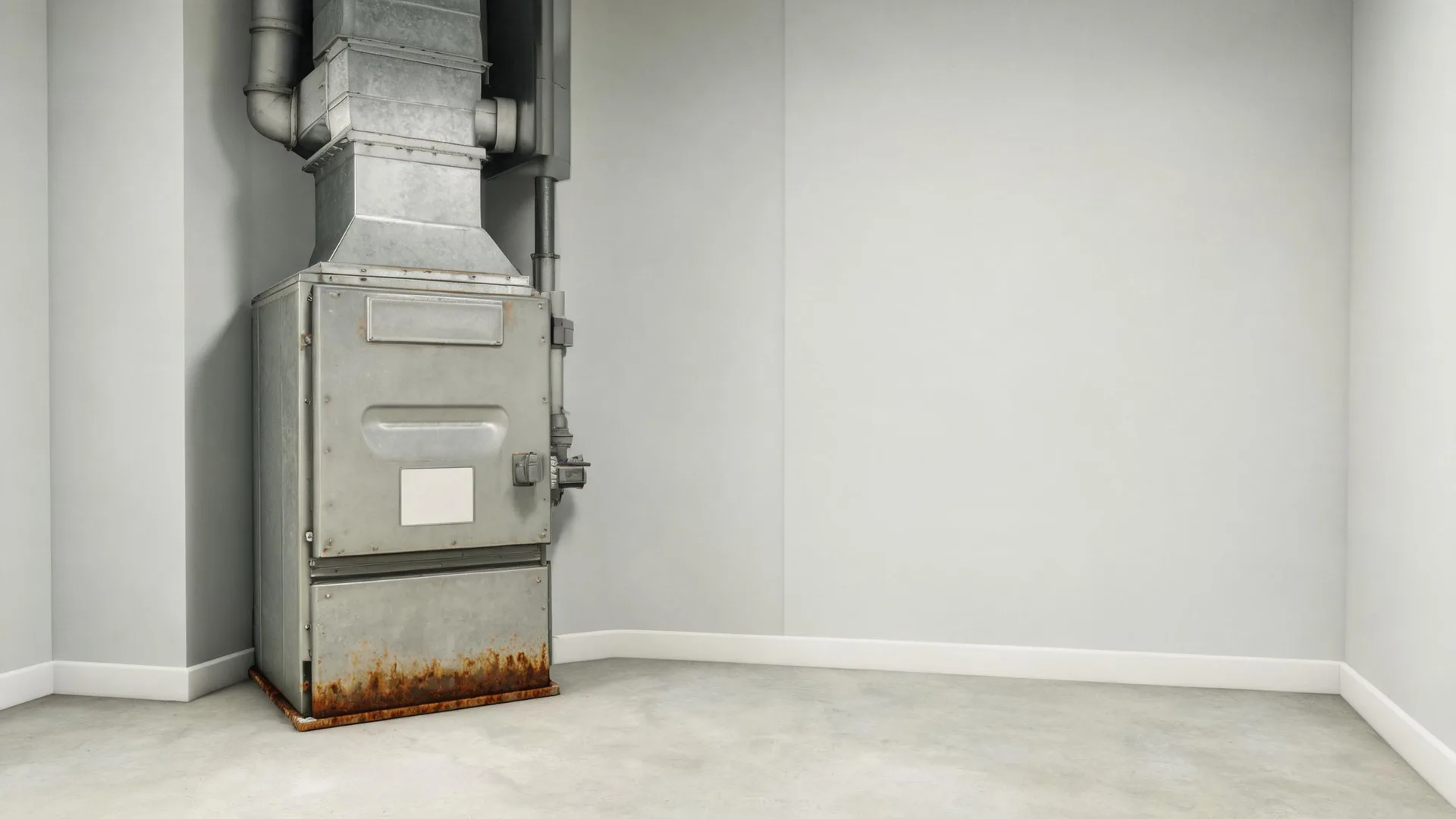
A gray gas furnace with attached ductwork and piping installed in an unfinished concrete basement.

What to check before you call

Before anyone comes out, check the thermostat is set to heat and the setting is above room temperature. Look at the switch on the furnace itself, it's shaped like a light switch and sits on or near the unit, sometimes on the wall nearby. It gets bumped off more than people expect. Check the breaker. Check the filter. A filter clogged with dust blocks airflow, and some furnaces will shut themselves down rather than run with the blower starved for air. If you have a window near the furnace, look for the exhaust pipe outside and make sure nothing is blocking it, no snow, no nest, nothing stuffed in the end. If the pilot light or igniter window shows no flame, don't keep trying to light it yourself. Gas smell means stop everything and call the gas company before anyone touches the furnace at all.

Most failures are the same handful of parts

The igniter cracks from the heat and cool of every cycle until it stops glowing hot enough to light the gas. The flame sensor builds up a film from normal combustion until it can't tell the furnace a flame is there, so the system shuts the gas off as a safety check. The blower motor runs so many hours a season that the bearings just wear through. Capacitors that start the blower weaken over time and eventually can't kick the motor on. None of these fail because something was done wrong. They fail because they've been running.
What the failure tells you about the fix

An igniter or flame sensor is a straightforward swap, the furnace runs the same once the part is in. A blower motor or capacitor failing usually means the furnace still lights but air stops moving, or moves weakly, which is a different repair but still just a part. The one that matters more is a cracked heat exchanger, since that's the metal chamber carrying combustion gas, and a crack there is a safety issue, not a wear-and-tear fix. A tech checking a furnace for repair should be able to tell you which kind of failure you're looking at before any part gets replaced.

Most people notice a furnace is failing before they can say why. It short cycles, running a few minutes and shutting off before the house warms. It blows cool or lukewarm air instead of hot. It makes a noise it didn't used to make, a rattle from the blower wheel or a screech from a motor bearing drying out. Sometimes it just gets louder at startup, a bang or thump as gas ignites late and builds up before it catches. A furnace that runs longer than it used to without hitting the thermostat setting is losing ground somewhere, even if it hasn't quit yet. Any of these is worth a call before the one morning it doesn't come on at all.

A tech starts by asking what the furnace was doing and when it started acting up. Then they watch it run through a full cycle, since a lot of problems only show once the igniter fires or the blower kicks on. From there it's a set of checks. Voltage at the control board. Resistance across the flame sensor. Amp draw on the blower motor. Each check rules a part in or rules it out, so nothing gets replaced on a guess. The flame itself gets checked too, since its color and shape can point to an airflow or gas problem even when the furnace seems to be running fine. By the end the tech should be able to name the part that failed and show you why that part is the cause.