A row of illuminated white colonial houses photographed at twilight along a tree-lined road with a stone wall in the foreground.

Furnace Repair in Danielson, CT

Tell us about the job

Takes about a minute. No obligation.

RepairFurnace or heatingNortheastern Connecticut Planning Region, CT
Step 1 of 2

What ZIP code is the job in?

Ignition parts wear out first

The igniter and the flame sensor take the most abuse because they sit right in the flame every time the furnace fires. An igniter gets brittle over time and eventually cracks. A flame sensor builds up a film from normal combustion until it can't sense the flame anymore and shuts the burner down as a safety measure.

A no-heat call isn't always the burner

A furnace that won't run at all is often a blower motor, a failed control board, or a clogged condensate line on a high-efficiency unit tripping a safety switch. These stop the system cold the same way a bad igniter does, so the fix depends on which part actually failed, not just on the fact that the furnace won't start.

8 months
October through May, your furnace is on duty
20°F
the average winter night it heats against
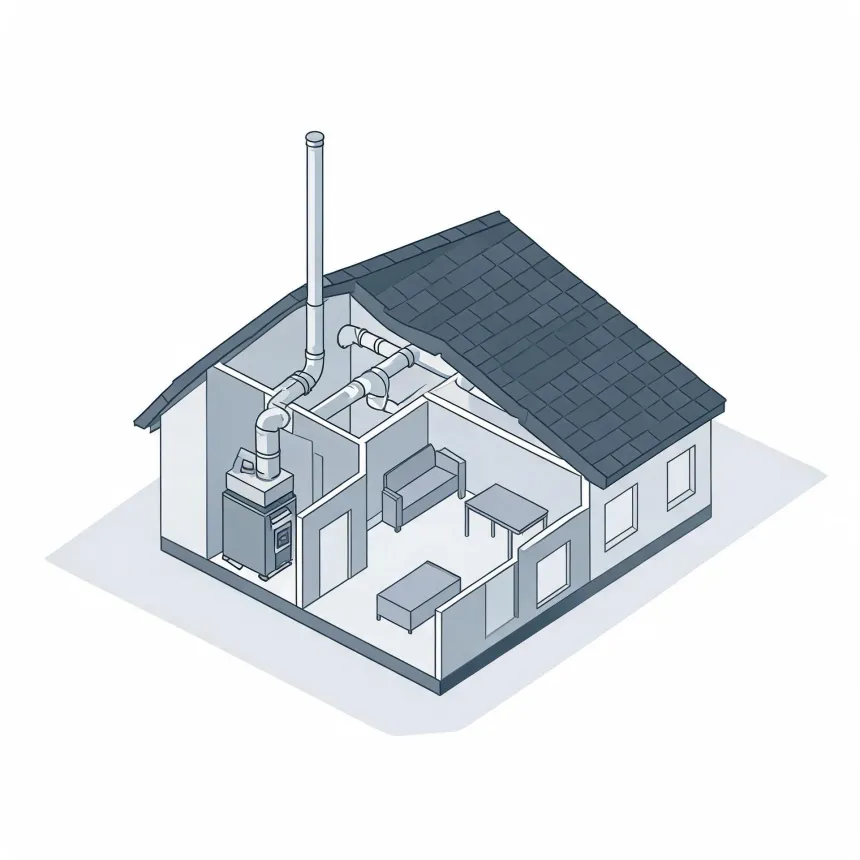
Isometric line illustration of a cutaway single-story house with a shingled roof, showing an interior furnace connected to ductwork and a tall vertical flue pipe, plus simple furniture in the adjacent room.
Your furnace works hardest from November through March.

NOAA 1991–2020 monthly normals

Furnaces in Danielson run about eight months a year, October through May.

Overnight lows averaging 20°F all winter mean the furnace rarely gets a break, and the parts inside feel every month of it.

September is the month to get it looked at, before October puts it to work

Heat runs October through May
Winter nights average 20°F
Half the homes here were built by 1973
Oil heat costs more to run hereFuel oil in Connecticut ran $21.64 per million Btu in 2024, so a furnace running poorly costs you every month it's not fixed.

A furnace failing here isn't a sign of anything unusual about Danielson. It's the same handful of parts that wear out in any furnace, anywhere, after enough winters of running. About 20% of Connecticut households went at least 24 hours without power in 2024. A furnace needs electricity to run even if it burns gas, so an outage stops it the same way a cracked igniter would. That's not a sign of damage. It's worth checking before you assume the worst and call for a repair you don't need.

Eight months of winter work is why repairs don't hold on their own

A furnace running since October has had time to wear the same parts that fail in any furnace. Getting the actual cause found, not just the symptom fixed, is what makes a repair last through the rest of the season.

Find a contractor
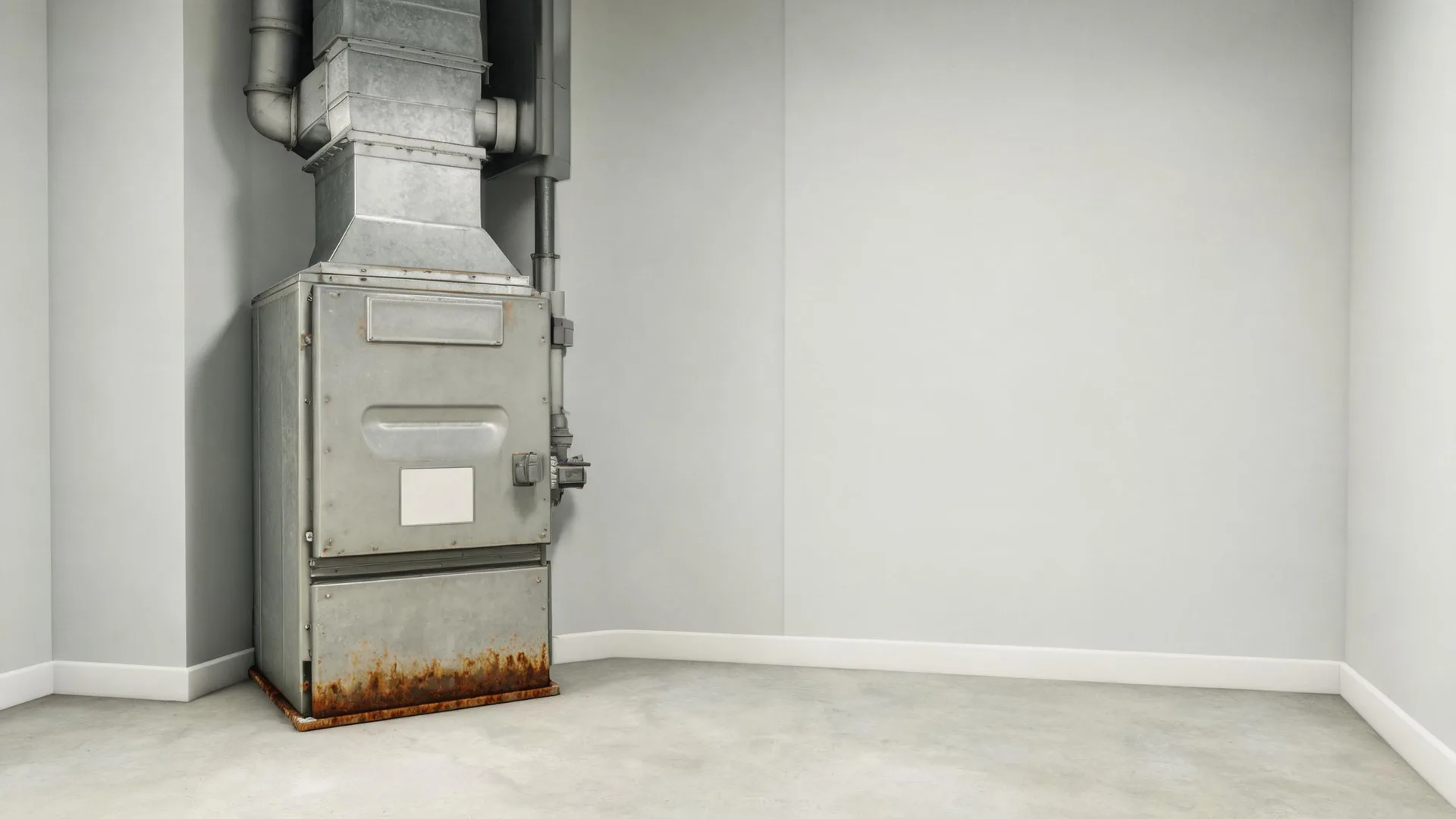
A gray gas furnace with attached ductwork and piping installed in an unfinished concrete basement.

An older furnace in an older home

Half the homes in this area were built in 1973 or earlier. A furnace that age has likely been replaced once already, but if yours hasn't, or if it's a later replacement that's had its own long run, parts get harder to find and repairs start costing close to what a new furnace would. Worth asking the tech straight out how much life is left in it before you pay for the fix.

Short cycling wears on everything else

A furnace that fires up, runs a couple minutes, then shuts off and starts again is usually struggling with airflow or overheating. A dirty filter chokes it. A cracked heat exchanger can trip a limit switch the same way. Either way, short cycling puts more wear on the parts that start the burner each time, so it tends to get worse the longer it runs like that.

Noise usually means something specific

A bang when the furnace fires is delayed ignition, where gas builds up before it catches. A squeal points to the blower motor or its bearings. A rattle can be a loose panel, but it can also be something coming loose inside the cabinet. None of these fix themselves, and most get louder before they get worse.

A few things are worth checking before you pick up the phone. If the furnace won't start at all, check the thermostat batteries and make sure it's set to heat and a few degrees above room temperature. Check the breaker and any switch that looks like a light switch near the furnace itself, since that shuts it off completely and gets bumped more often than you'd think. Look at the filter. A filter packed with dust chokes off airflow and can cause the furnace to overheat and shut itself down before it ever gets warm. If you smell gas, that's not a troubleshooting step, that's a call to the gas company first and everyone else after. Past that, if the furnace runs but the air feels off, or it's making a noise it didn't used to make, that's not something to chase down yourself. That's the point where you need someone who can get the panel off and see what's actually happening inside.

Repair makes sense when one part failed and the rest of the furnace is sound. An igniter, a flame sensor, a blower motor, these get replaced on their own all the time without touching anything else, and the furnace runs like normal after. Replacement starts making more sense when the failures stack up, one thing fixed this year and another last year, because that pattern usually means the whole furnace is wearing out at once, not just the one part in front of you. A cracked heat exchanger is its own category. That's not a part you replace on its own, since it means the furnace itself is no longer safe to run. Age matters less than what's actually failing and how often you're the one calling about it.