



A two-story red brick house with dark shutters and a gray roof sits behind a mowed lawn, a dry-stacked stone retaining wall, and large deciduous trees under an overcast sky.

Boiler Repair in Bridgeport, CT

Tell us about the job

Takes about a minute. No obligation.

RepairBoilerGreater Bridgeport Planning Region, CT
Step 1 of 2

What ZIP code is the job in?

Boilers in Bridgeport run from October through May, about eight months of the year. Overnight lows average 26°F through December, January and February, so the boiler is doing real work on the coldest nights, not just idling. None of that is unusual for a boiler built for this climate. When one stops heating right or starts making noise it shouldn't, the cause is usually something a tech has seen many times before. A failed igniter, a stuck valve, low pressure, air trapped in the lines. Finding which one it is and fixing it properly matters more than how long the system runs each year.

A tech checks pressure, the igniter, the valves and the venting before touching anything.

A stuck valve gets fixed because it was found, not because it was guessed at.

A boiler built for Bridgeport winters still runs on the same handful of parts

Heat runs October through May
Winter nights average 26°F
Half the homes here were built by 1959

Half the homes in Bridgeport were built in 1959 or earlier. If your boiler came with a house that old, it's not necessarily the original unit, but it may be carrying more years than the one next door. An old boiler can still run fine for a long time if it's been kept up, so age alone doesn't tell you much. What it does mean is worth a straight question before paying for a repair. How much life does this unit have left, and is this the first real problem or the third one this year. A tech who's looked at the system can give you that answer. Guessing at it from the outside can't.

Get the usual fix

Nothing about this area is especially hard on it. It's most likely the usual problem with the usual fix.

Find a contractor

What you can check yourself

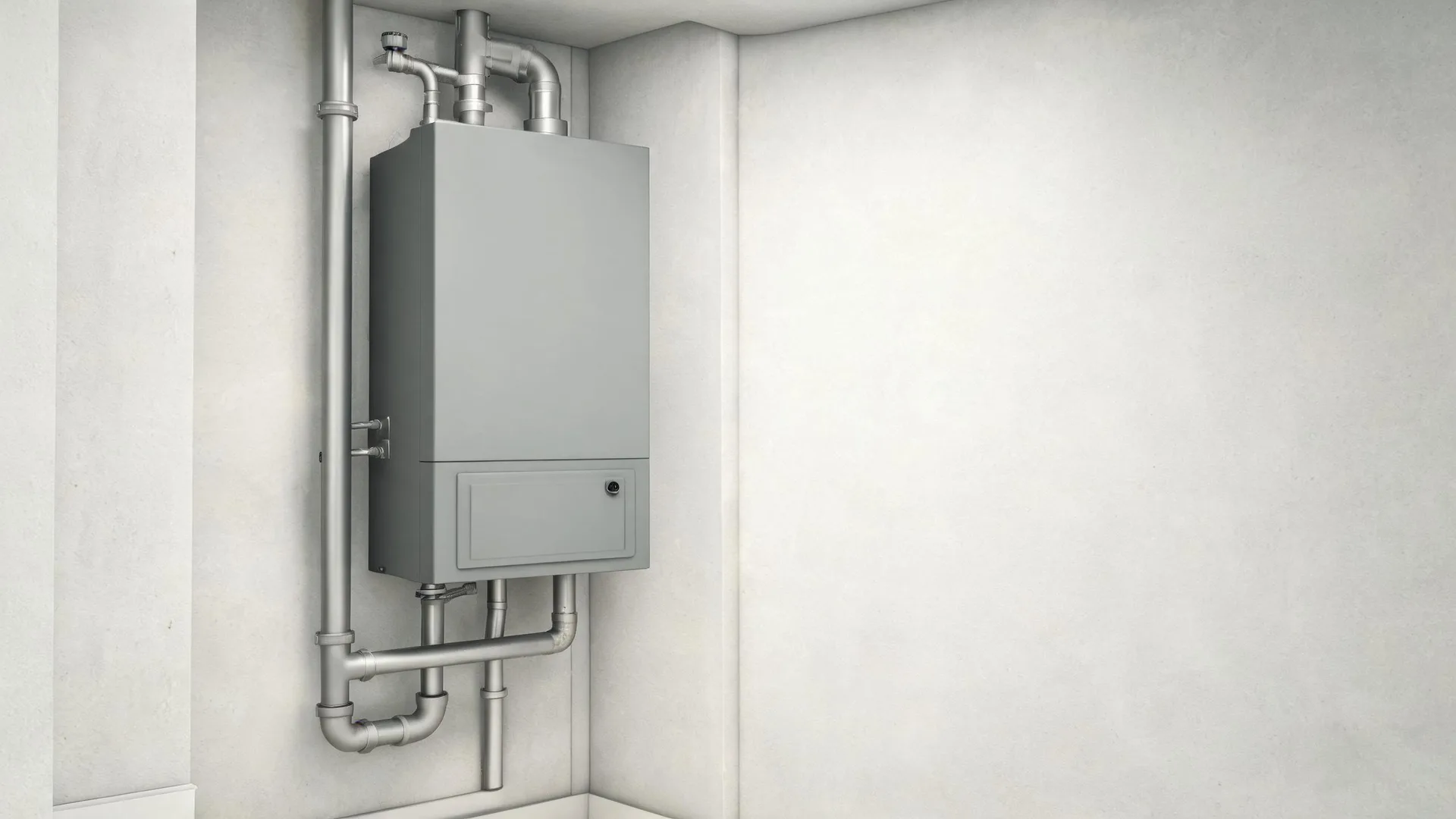
Look at the pressure gauge on the front of the boiler. It should sit somewhere around the middle of the normal range marked on the dial. If the needle is down near zero, the system is low on water and that alone can stop it from firing. Check that the thermostat is calling for heat and has power. If the boiler uses a standing pilot, see if it's lit. Look at the switch on the side of the unit, sometimes mounted like a light switch, and make sure nothing turned it off by accident.
What to leave alone

Don't open the boiler's cabinet or touch the gas valve. If you smell gas, leave the house and call the gas company from outside, not a repair line. Don't keep resetting a lockout button more than once. If it trips again after a reset, something is actually wrong and resetting it repeatedly can mask a problem that needs a tech's attention. Bleeding a radiator is usually fine for a homeowner to do, but repressurizing the system yourself can overfill it if you don't know the right stopping point.

Most boiler trouble shows up as a change you can hear or feel before it fully quits. Heat that used to come up fast now takes a long while, or one room stays cold while the rest of the house is fine. A kettling or banging noise from the boiler usually means sediment or trapped air is making steam pockets inside, and it gets worse, not better, if it's left alone. A pilot or igniter that won't hold, so the burner lights and then drops out, points to a flame sensor or thermocouple that's failing. Water pooling under the unit is never nothing. It means a seal, valve or fitting is letting go somewhere, and that's worth a look before it's a bigger leak. A boiler that short-cycles, firing up and shutting off again within a few minutes, is usually struggling with pressure or flow rather than fixing itself.

A boiler is a simple machine with a short list of parts that can fail, and most of those parts are worth fixing rather than replacing. A circulator pump, a zone valve, an igniter, these get swapped out on their own without touching the rest of the system. What changes the math is the heat exchanger. That's the core of the boiler, and if it's cracked or leaking, there's no patching it. A tech checks for that before recommending anything else, because every other repair assumes the heat exchanger is sound. If it isn't, the age of everything around it stops mattering.