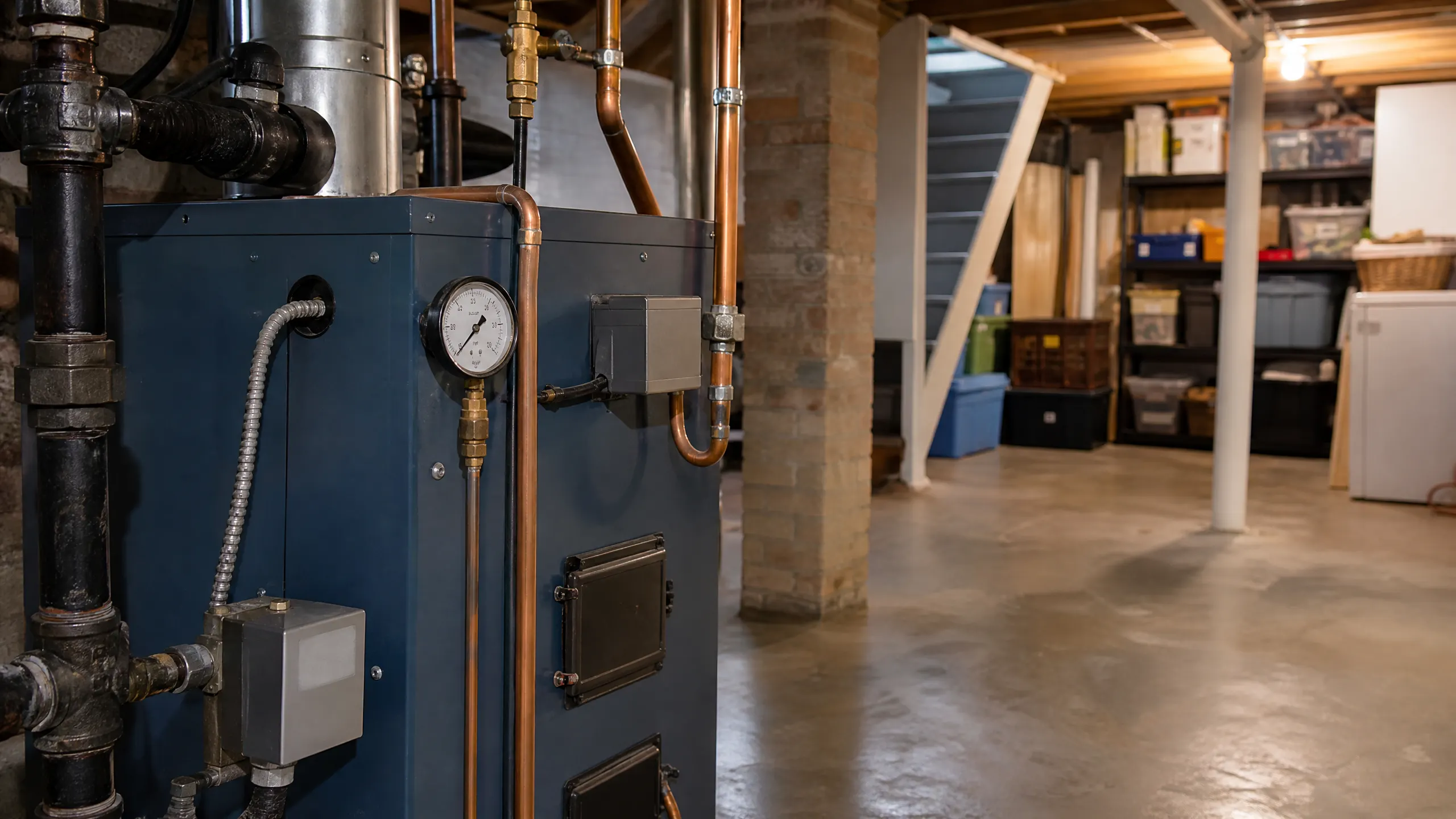




A blue boiler with copper pipes and a pressure gauge mounted on its front panel, installed in an unfinished basement used for storage.

Boiler Installation in Torrington, CT

Tell us about the job

Takes about a minute. No obligation.

New system or replacementBoilerNorthwest Hills Planning Region, CT
Step 1 of 2

What ZIP code is the job in?

Fuel oil ran $21.64 per million Btu in Connecticut in 2024. If your boiler runs on oil, that price is why the installation itself is worth getting right. An efficient boiler burns less fuel to put out the same heat, and at that price every therm saved shows up on the bill. A contractor sizing the new boiler for your home, not just swapping in the same size as the old one, is part of what makes that efficiency real. Ask what AFUE rating the unit carries before it goes in.

Standard sizing works fine for a boiler here.

A unit matched to your home's heat loss, not oversized, is what a contractor should be installing.

Eight months of heat and 17 degree nights, this boiler earns its keep

Heat runs October through May
Winter nights average 17°F
Half the homes here were built by 1967
Where oil heats most homes, boiler installation means knowing itFuel oil or kerosene heats 53.1% of homes in Northwest Hills Planning Region.

Heat goes on in October here and runs through May. That is eight months of the year this boiler has to work, which is most of the reasons to get the installation done before it starts rather than during the first cold week. A boiler put in under pressure gets sized and set up fast. One put in during September gets sized right, tested, and ready to run on the first cold morning instead of the first emergency call. If your current boiler is old enough that you are wondering whether it will make it through another winter, September is when you find out on your own terms.

The new boiler has to fit the house you have

Half the homes in Northwest Hills Planning Region were built in 1967 or earlier. A boiler going into a house that old should be sized for that house, not for whatever the old unit happened to be. A contractor doing a heat loss calculation on your home is how the new boiler ends up matched to it.

Find a contractor

The boiler is one piece of the bill

The unit itself is only part of what gets paid for. Piping, venting, the circulator pump, zone valves, and the labor to run all of it in the right order add up alongside the boiler. A contractor quoting just the box isn't quoting the job.
What the old system leaves behind matters

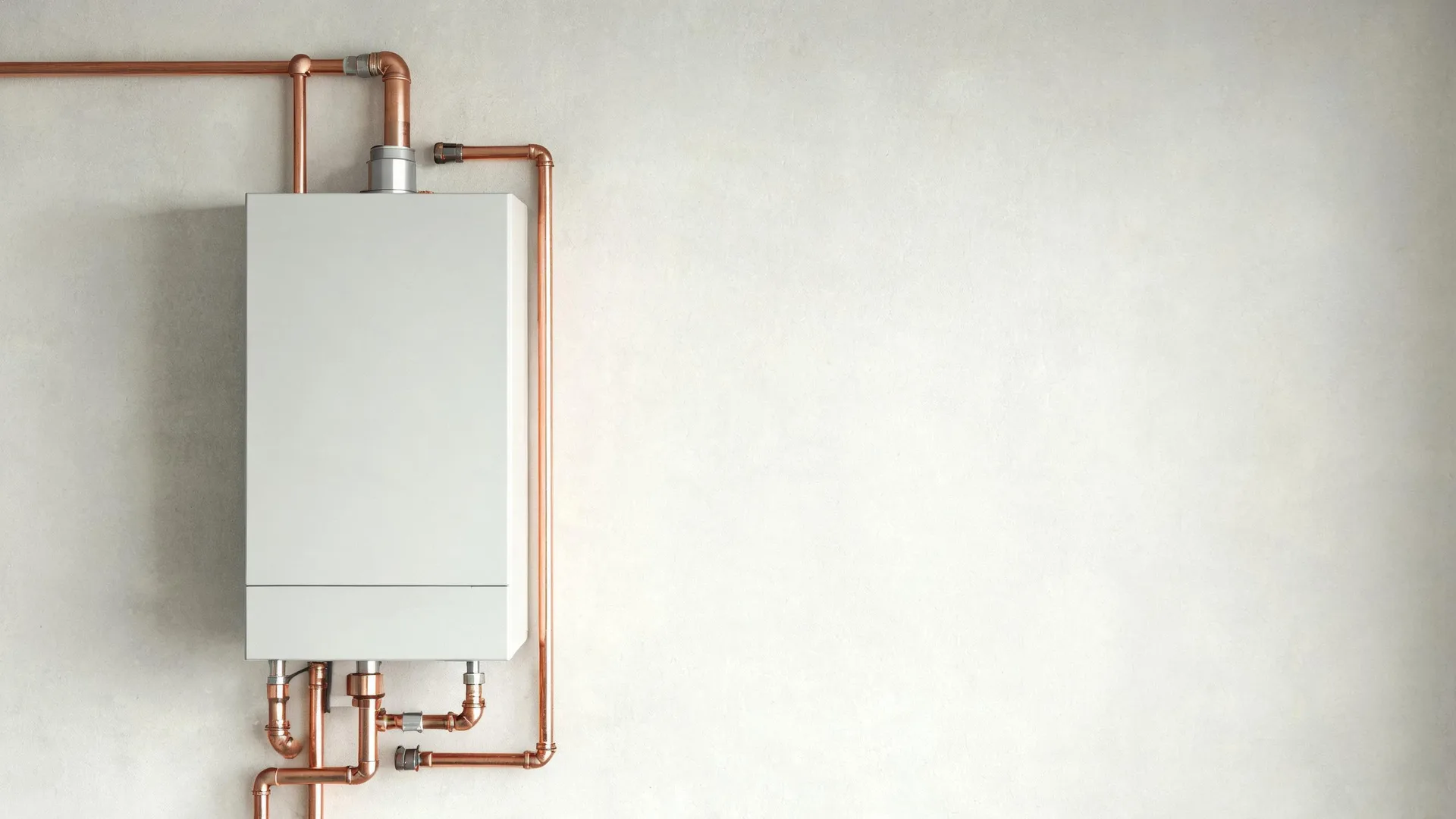
A straightforward swap, where the new boiler can use the existing pipe runs and flue, costs less in labor than one where the venting has to change or the zones get reworked. Walking through what the new boiler actually needs compared to what's already there is how a contractor prices the job accurately instead of guessing low and adjusting later.

The old boiler has to come out before the new one goes in, and that's its own piece of work. A boiler is heavy, full of water, and piped into both the heating loop and the chimney or vent. A contractor drains it, disconnects the gas or oil line, and breaks the flue connection before it can be hauled out. If the old unit is cast iron, it comes apart in sections because one piece is too heavy to move whole. Whatever gets disconnected, that includes the gas line, the water lines, the electrical, needs to be capped or rerouted cleanly so the new boiler isn't tied into old fittings that don't match it. None of this is difficult, but it has to happen in order, and it's why a boiler swap takes real time on site rather than just an afternoon of hooking up a new box.

Once the old boiler is out, the new one gets set on its pad and the plumbing starts. Supply and return lines get piped in. The gas or oil line gets connected and checked for leaks. The flue gets tied in to match what the new unit needs, which may not be the same size or draft as what the old one used. The aquastat, the circulator pump, and any zone valves the heating loop uses get wired in next. Before any of it gets closed up, the system has to be filled, bled of air, and brought up to pressure. Then it gets fired and run through a full cycle, with the flue draft, the burn, and the temperature rise all checked while it runs. A boiler that looks installed and a boiler that has been tested under fire are not the same thing.