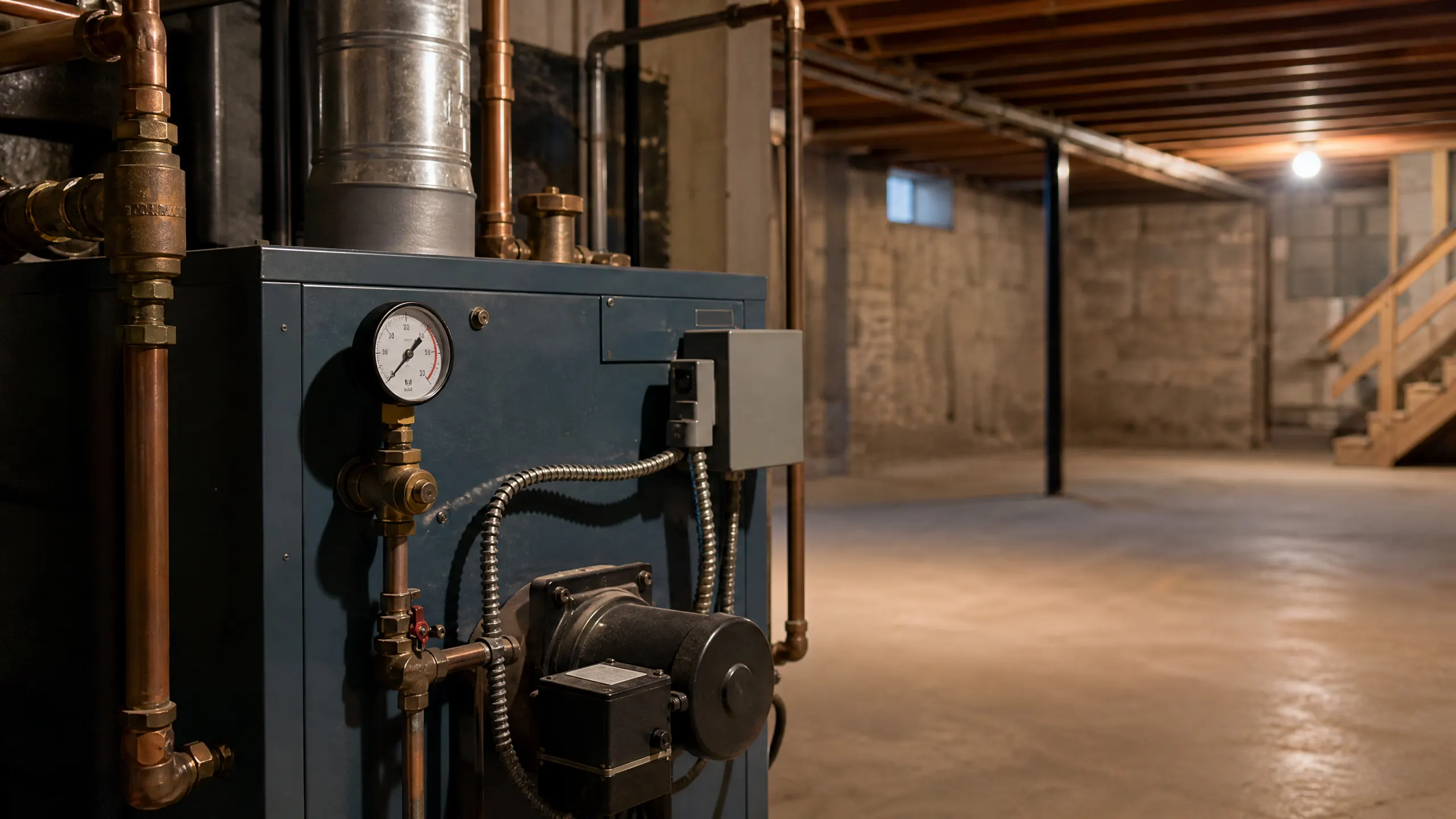



A blue steel boiler with copper pipes and a pressure gauge mounted in an unfinished basement with stone walls and wooden stairs.

Boiler Installation in Hartford, CT

Tell us about the job

Takes about a minute. No obligation.

New system or replacementBoilerCapitol Planning Region, CT
Step 1 of 2

What ZIP code is the job in?

Gas heats 46.4% of homes in the Capitol Planning Region, more than any other fuel. Fuel oil comes next at 30.6%, and that split shows up in the boilers you see here. A gas boiler vents through a flue or a sidewall vent and ties into a gas line if your home already has one run to it. An oil boiler needs a tank and fuel deliveries, and the burner gets cleaned on a schedule gas units don't need. If your home already has a gas line or an oil tank in place, keeping the same fuel means the installer is working with what's already there instead of adding it. Switching fuels during an installation is possible, but it means running a new gas line or removing an old tank, work the contractor will want to look at before quoting the job.

Winters here run cold enough that a boiler sized for an average year still has to hold 21°F overnight, eight months straight.

A correctly sized standard unit covers that without any upgrade to a bigger or pricier model.

A standard boiler, correctly sized, is built for this

20% of homes statewide lost power a day or more in 2024
Heat runs October through May
Winter nights average 21°F

Gas here runs $16.36 per million Btu, and that number sets what a standard boiler costs to run. It does not set what size or model you need. A correctly sized unit matches its output to the home it heats, not to the price of the fuel behind it. Paying more for a bigger or higher-efficiency boiler than the house calls for raises the installation cost without changing what gas costs per Btu. The fuel price is worth knowing when you compare gas to oil. It is not a reason to size up.

Get it installed in September, before heat season starts

Heat runs here from October through May, eight months straight. September is the month before it starts. Get the boiler in during September and the install happens on a normal schedule, with time to size it right and test it before the cold sets in.

Find a contractor

Ask what the sizing is based on

A boiler should be sized off a heat loss calculation for the actual house, the walls, the windows, the square footage, not off the old unit it's replacing. If an installer quotes a size by matching what's already there, ask how they got that number. A boiler too big for the house will short cycle, turning on and off more than it should, and that wears out the parts faster than steady runtime would.
Ask what happens to the near-boiler piping

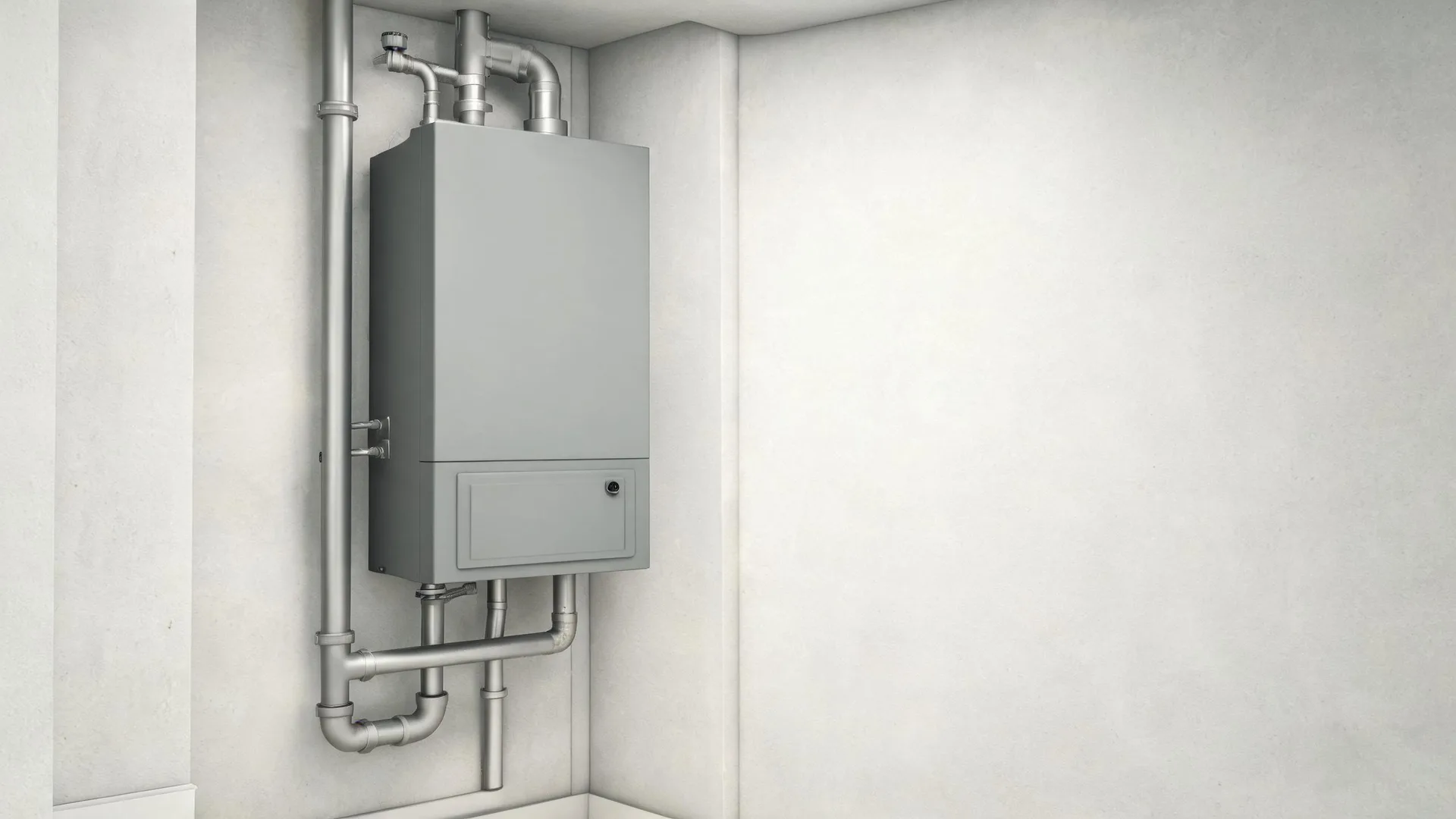
The boiler itself is only part of the job. The near-boiler piping, the expansion tank, the circulator pump, and the venting all have to match the new unit, not the old one. Some of this gets reused, some doesn't fit the new boiler's specs and has to be replaced. Get this listed out in the quote so you know what's being reused and what's new, instead of finding out partway through the install.

Every boiler carries an AFUE number on its label, and it tells you how much of the fuel it burns turns into heat for the house instead of going out the flue. A higher number means less fuel wasted, nothing more. It doesn't tell you whether the unit is the right size for the house, and a boiler that's too big will still cycle on and off more than it should no matter what the label says. Boilers with the same AFUE can be built differently inside, a simpler heat exchanger versus a more complex one that needs more upkeep to keep running at that rating over the years. Ask an installer how that number was tested and what it takes to maintain it, not just what the unit costs to buy.

Installation day starts with shutting down and draining the old boiler before anything new goes in. The installer disconnects the piping, the venting, and the gas or oil line, then clears the old unit out before the new one gets set. Setting the new boiler means leveling it and connecting it to the near-boiler piping, which is where a lot of the real work happens since that piping has to match the new unit's specs. After it's piped in, the venting gets connected and checked for the right pitch and clearance. Then the system gets filled with water, purged of air, and fired up for testing. A proper installation ends with the installer checking the controls, setting the aquastat, and running the system through a full cycle before calling the job done.