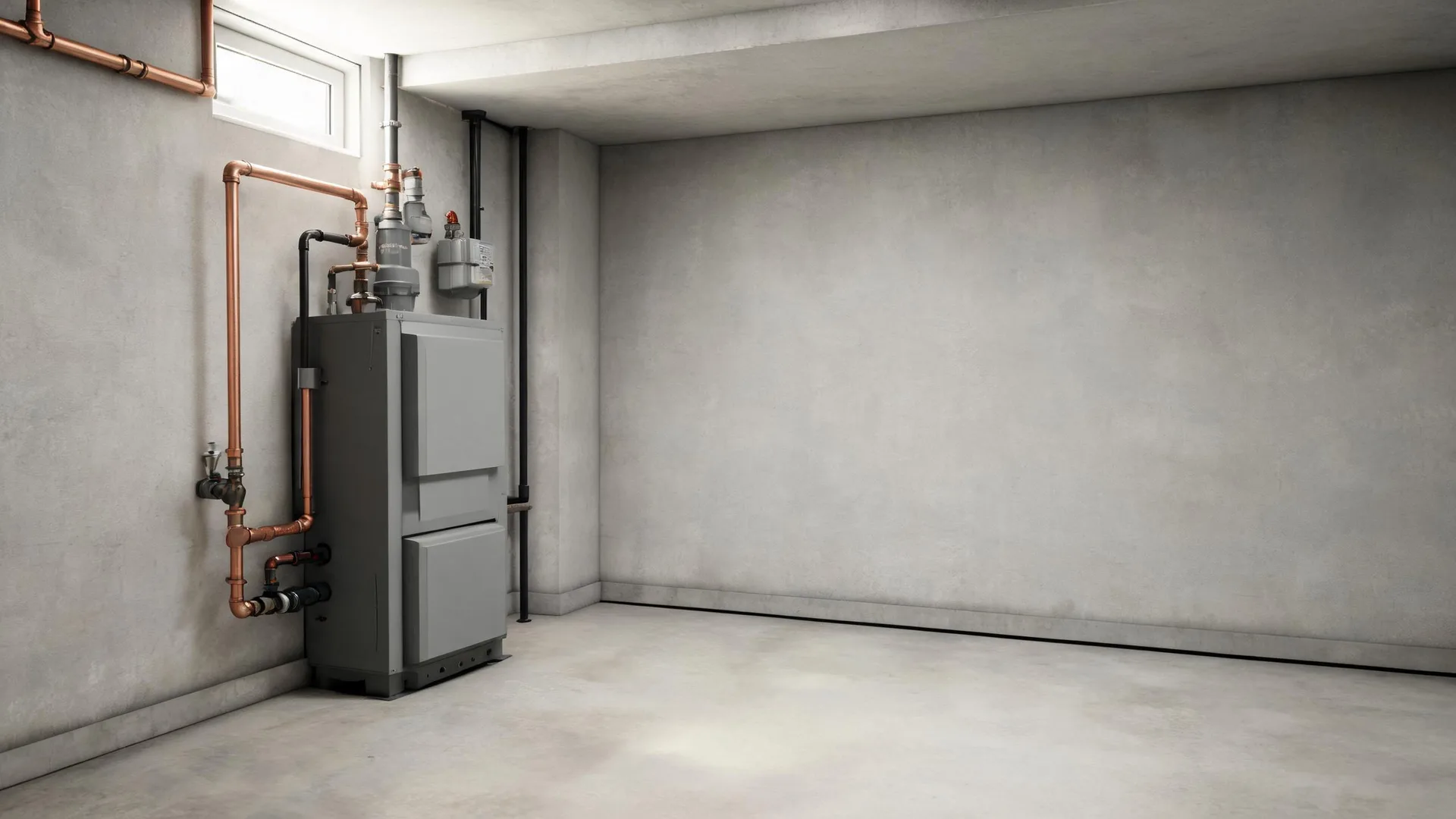
Most of Bridgeport heats with gas
Utility gas heats 57.4% of occupied homes in the Greater Bridgeport region, more than any other fuel. Fuel oil comes next at 23%. A gas boiler is the common setup here, not an exception.
Takes about a minute. No obligation.
Utility gas heats 57.4% of occupied homes in the Greater Bridgeport region, more than any other fuel. Fuel oil comes next at 23%. A gas boiler is the common setup here, not an exception.
If your current boiler runs on gas, replacing it with another gas boiler means working with a gas line and venting already sized for that job. A contractor can confirm what your home has to work with before quoting anything else.
Half the homes in this region were built in 1959 or earlier.
A boiler going into a house that old has to match the pipes and radiators already in place, not the other way around.



A standard boiler sized to your home is the right call here. Bridgeport doesn't throw anything unusual at a heating system that would push you toward oversizing or extra capacity. One thing worth asking about while it's being installed is battery backup or some way to keep the boiler running without grid power. Twenty percent of Connecticut households lost power for at least 24 hours in 2024. A gas boiler still needs electricity to run its controls and circulator pump, so an outage means no heat even with gas flowing. That's a conversation for your contractor, not a reason to buy a bigger unit.
Gas costs what it costs here, and no boiler changes that. A standard, correctly sized unit will run efficiently on the gas line you already have. There's no reason to pay for extra capacity this house doesn't need.
Find a contractor
A boiler's output has to match the radiators or baseboard it's feeding. One sized too small will run constantly and never quite get the far rooms warm. One sized too big will short cycle, turning on and off in quick bursts that wear out the parts faster and still leave the house feeling uneven.
Older boilers vent through a chimney. Many newer high-efficiency models vent through a wall with plastic pipe instead, which means new venting has to be run and placed somewhere that meets code for clearance from windows and doors. That's labor the quote should spell out, not something that shows up as a surprise once the work starts.
Sizing a boiler comes down to a heat loss calculation, not a guess based on square footage or what the old unit was rated for. A contractor measures or estimates how much heat the house loses on the coldest day, room by room, factoring in window area, insulation, and the output of each radiator or baseboard run. That number tells them what the boiler has to produce, not more and not less. Skipping this step and matching the new unit to the old one is a common mistake, since the old boiler may have been wrong from the start or sized for a house that's since been insulated or had windows replaced. The radiators themselves don't change, so the boiler has to be matched to what's already moving the heat, not picked first and fitted to them after.
Installation day starts with the old boiler coming out, and that alone can take a few hours if it's piped into cast iron radiators or baseboard that's been there a long time. The new unit gets set, leveled, and connected to the gas line, the water lines, and the venting, then pressure tested before anything gets fired up. Electrical work follows, tying in the controls and the circulator pump. Once it's running, the contractor bleeds air out of the radiators or baseboard loops and checks that heat is reaching every zone evenly. A straightforward swap, same fuel and similar venting, usually wraps up in a day. If the venting has to change from a chimney to a wall vent, or if a zone needs new piping, plan on it running longer. Either way, you shouldn't be without heat overnight.