





A row of white Colonial-style houses with glowing windows photographed at dusk along a road bordered by a stone wall.

Mini Split Installation in Norwich, CT

Tell us about the job

Takes about a minute. No obligation.

New system or replacementMini-splitSoutheastern Connecticut Planning Region, CT
Step 1 of 2

What ZIP code is the job in?

Connecticut homeowners paid 28.75 cents per kilowatthour in 2024, well above what most of the country pays. A mini split runs on electricity, so that rate hits every cycle it makes. The payoff is in how a mini split is built. It sends heat or cool air only to the room you're using, not the whole duct system, and it adjusts its output instead of switching on at full blast and shutting off. Less wasted output means fewer kilowatthours at that 28.75 cent rate. On a system you'll run for years, that difference shows up on every bill it sends you.

8 months
October through May, your system heats
3 months
June through August, it cools
24°F
the average winter night it heats against
80°F
the average summer afternoon it cools against
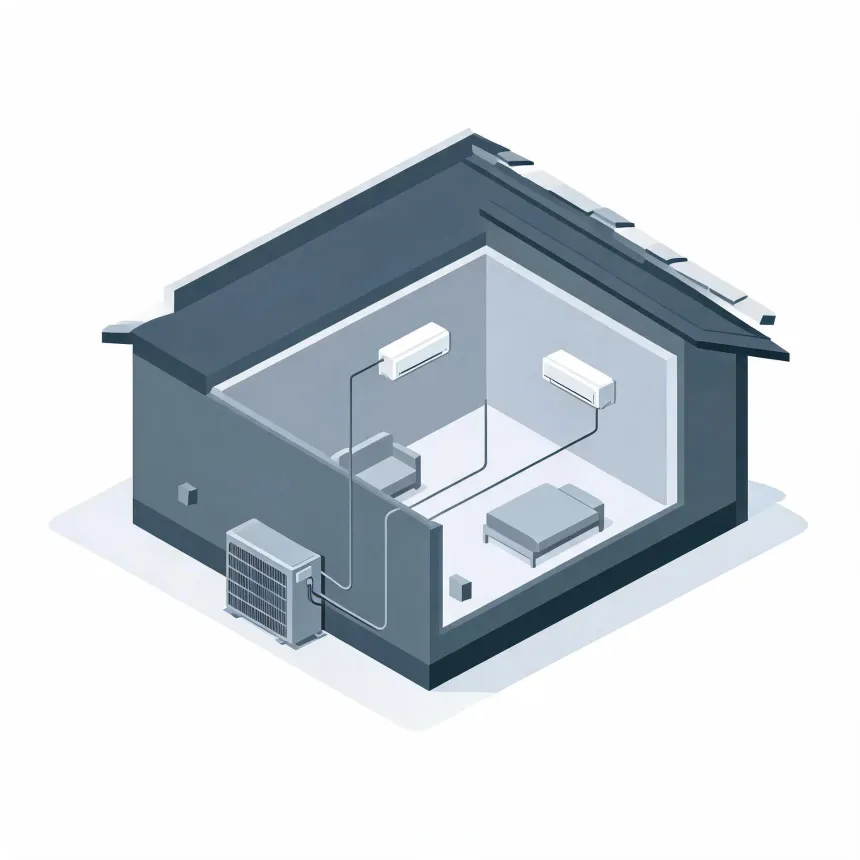
Isometric illustration of a cutaway house interior showing two wall-mounted indoor air conditioning units connected by line sets to an outdoor condenser unit beside the exterior wall.
Your system heats October through May and cools June through August.

NOAA 1991–2020 monthly normals

Oil and kerosene heat 48.6% of homes in Southeastern Connecticut, more than any other fuel.

A mini split runs on electricity, so it adds a second system to an oil-heated home instead of a reason to tear out the furnace.

Half these homes were built by 1969, before a mini split could be designed in

Half the homes here were built by 1969
Cooling runs June through August
Summer afternoons average 80°F

A mini split sized for the room it heats or cools is the right call here. Nothing about Norwich pushes you toward a bigger unit or a pricier line. Outages are the one thing worth knowing. 20% of Connecticut households went at least 24 hours without power in 2024. A mini split won't run without electricity, same as a furnace blower or an oil burner's igniter. If that matters to you, ask about a model that can pair with a battery or generator circuit. That's a question about backup, not about the size or grade of the unit itself.

Get it installed before June, not after the heat arrives

Cooling here runs June through August. Put a mini split in before June and it's a planned job, done on your timeline, with the unit ready to go on the first warm day. Wait until the heat is already on and you're choosing from whatever's available, on whatever day someone can get to it.

Find a contractor
A man in a cap, gray long-sleeve shirt and brown pants carries a canvas tool bag up porch steps toward a dark front door, beside a potted shrub.
A beige split-system air conditioner outdoor condenser unit mounted on metal wall brackets atop a stucco wall.

Three months of work a year

Three months of cooling, June through August, with afternoons averaging 80°F. That's not a hard summer for a compressor to work through. Less run time means less wear, so when something does go wrong years from now, it's more likely a part that wore out or a unit that never got serviced than one worked past what it was built for. You don't need the biggest or most efficient model on the shelf to handle what summer asks of it here. A unit sized right for the room, installed well, covers more than this job requires.

The old unit doesn't come out first

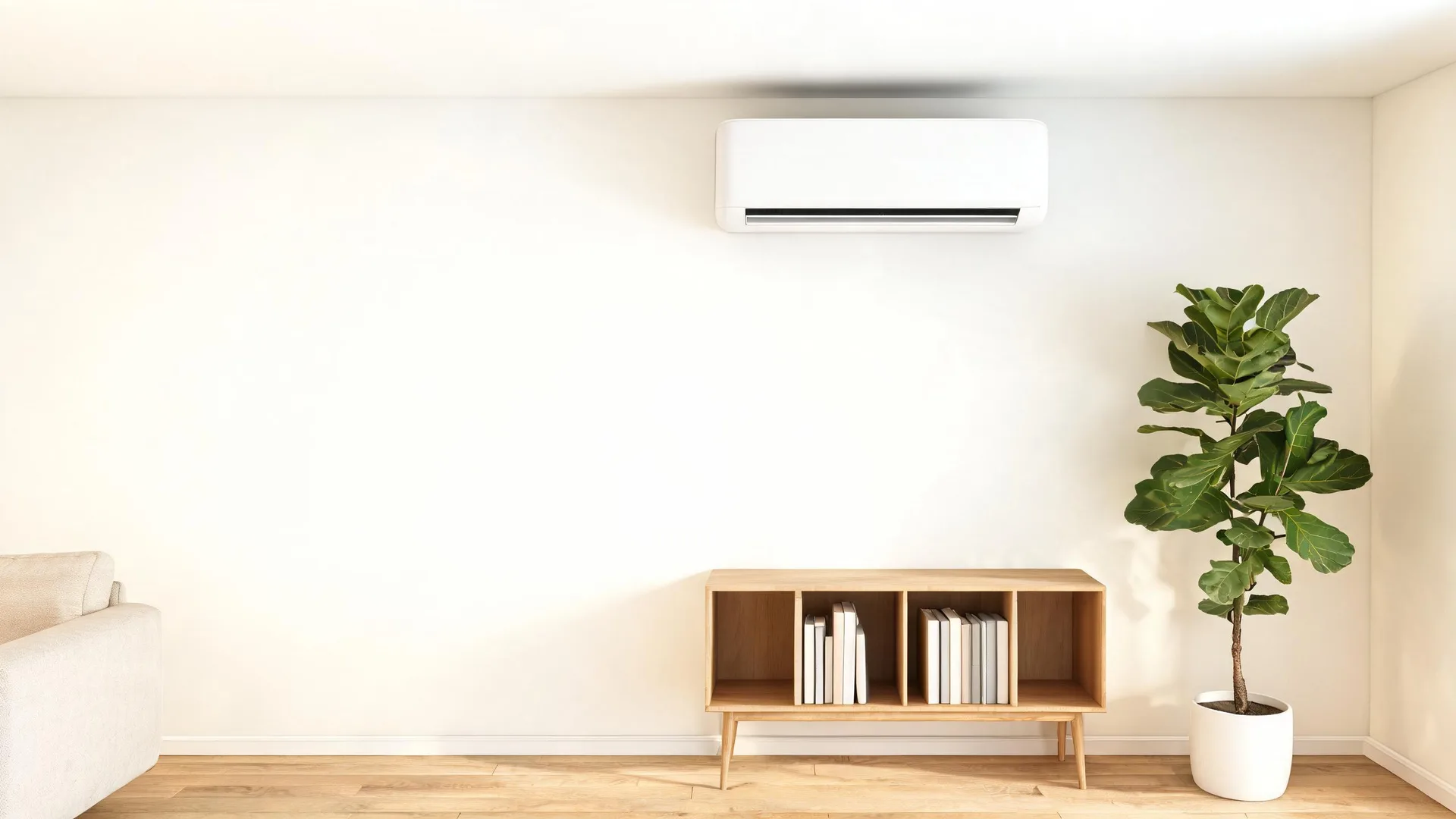
A mini split installer mounts the new indoor and outdoor units, runs the line set, and gets the system charged and running before anyone touches the old equipment. If a window AC or electric baseboard is handling that room now, it can stay in place until the new system is proven out.
What happens next depends on what's leaving

A window unit or portable AC just gets hauled off. Baseboard heaters or an old wall furnace usually need an electrician or the installer to disconnect wiring or cap a gas line before removal. Ask ahead of time who handles that part, so it's not a surprise on install day.

What you pay for comes down to how much equipment goes in and how hard it is to get it there. A single zone, one outdoor unit feeding one indoor head, costs less than a multi-zone setup running several heads off one compressor. Line set length matters too. The farther the indoor and outdoor units sit from each other, the more refrigerant line and wiring the job takes, and the more wall or floor gets opened up to route it. Where the outdoor unit lands plays a part as well, a straightforward pad on the ground goes faster than a wall mount bracket or a roof setup. Electrical work can add to it, since a mini split needs its own dedicated circuit, and if the panel doesn't have room for one, that's a separate job before the unit goes in at all. The brand and the efficiency rating of the equipment itself set a price floor, but labor and access usually move the number more than the unit does.

Sizing a mini split comes down to matching the unit's output to the room's heat gain and heat loss, nothing more. Too big and it cools the air fast, shuts off, and leaves the room clammy because it never ran long enough to pull moisture out. Too small and it runs constantly, straining to hold a temperature it can't quite reach, which wears the compressor down well before its time. A contractor works this out room by room, looking at square footage, ceiling height, window area, insulation, and what direction the room faces. A room that gets afternoon sun through a wall of glass needs more capacity than one the same size that doesn't. The manufacturer's chart on the box is a starting point, not the answer, because it assumes conditions your actual room may not have.