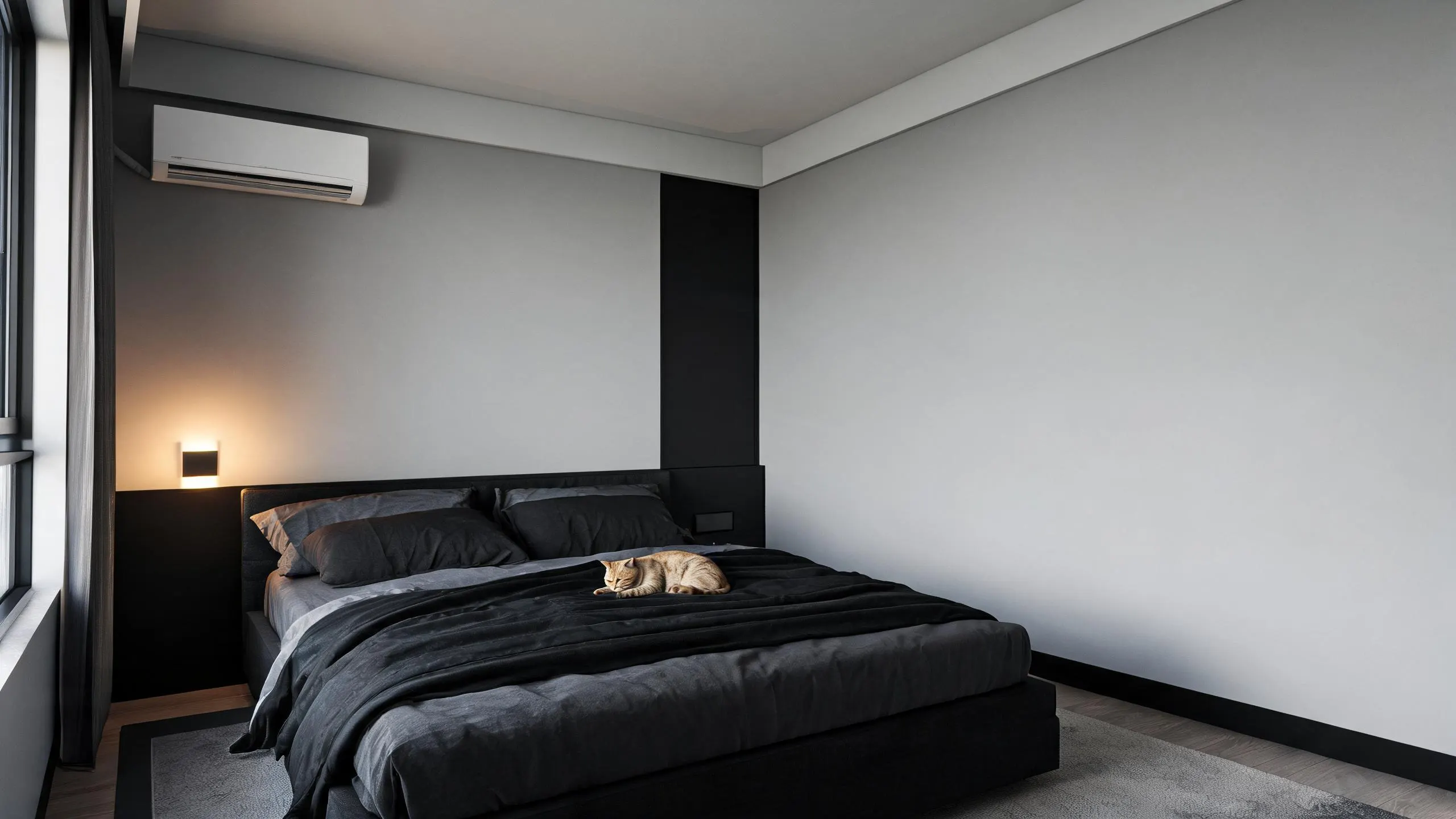
Electricity here runs 28.75 cents a kilowatt-hour
Connecticut's electric rates are among the highest in the country. A mini split's efficiency matters more on a bill with rates like these than it would somewhere power is cheap.
Takes about a minute. No obligation.
Connecticut's electric rates are among the highest in the country. A mini split's efficiency matters more on a bill with rates like these than it would somewhere power is cheap.
Mini splits are rated for efficiency, and that rating is what decides how much of each kilowatt-hour turns into heating or cooling instead of waste. Look at that rating on any system a contractor proposes for this job.
NOAA 1991–2020 monthly normals
Summers in Middletown run about three months, June through August, with afternoon highs averaging 82°F.
A mini split here isn't fighting extreme heat for long stretches, so a well-built mid-range system can do this job fine.




Most homes in this region heat with fuel oil, more than half. A mini split doesn't change that heating setup. It runs alongside it, handling cooling in summer and taking some of the load on milder days so the oil furnace runs less. That's a different job than the one a furnace does, and it's worth being clear with a contractor about which job you want this system to do.
About 20% of Connecticut households lost power for at least a day in 2024. That's a grid issue, and sizing a mini split bigger won't fix it. A standard system sized to the room it's heating and cooling does the job here. Get a few quotes and compare the SEER2 numbers against what's proposed.
Find a contractor
June through August, then the compressor shuts off for the rest of the year. That's not a hard schedule for a mini split to hold up under. A mid-range unit from a solid brand can handle three months of summer duty without trouble. Put the money into getting the size and the install right instead of chasing the highest-end system on the lot.
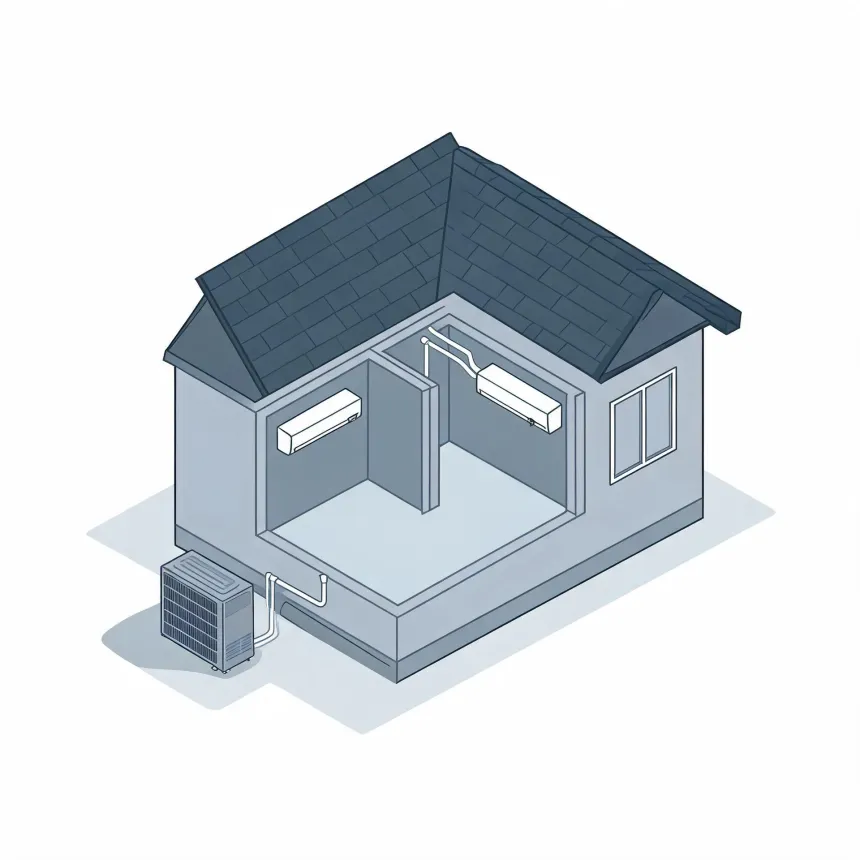
One indoor unit tied to one outdoor unit is the simplest version of this install. Add a second or third zone and you're paying for another line set, another indoor head, and a bigger outdoor unit to drive all of them. More rooms means more holes through the wall and more refrigerant line hidden or run in a chase, and all of that adds labor before the equipment cost even comes in.
An outdoor unit sitting right below the indoor head is the easy case. Once the outdoor unit has to sit farther away, or the line set has to run up through a wall cavity, across an attic, or around the outside of the house, that's more refrigerant line, more mounting, and more time on the job. A contractor walking the site before quoting is looking at this path, not just counting rooms.
Sizing a mini split right means running a load calculation on the room, not just measuring the floor. A contractor looks at the square footage, but also the windows, the insulation, how many walls face outside, and what sits above the ceiling. Those things change how much heat the room gains and loses, and a unit sized off square footage alone can miss that. Oversized isn't a safety margin, it's a problem of its own. A unit too big for the room cools the air fast and shuts off before it pulls the moisture out, so the room ends up cold and clammy instead of comfortable. It also cycles on and off more than it should, and that wears on the compressor over time. Undersized runs the other way, working constantly and never quite catching up. The right size runs long, steady cycles and holds the room where you set it.
Installation day starts with the outdoor unit and the line set path, since that decides where everything else goes. The contractor mounts the indoor head on the wall at the height and location worked out ahead of time, then drills through the wall for the line set, the drain line, and the electrical. That hole gets sealed afterward so no air or water gets in around it. Outside, the lines connect to the compressor, and the system gets evacuated with a vacuum pump to pull all the moisture and air out of the lines before refrigerant goes in. Skipping that step is what leads to a system that never cools right. Once it's charged, the contractor runs the system, checks the temperature split at the indoor head, and confirms the drain line is actually draining before calling the job done.