


What the cold actually costs you here
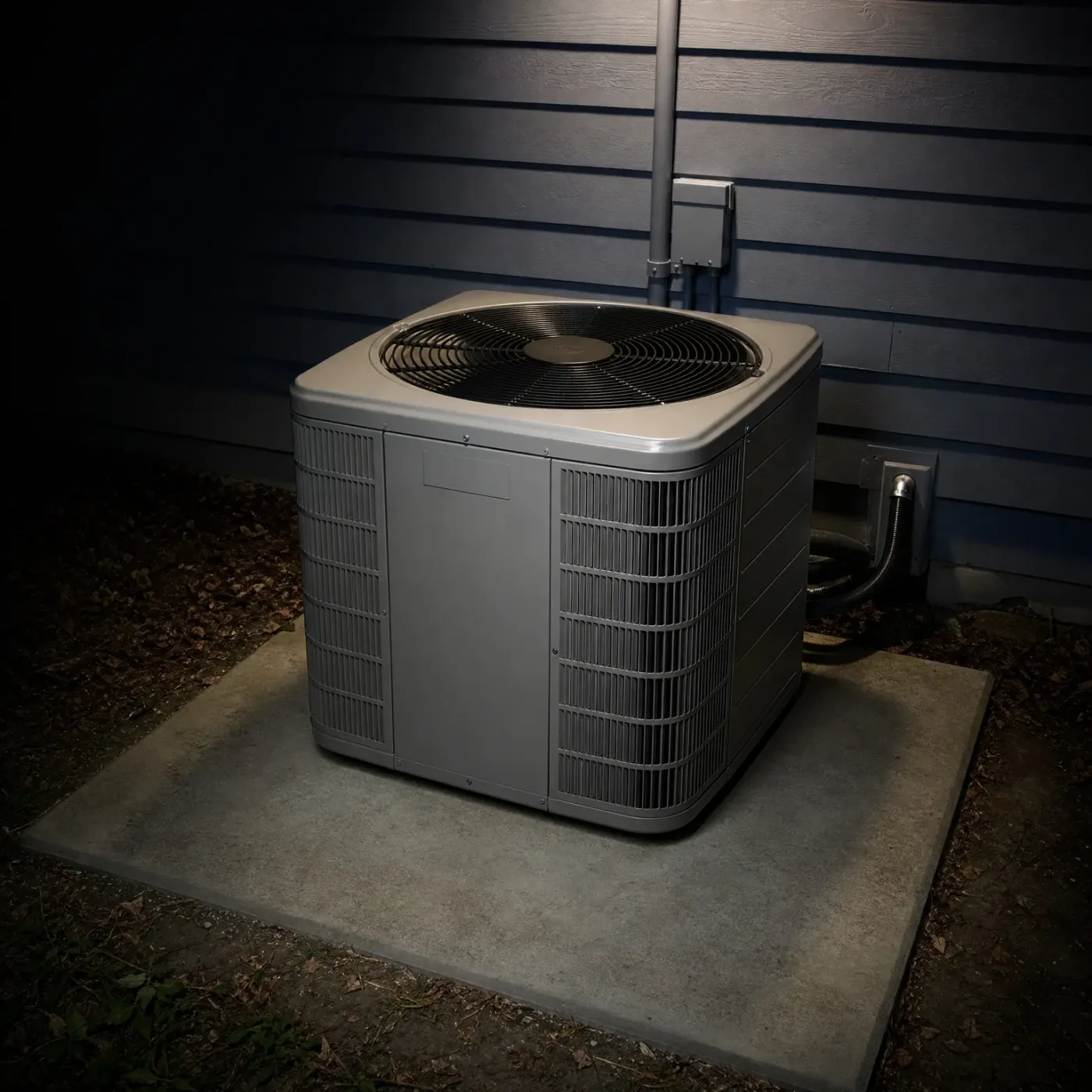
Winter here is long and it bites. Heat runs eight months a year, October through May, and the overnight low averages 22°F in December, January and February. About half the nights in that stretch, 125 of them, drop to freezing or below. A heat pump's performance has two marks against that kind of cold: below 40°F it puts out less heat than its rating, and below about 35°F it usually needs backup heat to keep up. Both marks sit above this county's average winter low, not below it. So on a typical winter night here, a standard heat pump is already working below its rated output and likely leaning on backup heat to make up the difference.
That does not mean the house goes cold. It means the heat pump is not doing the job alone on the coldest nights. Cold climate heat pumps are built for exactly this, and a two-winter field test of prototype cold climate models found backup heat carried only a small share of the load between 0°F and 35°F, and running on backup alone was rare even above 0°F. This county sees 0°F or below about 3 nights a year, a small fraction of the 125 freezing nights. So the real question for a heat pump here is not whether it can survive the coldest night of the year. It is whether the one you buy is rated for this cold, since a standard model and a cold climate model behave differently once the temperature drops.